



Temple & Webster’s Reflect RAP (Reconciliation Action Plan)
Acknowledgement of Country
Temple & Webster Group acknowledges the Traditional Owners and Custodians of Country throughout Australia. We recognise their enduring connection to the lands, the waterways, and the skies. We acknowledge the Gadigal and Wangal people, on whose lands our corporate head office is located, as well as all other First Nation Countries we operate across. We pay our respects to Elders past, present and to all Aboriginal and Torres Strait Islander peoples.
Temple & Webster is proud and excited to be on our Reconciliation journey, working with Murawin, a national Indigenous consultancy (certified by Indigenous business directory Supply Nation), to develop our “Reflect” Reconciliation Action Plan (RAP).
Being inclusive has always been a core value of ours, so working towards a shared understanding of First Nations history and culture, and building authentic and lasting relationships with First Nations Peoples is something our team members are extremely passionate about.
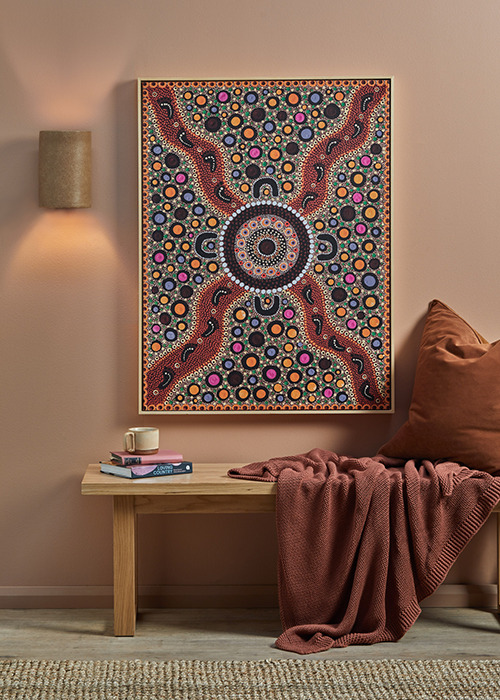
Children Picking Desert Flowers by Kathleen Buzzacott of Pitjantjatjara, Scottish and English heritage. Read the Artist's story here.
In May 2022, we established our RAP Working Group comprising 10 team members from across the business to workshop our vision for reconciliation, and to scope how we could meaningfully contribute towards reconciliation. We have registered with Reconciliation Australia and, in June 2022, guided my Murawin, we developed our Acknowledgement of Country (see above).
“Murawin has been working with Temple & Webster as a critical friend since April 2022. During this time, we acknowledge their unyielding willingness to learn more about First Nations histories, cultural knowledges and social systems so that they can build a sustainable and authentic Reflect RAP with utmost respect for First Nations protocols and truth-telling. We admire their honesty, integrity, vulnerability, and grace in which they have embraced their commitment to the development of their Reflect RAP and are honoured to walk the Reconciliation pathway with a company who are ever-present, and ready to drive social and cultural change for First Nation Australians.”
Carol Vale, CEO, MurawinWatch this space as we update it with the latest news of our Reflect RAP and to find out how we are creating positive change through the way we do business.

Temple & Webster's Reflect RAP Group led by Sustainability Officer Sonia Chand (far right).
“Through the RAP, we hope to reflect on matters affecting First Nations peoples in Australia, build enduring relationships and partnerships with First Nations communities, and weave this into the core of Temple & Webster.”
Sonia Chand, Temple & Webster Sustainability OfficerTemple & Webster and Aboriginal artwork
Aboriginal artwork is a significant part of the Temple & Webster range, and portraying First Nations culture accurately, and with integrity, is something that we are committed to doing well. It’s important that the First Nations artists represented on our site have their artwork and stories portrayed authentically and respectfully, and our RAP Working Group is already finding ways to improve on this.For NAIDOC Week 2022, we dedicated an email and a series of Instagram Stories and Pinterest pins, highlighting some of our First Nations artists, sharing their stories and the stories behind their artwork. To ensure we were inclusive and respectful, we sent all promotional content to each artist for their feedback and approval before publishing.
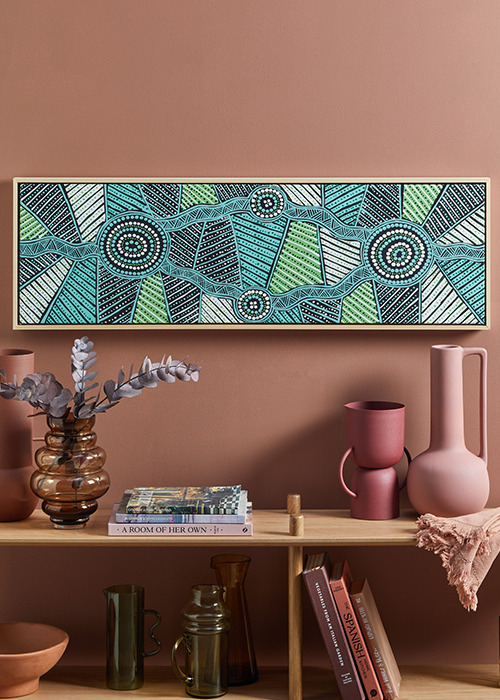
Yirringarni Green Waterhole by Tiwi artist Russellina Puruntatameri. Read the Artist's story here.
As a result, we learned about the sensitivity around Dreaming stories and claiming them without cultural permission, and the importance of displaying First Nations artworks in their entirety without cropping or covering them with graphics or text, which can alter the meaning of the works.
The First Nations artists we profiled included Amanda Hinkelmann, Maria Watson-Trudgett, Kathleen Buzzacott and Russellina Puruntatameri. Although we featured the works and stories of only four artists, we ensured our promotional landing page included the names and links to all 20 First Nations artists on our site (as of today, we now have 23 First Nations artists on our site).
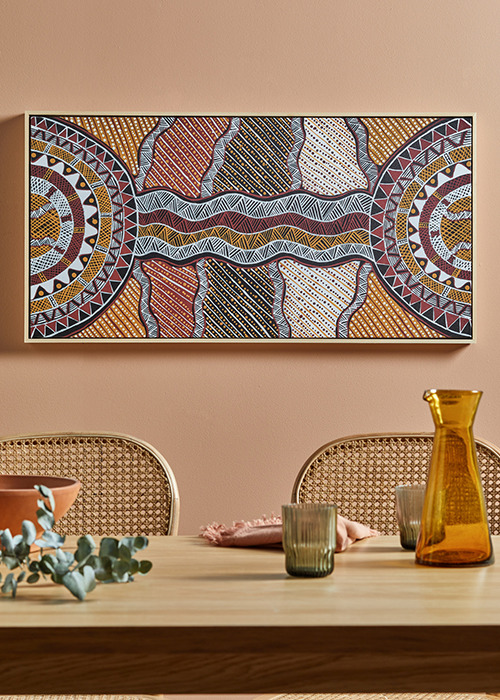
Kulama Ceremony by Russellina Puruntatameri. Read the Artist's story here.
We look forward to building out resources about First Nations culture and learning more about inclusive and respectful language and ways of communication.
Want to find out more? Check out some of these resources we’ve been using.
Reconciliation Australia outlines the five dimensions of reconciliation and explains the RAP Framework.
Australian Institute of Aboriginal and Torres Strait Islander Studies (AIATSIS) has the largest collection of Australian Aboriginal and Torres Strait Islander artefacts, insights into First Nations history and culture, and the handy AIATSIS map of Indigenous Australia.
The Barani website by the City of Sydney provides First Nations histories, a map that highlights places of importance to First Nations peoples in Sydney, and features an extensive list of resources.
The Sydney Language by Jakelin Troy is a recommended reference for the Aboriginal language of the Sydney district, commonly referred to as Gadigal within the Sydney city area and Dharug in Western Sydney.

Explore More








Head Office (No Showroom)
2/1-7 Unwins Bridge Rd, St Peters,
NSW 2044, Australia
Your customer reference #:
01-X-CSN