



Stories from 6 First Nations artists
With generations of wisdom finding expression through contemporary Aboriginal art, we’re celebrating NAIDOC Week 2023 by speaking to six First Nations artists about their practice and the stories behind some of the vibrant works showcased on our site.
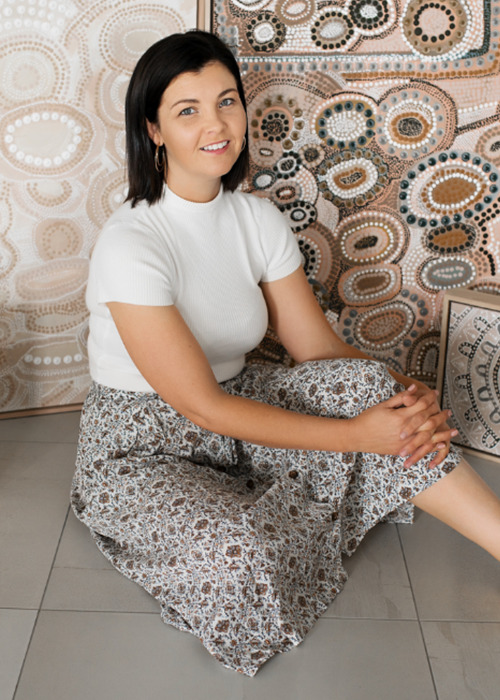
“I was born in Wiradyuri Country in Wagga Wagga. Inspired by my family, the Dreamtime and my hometown of Wagga, my art tells stories about connection, Country and experience, all in my unique contemporary Aboriginal art style.”
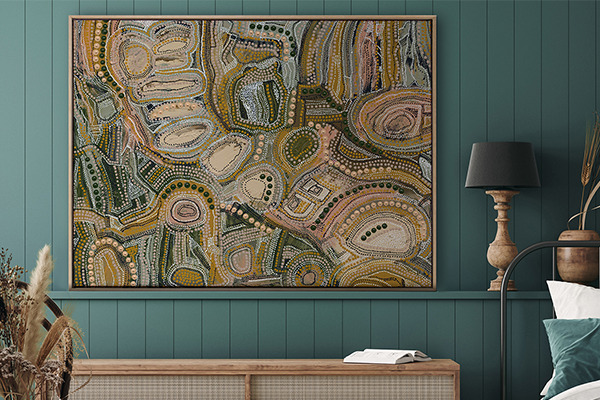
“Wiraywinhangin Marramarra portrays a holistic view of The Dreaming stories. It represents all the animals, people and spirits, including the slightly cheeky ones that made the land and creatures the way we know them today.”
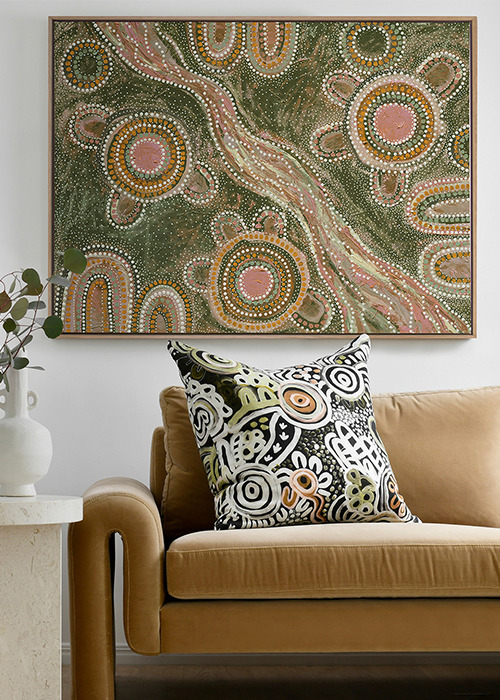
“Marrambidya Bila depicts an ode to home, where the Murrumbidgee River intersects it, carrying a sense of life and peace.”
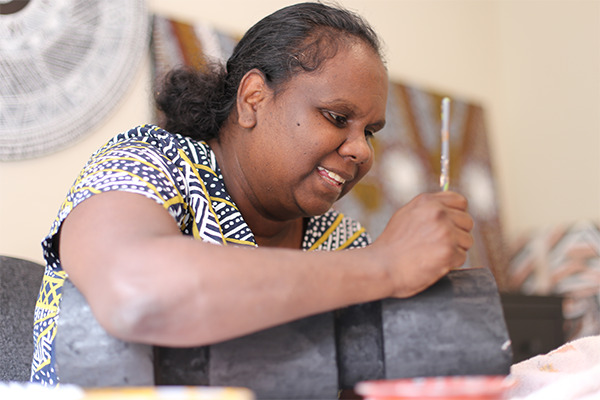
“I’m a proud Tiwi woman from the Tiwi Islands north of Darwin. My paintings are about giving prominence to Tiwi culture, especially to our children so they can learn our stories, dances, language and art.”
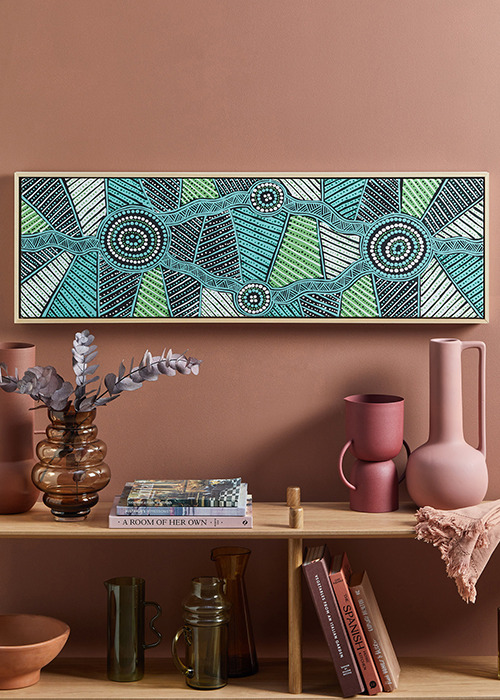
“Yirringarni refers to billabongs, swamps and waterholes, a significant source of life in the outback, forming sacred sites where people meet for physical, social and spiritual sustenance. Connected waterholes are one of the most common symbols in Aboriginal art.”
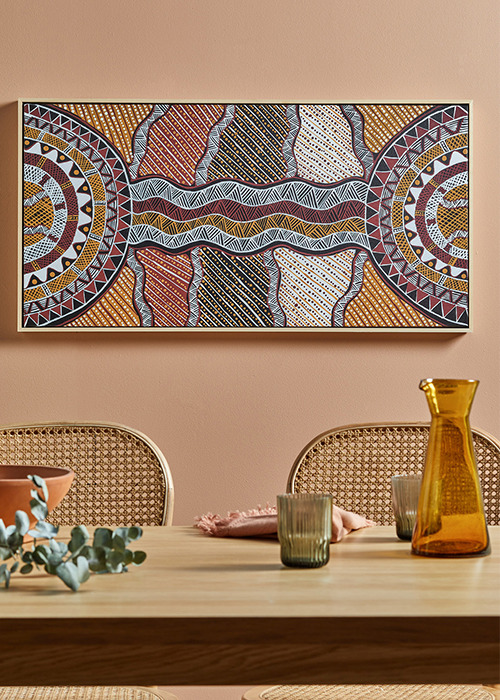
“The Kulama Ceremony consists of three days and nights of ritual body paintings, singing and dancing that happens towards the end of the wet season when a ring appears around the moon. It is an annual celebration of life and an important initiation ritual for young men, symbolising good health, hunting and marriage.”
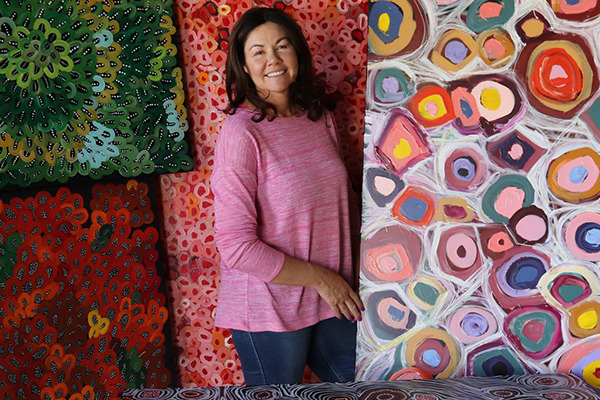
“I’m a proud Koori woman of the Wiradyuri people. My paintings are inspired by the connection to my Country and knowledge of Aboriginal culture. I paint in a contemporary way which narrates stories of Aboriginal culture and the interconnectedness I have to the landscapes of my Country.”
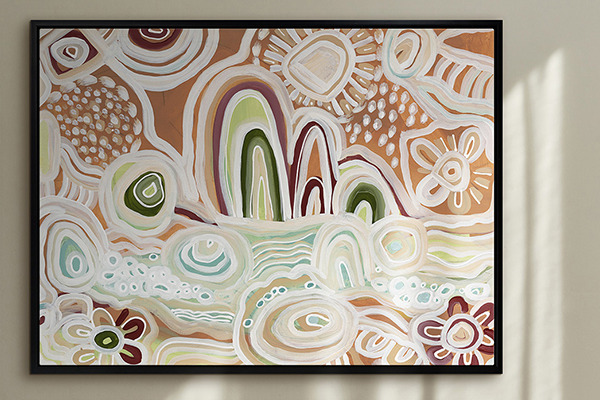
“Wiradyuri people are 'River People' intelligent environmental scientists and skilled hunter-fisher-gatherers. Growing up by the rivers and in the surrounding landscape was my way of life, and an important element of connection to my Country and culture.”
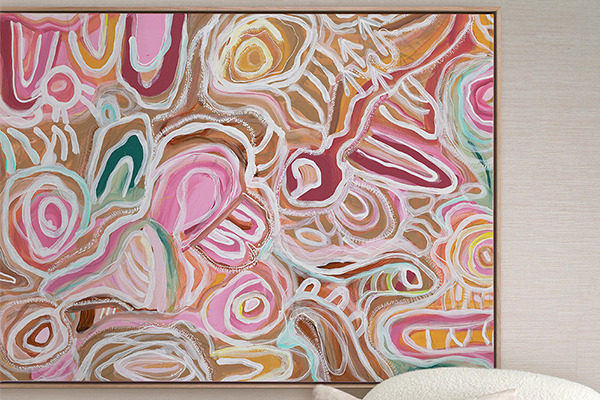
"Dharrang is a Wiradyuri word, meaning message sticks. This artwork shows the diverse landscapes and the journeys traveled by the message stick carriers. The sticks transmitted messages to different communities and gave its carriers ‘rites of passage’ onto another Country. Messages conveyed included announcements of ceremonies, invitations to meetings, corroborees, or marriages."
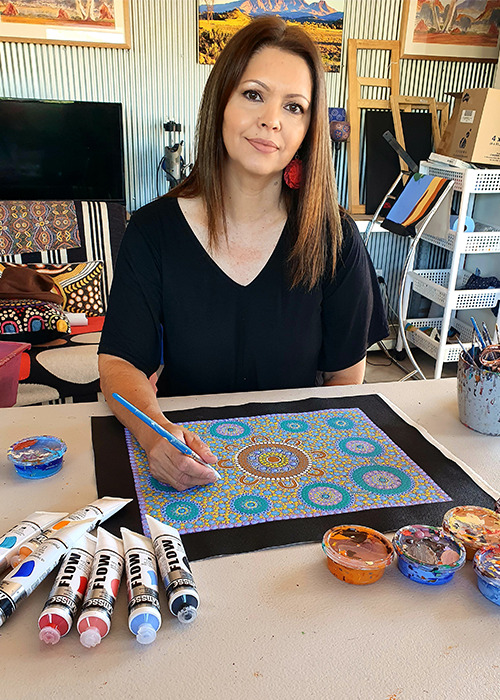
“I am of Pitjantjatjara, Scottish and English heritage, and was born in Alice Springs. My fine Central Desert dot painting style celebrates my discovery and connection to my Indigenous heritage, and my paintings share my memories of growing up in the bush and storytelling.”
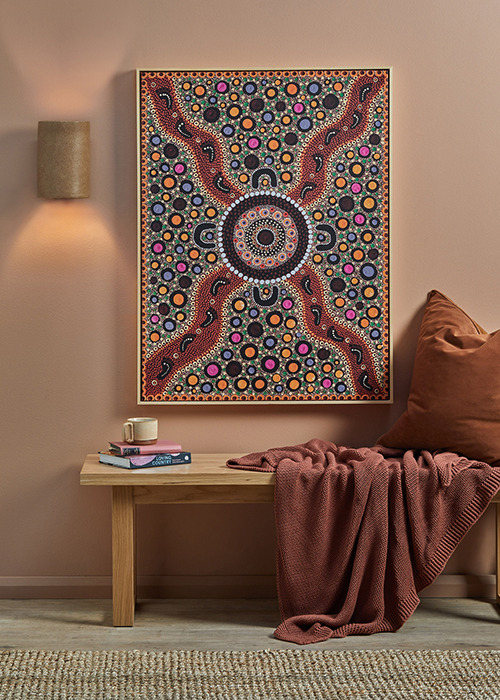
“Children Picking Desert Flowers recalls memories of growing up out bush and picking flowers when they bloomed after the rain. Purple ‘pussycat tails’ were my favourite."
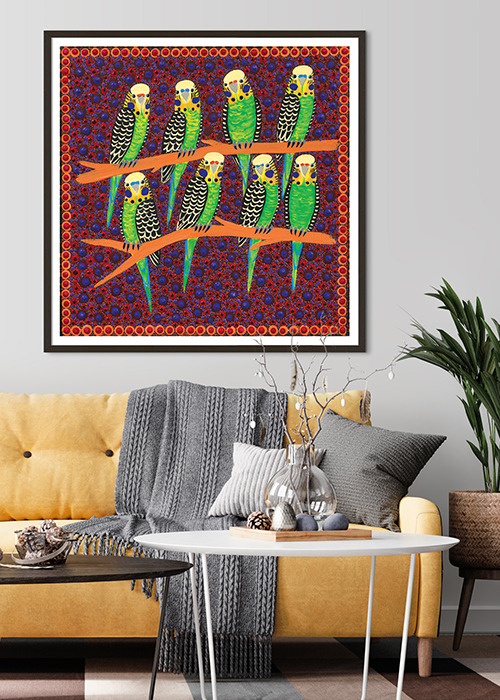
“Budgies are native to Australia and are highly nomadic. Flocks follow rainfall, and during rainy periods you’ll find an abundance of budgies nesting in the hollows of the River Red Gums along Roe Creek, where I live.”
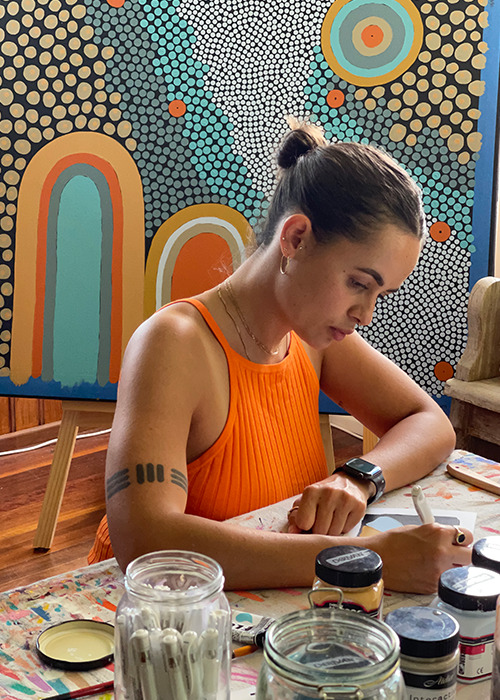
“I’m a Gudanji/Wakaja woman with English/Irish and Spanish/Austrian heritage. I grew up in a remote community in the Gulf of Carpentaria and got to know my Country through the stories my family told me and by walking in the footprints my family has travelled since the beginning. My painting is storywork, and I call my storying Nardurna, which means ‘woman’ in Gudanji.”
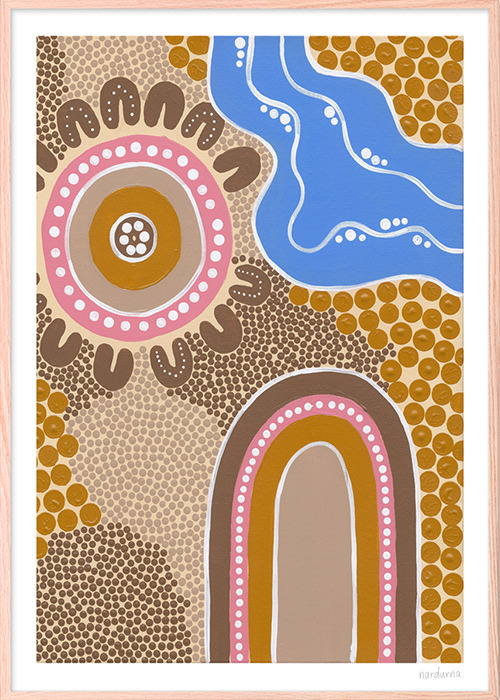
“Valley shows a family gathered around a fire in their camp eating fish they caught in the river. The land is dotted with plants and surrounded by large hills that protect them from the weather."
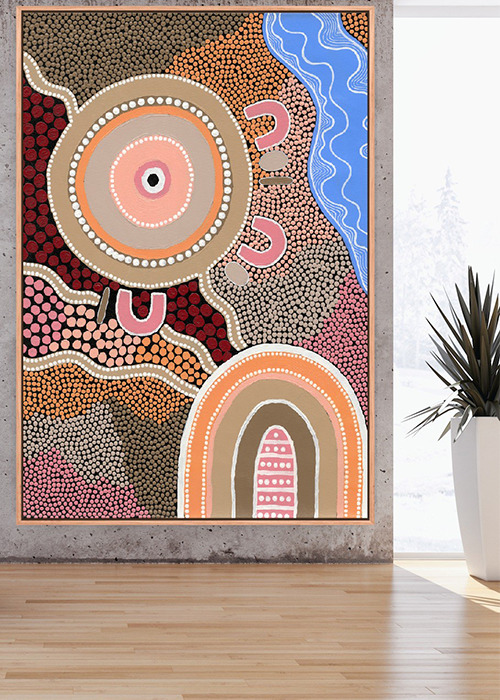
"This artwork depicts our country during the burning off when the land is dry, and the embers are coming through, lighting small fires.”
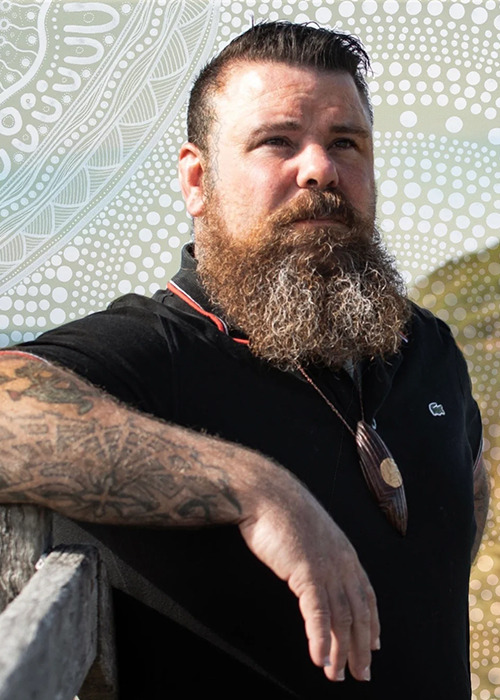
“I’m a proud Worimi man and live and work on Gulidjan and Wadawurrung Country. My work reflects my Indigenous background, storytelling and love of nature - and draws on my design background from 10 years of tattooing. Connecting Indigenous art with modern design and medium is my way of promoting reconciliation and connection.”
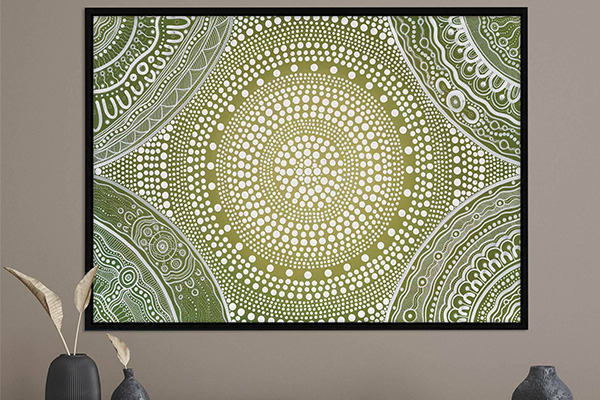
“Burra Giwang shows four neighbouring tribes gathering under the bright spirit of a full moon-lit night sky for a Corroboree, a time of celebration and to share knowledge and connect to the spirits of the Dreaming.”
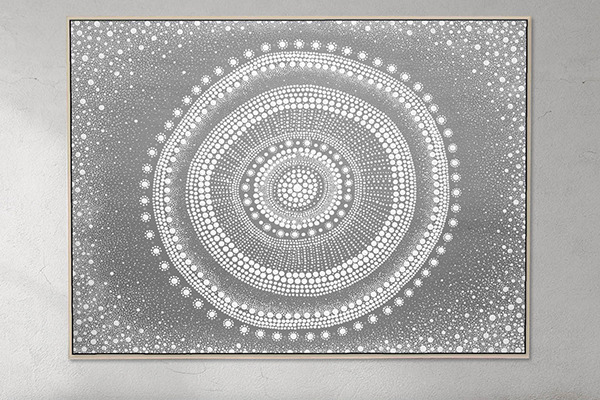
“Butuwang Mirriiyn Yurrung depicts where our ancestors and creator spirits of the Dreamtime live; an ancient realm of spirits and knowledge, where everything began, and where everything will once again return.”
National NAIDOC Week can be traced back to the 1938 Day of Mourning, which was originally held annually on the Sunday before Australia Day. In 1955, this day was moved to the first Sunday in July when it was decided that it should also be a celebration of First Nations culture. In 1975, the day then evolved into a week-long event to recognise the rich heritage and incredible achievements of Aboriginal and Torres Strait Islander peoples. Activities for NAIDOC Week 2023 kick off nationally on July 2nd. Find out what NAIDOC Week events are happening near you here.
Celebrate NAIDOC Week and explore the rich stories of all 36 of the First Nations artists on our site now.
Amanda Hinkelmann
Amanda acknowledges that her artworks have been partly cropped. View Amanda's artworks in full here.
“I was born in Wiradyuri Country in Wagga Wagga. Inspired by my family, the Dreamtime and my hometown of Wagga, my art tells stories about connection, Country and experience, all in my unique contemporary Aboriginal art style.”
Wiraywinhangin Marramarra (Mistaken Creation) by Amanda Hinkelmann
“Wiraywinhangin Marramarra portrays a holistic view of The Dreaming stories. It represents all the animals, people and spirits, including the slightly cheeky ones that made the land and creatures the way we know them today.”
Marrambidya Bila Green (The Murrumbidgee River) by Amanda Hinkelmann
“Marrambidya Bila depicts an ode to home, where the Murrumbidgee River intersects it, carrying a sense of life and peace.”
Russellina Puruntatameri
View Russellina's artworks in full here.
“I’m a proud Tiwi woman from the Tiwi Islands north of Darwin. My paintings are about giving prominence to Tiwi culture, especially to our children so they can learn our stories, dances, language and art.”
Yirringarni Green Waterhole by Russellina Puruntatameri
“Yirringarni refers to billabongs, swamps and waterholes, a significant source of life in the outback, forming sacred sites where people meet for physical, social and spiritual sustenance. Connected waterholes are one of the most common symbols in Aboriginal art.”
Kulama Ceremony by Russellina Puruntatameri
“The Kulama Ceremony consists of three days and nights of ritual body paintings, singing and dancing that happens towards the end of the wet season when a ring appears around the moon. It is an annual celebration of life and an important initiation ritual for young men, symbolising good health, hunting and marriage.”
Maria Watson-Trudgett
Maria acknowledges that her artworks have been partly cropped. View Maria's artworks in full here.
“I’m a proud Koori woman of the Wiradyuri people. My paintings are inspired by the connection to my Country and knowledge of Aboriginal culture. I paint in a contemporary way which narrates stories of Aboriginal culture and the interconnectedness I have to the landscapes of my Country.”
River Country Tan by Maria Watson-Trudgett
“Wiradyuri people are 'River People' intelligent environmental scientists and skilled hunter-fisher-gatherers. Growing up by the rivers and in the surrounding landscape was my way of life, and an important element of connection to my Country and culture.”
Message Sticks Pink by Maria Watson-Trudgett
"Dharrang is a Wiradyuri word, meaning message sticks. This artwork shows the diverse landscapes and the journeys traveled by the message stick carriers. The sticks transmitted messages to different communities and gave its carriers ‘rites of passage’ onto another Country. Messages conveyed included announcements of ceremonies, invitations to meetings, corroborees, or marriages."
Kathleen Buzzacott
Kathleen acknowledges that her artworks have been partly cropped. View Kathleen's artworks in full here.
“I am of Pitjantjatjara, Scottish and English heritage, and was born in Alice Springs. My fine Central Desert dot painting style celebrates my discovery and connection to my Indigenous heritage, and my paintings share my memories of growing up in the bush and storytelling.”
Children Picking Desert Flowers by Kathleen Buzzacott
“Children Picking Desert Flowers recalls memories of growing up out bush and picking flowers when they bloomed after the rain. Purple ‘pussycat tails’ were my favourite."
Budgies by Kathleen Buzzacott
“Budgies are native to Australia and are highly nomadic. Flocks follow rainfall, and during rainy periods you’ll find an abundance of budgies nesting in the hollows of the River Red Gums along Roe Creek, where I live.”
Ryhia Dank (Nardurna)
Ryhia acknowledges that her artworks have been partly cropped. View Ryhia's artworks in full here.
“I’m a Gudanji/Wakaja woman with English/Irish and Spanish/Austrian heritage. I grew up in a remote community in the Gulf of Carpentaria and got to know my Country through the stories my family told me and by walking in the footprints my family has travelled since the beginning. My painting is storywork, and I call my storying Nardurna, which means ‘woman’ in Gudanji.”
Valley by Nardurna
“Valley shows a family gathered around a fire in their camp eating fish they caught in the river. The land is dotted with plants and surrounded by large hills that protect them from the weather."
Burn Off 1 by Nardurna
"This artwork depicts our country during the burning off when the land is dry, and the embers are coming through, lighting small fires.”
Gerard Black
Gerard acknowledges that his artwork has been partly cropped. View Gerard's artwork in full here.
“I’m a proud Worimi man and live and work on Gulidjan and Wadawurrung Country. My work reflects my Indigenous background, storytelling and love of nature - and draws on my design background from 10 years of tattooing. Connecting Indigenous art with modern design and medium is my way of promoting reconciliation and connection.”
Burra Giwang by Gerard Black
“Burra Giwang shows four neighbouring tribes gathering under the bright spirit of a full moon-lit night sky for a Corroboree, a time of celebration and to share knowledge and connect to the spirits of the Dreaming.”
Butuwang Mirriiyn Yurrung by Gerard Black
“Butuwang Mirriiyn Yurrung depicts where our ancestors and creator spirits of the Dreamtime live; an ancient realm of spirits and knowledge, where everything began, and where everything will once again return.”
What is NAIDOC Week?
NAIDOC stands for National Aboriginal and Islanders Day Observance Committee. Its origins can be traced to the emergence of Aboriginal groups in the 1920′s who sought to increase awareness in the wider community of the status and treatment of Aboriginal and Torres Strait Islander Australians.National NAIDOC Week can be traced back to the 1938 Day of Mourning, which was originally held annually on the Sunday before Australia Day. In 1955, this day was moved to the first Sunday in July when it was decided that it should also be a celebration of First Nations culture. In 1975, the day then evolved into a week-long event to recognise the rich heritage and incredible achievements of Aboriginal and Torres Strait Islander peoples. Activities for NAIDOC Week 2023 kick off nationally on July 2nd. Find out what NAIDOC Week events are happening near you here.
What is the theme for NAIDOC Week 2023?
The theme for NAIDOC Week 2023 is ‘For Our Elders’, which pays homage to leaders, teachers, advocates and survivors. To celebrate generations of wisdom past, we're exploring how the First Nations artists on our site have been influenced by their Elders, and how the knowledge and learnings they've drawn have informed their work.Celebrate NAIDOC Week and explore the rich stories of all 36 of the First Nations artists on our site now.

Explore More








Head Office (No Showroom)
2/1-7 Unwins Bridge Rd, St Peters,
NSW 2044, Australia
Your customer reference #:
01-X-CSN