


Blog

Updated 10 February 2021
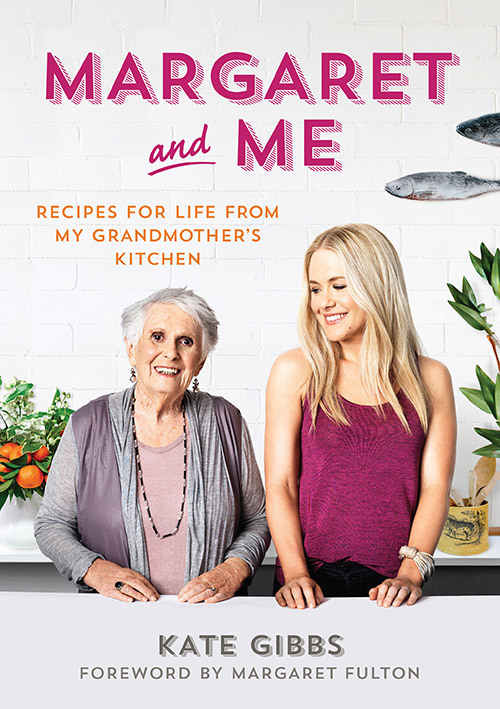
Kate Gibbs is a food and travel writer who also happens to be the grand daughter of Australian food legend Margaret Fulton (she's officially been named a National Living Treasure!). Kate has written a lovely 'foodoir' - a combination of the stories of Margaret's life, and her own, and what she describes as 'recipes for life'. Here we share an edited extract from Margaret and Me - an account of Margaret's childhood, plus her treasured shortbread recipe. Leave a comment below for your chance to win a copy.
From the age of two, Margaret, her older siblings and her parents lived in Glen Innes, a town about 600 kilometres north of Sydney. Her father was a tailor and the children were dressed impeccably in sensible Scottish wool and sturdy leather. Margaret always wanted to wear something pink as a little girl and – pushing it – some patent leather shoes.
Other girls didn't wear tweed overcoats and lace-up brown shoes with buttons, they weren't nicknamed 'Scotch'. Other girls were not immigrants, whose father had packed up his entire family, overhauling life plans on the say-so of a letter from a fellow tailor who had moved from Scotland to Australia and found wealth (as a farmer, he neglected to note). Other girls didn't have little velour hats like the ones worn by the English Princesses Elizabeth and Margaret Rose: they were different. Margaret was different.
When her father told her stories of Scottish heroes, she felt much less of an outsider.
'I went home to hear stories of William Wallace, or red-headed Scottish warriors withstanding the Romans, tales of Robert the Bruce, and I was proud of where I'd come from.'
As the Great Depression pushed more people out of work, men travelled into small towns looking for jobs, often arriving at Margaret's father's tailor shop to see if he could use them; a shilling or two was better than starving. He found odds and ends for them: re-rolling fabric and sharpening scissors, sweeping floors and tinkering with plumbing. When their token chores were done and he handed them something for their work, Alexander sent them on to his wife, giving them directions and suggesting they may be useful there. They pulled weeds from the garden and beat the dust from rugs, polished cutlery and pruned trees.
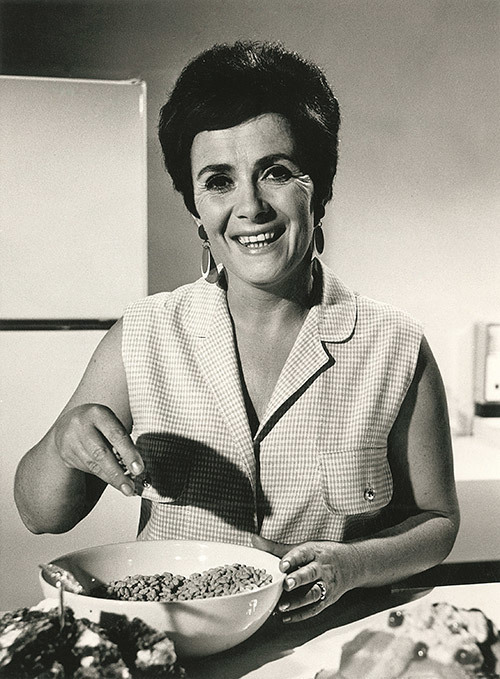
Margaret in her television days
Families pulled together meals from the cheapest cuts, and tripe – the rippled insides of a cow's stomach – appeared on tables everywhere. Tripe and onions, boiled into a stew, became a popular staple during the Depression and while her friends hated the dish, Margaret loved how her mother made it. The flavours enveloped each other, rich and textured. Bread and dripping were served with mutton for bulking up meals and mopping up juices. Bread was often saved for dessert if treacle was on hand, a sweet, luxurious treat.
'Australian women became very adept,' says Margaret now. 'They had very little at this time, but they made the effort, especially when a guest was coming. It wasn't uncommon to travel three or four hours to have afternoon tea. So you had the feeling that you had to do something really proper and special. It's not as though you could run down to the shops to pick up a cake. Women took a lot of pride in their skills in the kitchen.'
Margaret's mother Isabella was no different. She took her recipe cues from the Country Women's Association and the Presbyterian Women's Association cookbooks, learning new ways to bake. She stumbled over the chocolate cakes and sponges her Australian peers had mastered – it didn't come naturally. Margaret envied her friends who arrived home to jam tarts and gingerbread cake; she was handed an apple when she walked in the door. There was usually shortbread, that crumbly and buttery Scottish biscuit, and Dundee cake, a dense fruitcake that Margaret adored, but both were for special occasions, for guests who travelled miles for afternoon tea.
Sitting with a bowl on her lap in the afternoon, Isabella used her hands to beat butter and sugar until it resembled whipped cream, to make one baked thing she did perfectly: shortbread. The warmth of her hands softened the butter as she pinched her fingers into a whisk shape – no utensils needed. Scots often add ground rice to their shortbread, giving the whole thing a coarse grittiness. But the texture also comes from using coarse flour, hand-ground where possible. Margaret and her sisters never agreed on how their mother made the recipe, what was 'proper'. So from this brood of children came a handful of different recipes for shortbread, and each continued to make her own version of their mother's recipe throughout their lives. Catherine, Margaret's oldest sister ('She makes a very good shortbread,' says Margaret diplomatically), doesn't knead the shortbread, but Margaret remembers her mother working away at it in a bowl, 'so I knead'. Jean, Margaret's closest sister in age, 'kneads a little bit'. But Margaret says it's important not to knead the dough too much nor overwork it.
'It needs lightness of hand and good judgment. If the ingredients are worked too much, shortbread becomes tough and chewy, instead of short and melting in the mouth.'
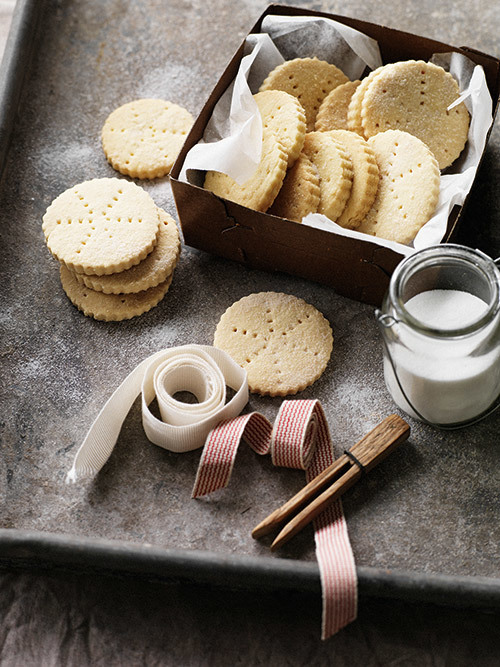
Scottish Shortbread
Makes 36 x 6 cm (2½ in) round shortbreads
250 g (9 oz) butter, softened
110 g (3¾ oz/½ cup) caster (superfine) sugar, plus extra for dusting
300 g (10½ oz/2 cups) plain (all-purpose) flour
150 g (5½ oz/1¼ cups) cornflour (cornstarch)
Preheat the oven to 160°C (315°F). Lightly grease two baking trays and line with baking paper.
Use an electric mixer to cream the butter until pale, then gradually add the sugar, beating the mixture until it is pale and creamy.
Gradually work in the flour and cornflour, then knead for about 5 minutes, until it becomes a very smooth dough.
Roll out the dough on a lightly floured work surface until it is 5–6 mm (¼ in) thick and use a 6 cm (2½ in) fluted round cutter to cut out rounds. Put on the prepared trays and use a fork to prick shortbread in a decorative pattern. Dust lightly with extra caster sugar.
Bake the shortbread in the lower half of the oven for 25–30 minutes, or until very lightly coloured and crisp, swapping trays halfway through for even baking. Cool on the trays for 10 minutes, then transfer to a wire rack to cool completely. Store in an airtight container for up to 3 weeks.
Edited extract from Margaret and Me by Kate Gibbs
Recipes for life: Kate Gibbs and Margaret Fulton
Kate Gibbs is a food and travel writer who also happens to be the grand daughter of Australian food legend Margaret Fulton (she's officially been named a National Living Treasure!). Kate has written a lovely 'foodoir' - a combination of the stories of Margaret's life, and her own, and what she describes as 'recipes for life'. Here we share an edited extract from Margaret and Me - an account of Margaret's childhood, plus her treasured shortbread recipe. Leave a comment below for your chance to win a copy.
From the age of two, Margaret, her older siblings and her parents lived in Glen Innes, a town about 600 kilometres north of Sydney. Her father was a tailor and the children were dressed impeccably in sensible Scottish wool and sturdy leather. Margaret always wanted to wear something pink as a little girl and – pushing it – some patent leather shoes.
Other girls didn't wear tweed overcoats and lace-up brown shoes with buttons, they weren't nicknamed 'Scotch'. Other girls were not immigrants, whose father had packed up his entire family, overhauling life plans on the say-so of a letter from a fellow tailor who had moved from Scotland to Australia and found wealth (as a farmer, he neglected to note). Other girls didn't have little velour hats like the ones worn by the English Princesses Elizabeth and Margaret Rose: they were different. Margaret was different.
When her father told her stories of Scottish heroes, she felt much less of an outsider.
'I went home to hear stories of William Wallace, or red-headed Scottish warriors withstanding the Romans, tales of Robert the Bruce, and I was proud of where I'd come from.'
As the Great Depression pushed more people out of work, men travelled into small towns looking for jobs, often arriving at Margaret's father's tailor shop to see if he could use them; a shilling or two was better than starving. He found odds and ends for them: re-rolling fabric and sharpening scissors, sweeping floors and tinkering with plumbing. When their token chores were done and he handed them something for their work, Alexander sent them on to his wife, giving them directions and suggesting they may be useful there. They pulled weeds from the garden and beat the dust from rugs, polished cutlery and pruned trees.
Margaret in her television days
Families pulled together meals from the cheapest cuts, and tripe – the rippled insides of a cow's stomach – appeared on tables everywhere. Tripe and onions, boiled into a stew, became a popular staple during the Depression and while her friends hated the dish, Margaret loved how her mother made it. The flavours enveloped each other, rich and textured. Bread and dripping were served with mutton for bulking up meals and mopping up juices. Bread was often saved for dessert if treacle was on hand, a sweet, luxurious treat.
'Australian women became very adept,' says Margaret now. 'They had very little at this time, but they made the effort, especially when a guest was coming. It wasn't uncommon to travel three or four hours to have afternoon tea. So you had the feeling that you had to do something really proper and special. It's not as though you could run down to the shops to pick up a cake. Women took a lot of pride in their skills in the kitchen.'
Margaret's mother Isabella was no different. She took her recipe cues from the Country Women's Association and the Presbyterian Women's Association cookbooks, learning new ways to bake. She stumbled over the chocolate cakes and sponges her Australian peers had mastered – it didn't come naturally. Margaret envied her friends who arrived home to jam tarts and gingerbread cake; she was handed an apple when she walked in the door. There was usually shortbread, that crumbly and buttery Scottish biscuit, and Dundee cake, a dense fruitcake that Margaret adored, but both were for special occasions, for guests who travelled miles for afternoon tea.
Sitting with a bowl on her lap in the afternoon, Isabella used her hands to beat butter and sugar until it resembled whipped cream, to make one baked thing she did perfectly: shortbread. The warmth of her hands softened the butter as she pinched her fingers into a whisk shape – no utensils needed. Scots often add ground rice to their shortbread, giving the whole thing a coarse grittiness. But the texture also comes from using coarse flour, hand-ground where possible. Margaret and her sisters never agreed on how their mother made the recipe, what was 'proper'. So from this brood of children came a handful of different recipes for shortbread, and each continued to make her own version of their mother's recipe throughout their lives. Catherine, Margaret's oldest sister ('She makes a very good shortbread,' says Margaret diplomatically), doesn't knead the shortbread, but Margaret remembers her mother working away at it in a bowl, 'so I knead'. Jean, Margaret's closest sister in age, 'kneads a little bit'. But Margaret says it's important not to knead the dough too much nor overwork it.
'It needs lightness of hand and good judgment. If the ingredients are worked too much, shortbread becomes tough and chewy, instead of short and melting in the mouth.'
Scottish Shortbread
Makes 36 x 6 cm (2½ in) round shortbreads
250 g (9 oz) butter, softened
110 g (3¾ oz/½ cup) caster (superfine) sugar, plus extra for dusting
300 g (10½ oz/2 cups) plain (all-purpose) flour
150 g (5½ oz/1¼ cups) cornflour (cornstarch)
Preheat the oven to 160°C (315°F). Lightly grease two baking trays and line with baking paper.
Use an electric mixer to cream the butter until pale, then gradually add the sugar, beating the mixture until it is pale and creamy.
Gradually work in the flour and cornflour, then knead for about 5 minutes, until it becomes a very smooth dough.
Roll out the dough on a lightly floured work surface until it is 5–6 mm (¼ in) thick and use a 6 cm (2½ in) fluted round cutter to cut out rounds. Put on the prepared trays and use a fork to prick shortbread in a decorative pattern. Dust lightly with extra caster sugar.
Bake the shortbread in the lower half of the oven for 25–30 minutes, or until very lightly coloured and crisp, swapping trays halfway through for even baking. Cool on the trays for 10 minutes, then transfer to a wire rack to cool completely. Store in an airtight container for up to 3 weeks.
Edited extract from Margaret and Me by Kate Gibbs
Explore More



Payment options





Head Office (No Showroom)
2/1-7 Unwins Bridge Rd, St Peters,
NSW 2044, Australia
Your customer reference #:
01-X-CSN