


Blog

How to organise your home office
There have been countless studies on the impact of a messy desk on productivity. Studies show that the average person can waste as much as 4.3 hours per week searching for documents. A clean desk can also lead to a host of other benefits: mental stability, stress reduction and increased focus. Whether it's a desk in your bedroom or a designated home office, we share tips for organising your workspace for maximum productivity.
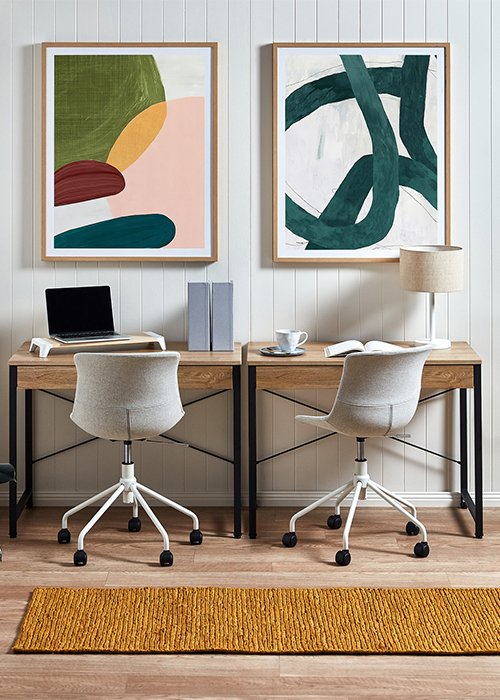
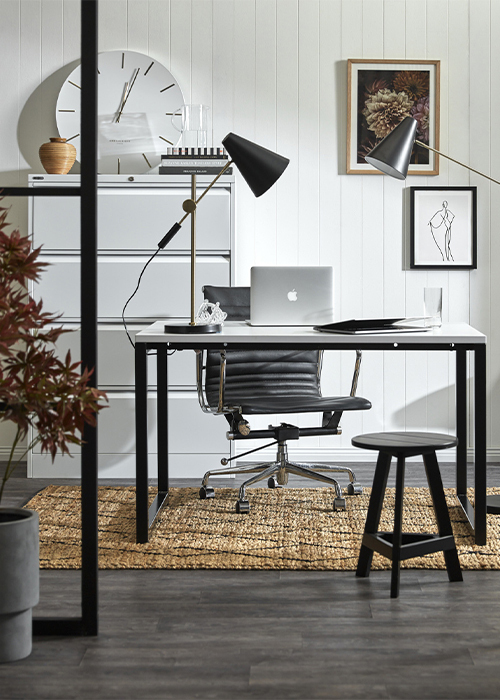
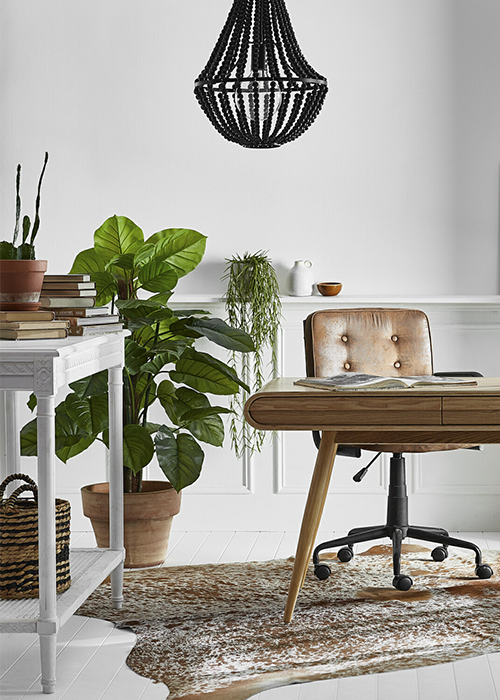
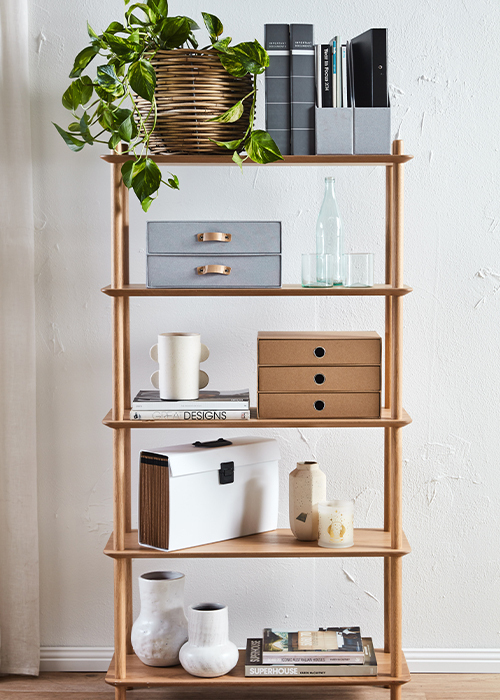
For your reference zone, consider extra shelving units to store books and files. Keep it tidy with bookends and break the monotony and heaviness by scattering in beautiful sculptural ornaments. Also, make use of cork or peg boards to display reference documents, calendars and to do lists. For extra storage for your supplies, opt for desks with drawers and built-in shelves.
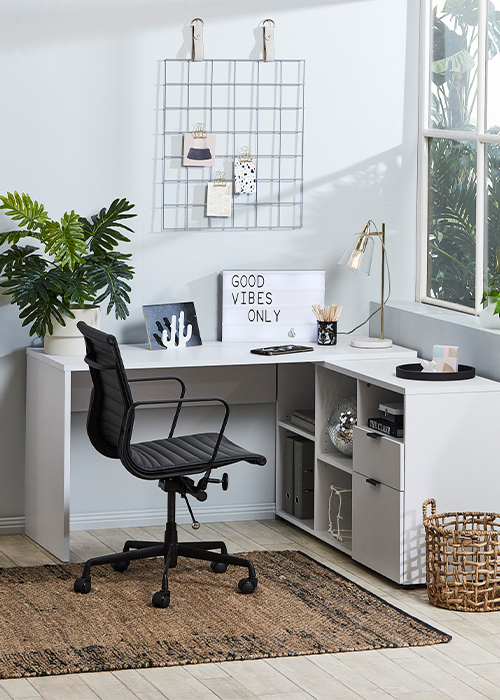
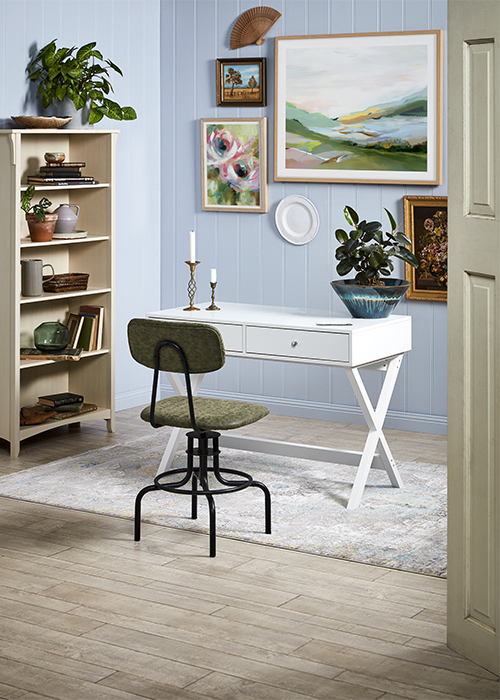
For practical tips on how to choose a desk, how to choose an office chair, as well as workplace ergonomics, check out our blog post on how to set up your workspace at home.
Sanitise your entire workspace
Your keyboard, mouse, monitor and headphones are swarming with bacteria, up to 7000 micro-organisms in fact. And, if you're prone to eating at your desk, can you also imagine all the crumbs and sticky spills that have accumulated? Remove every single item from your desk and workspace (including shelves and cabinets), and start with a blank canvas. Sanitise all surfaces and objects, shaking out keyboards and wiping screens to remove dust and smudges.Establish zones for work, reference and supplies
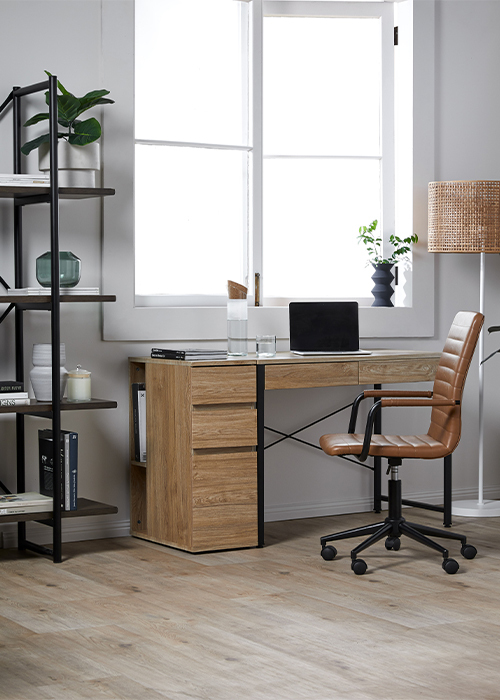
Your workspace should ideally comprise three zones: a work zone (your desk); a reference zone (a bookcase or filing cabinet); and a supply zone (desk drawers or desk organisers). Establish these zones and assess whether you have the adequate furniture or accessories to do the job. If, for instance, your work requires extra space for planning, consider a second desk. Large multipurpose tables have become especially popular in this new era of working from home, and are useful for accommodating more than one family member.For your reference zone, consider extra shelving units to store books and files. Keep it tidy with bookends and break the monotony and heaviness by scattering in beautiful sculptural ornaments. Also, make use of cork or peg boards to display reference documents, calendars and to do lists. For extra storage for your supplies, opt for desks with drawers and built-in shelves.
Be ruthless with paperwork
Go through all the paper in your workspace. Recycle and discard unwanted documents and review how to go paperless where possible. Also, ensure you have a rubbish bin and recycling tray by your side.Create a document storage system
Once you've discarded unnecessary papers, divide what's left into two piles: 'to do' and 'to file'. Tackle your 'to file' pile immediately by creating a document storage system that best suits your needs and space. Colour code and label files, and house them in magazine racks and file holders. Vertical systems such as racks are also useful as they discourage clutter and are more visible. If you have a large number of files, consider using storage boxes and filing cabinets instead.Prioritise what goes on your desk
Nothing that you don't use on a daily basis should be on your desk. Occasional stationery items such as staplers should all be housed in desk drawers or within your supply zone. Regularly used stationery can be organised with desk accessories such as caddies, stationery boxes, desktop organisers, pen holders, trays and small clear containers. When arranging these items on your desk, put the things you use most on your dominant side.Corral cables and power packs
Visible chords just add clutter so take advantage of cable trays and cord reels to rein them in. Instead of power packs being scattered around your desk or floor, contain them all neatly in a basket.
Assess what's on the floor
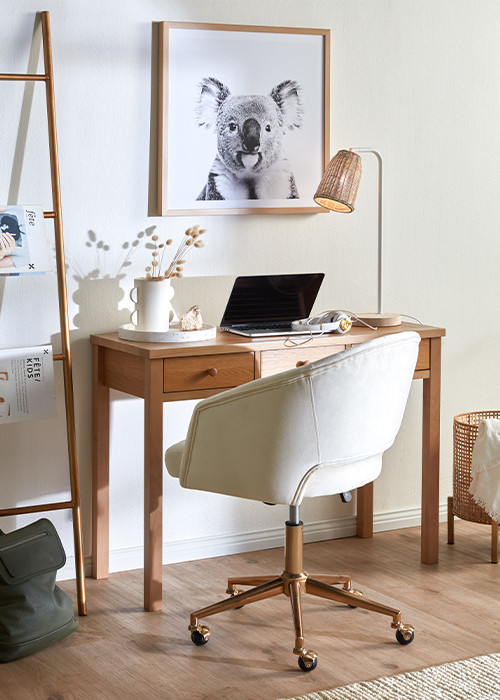
Don't let files and books build up on the floor. Use cupboards and cabinets for binders and books, or be creative with how you store your reference material; we love how a decorative ladder can be used to display magazines.
Make your workspace personal
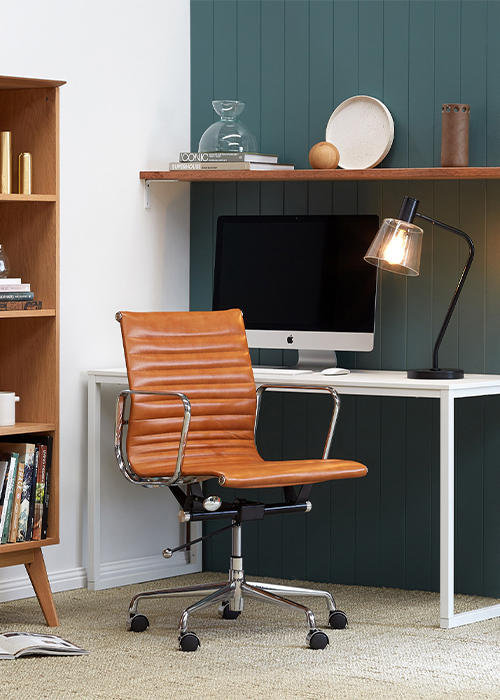
Finally, don't forget to add personal touches such as photographs, plants, scented candles and wall art to provide inspiration and stimulation. If you don't want to take up valuable desk space, consider adding floating shelves to display objects that you love. Colour can also have an enormous effect on your performance. Blues are ideal to boost productivity, while greens help you stay relaxed.For practical tips on how to choose a desk, how to choose an office chair, as well as workplace ergonomics, check out our blog post on how to set up your workspace at home.

Explore More



Payment options





Head Office (No Showroom)
2/1-7 Unwins Bridge Rd, St Peters,
NSW 2044, Australia
Your customer reference #:
01-X-CSN