



Updated 8 January 2021
Karen McCartney writes about decorating with books, and starting young.
‘I would be most content if my children grew up to be the kind of people who think decorating consists mostly of building enough bookshelves,’ said American author Anna Quindlen, and she has a point. In these days of e–books, Kindle Paperwhite and Kobo Glo there is still tremendous power in the physicality of a book – it has a graphic presence, a colour, a form and as such it has place in the decorative lexicon.
While people who buy books for decorative use by the metre, for the effect of their spine colour rather than their content, are the exception, there is much to be said for a bit of colour management. I visited Melbourne architect John Wardle’s Bruny Island house where he had created a wall of books where orange and red spines (near the fire) bleed into greens and blue as it moved away from the heat. He joked that his mother was a librarian and would not have approved of his filing system.
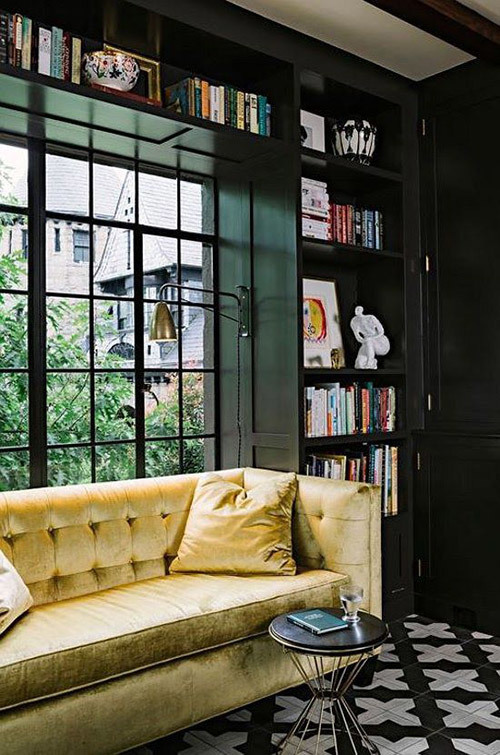
The thing about custom shelving is that it allows books to live almost anywhere within the home – up a high wall, down a staircase, in a neglected corner, at the bottom of a bed, and my favourite, around a door opening. Shelf height and depth can be calculated according to the number of paperbacks versus hardbacks and coffee table books.
Which leads me neatly to that subject. Look at any self-respecting living room and the coffee table is the surface that says the most about the interior. A pile of the latest cookery, architecture, design or interiors books declares your interest and your taste. Often styled with some carefully selected objects, a small vase of flowers and maybe a designer candle, the books become totemic, their graphics and cover design creating an object of desire in their own right – not just the supporting cast.
This idea of book covers as art can be started at an early age with slim display-style shelves for kids’ rooms where the book covers face outwards into the room, their colourful covers adding to the design treatment of the space. I am sure if you want your children, as Anna Quindlen does, to grow up loving books, it is a very good way to start.
Style in volumes
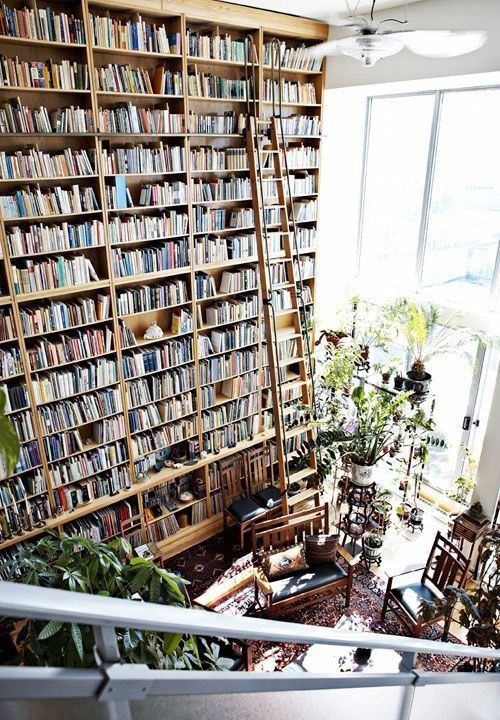 Image via apartmenttherapy.com
Karen McCartney writes about decorating with books, and starting young.
‘I would be most content if my children grew up to be the kind of people who think decorating consists mostly of building enough bookshelves,’ said American author Anna Quindlen, and she has a point. In these days of e–books, Kindle Paperwhite and Kobo Glo there is still tremendous power in the physicality of a book – it has a graphic presence, a colour, a form and as such it has place in the decorative lexicon.
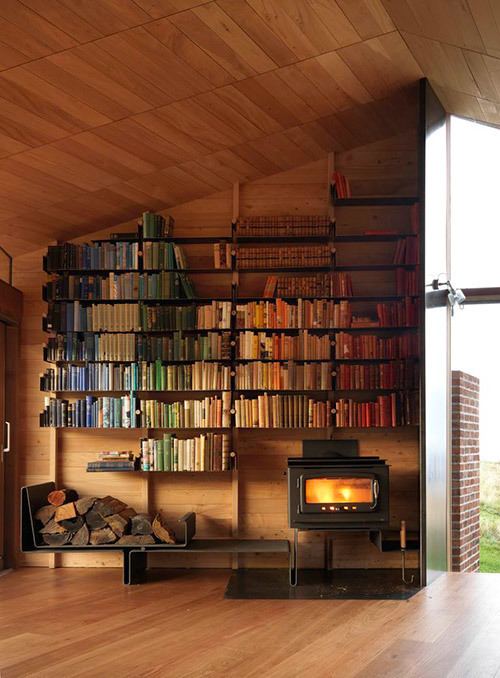 Image - Trevor Mein. Bruny Island home by John Wardle Architects.
While people who buy books for decorative use by the metre, for the effect of their spine colour rather than their content, are the exception, there is much to be said for a bit of colour management. I visited Melbourne architect John Wardle’s Bruny Island house where he had created a wall of books where orange and red spines (near the fire) bleed into greens and blue as it moved away from the heat. He joked that his mother was a librarian and would not have approved of his filing system.
 Shelves frame the window in a home designed by Nate Berkus.
The thing about custom shelving is that it allows books to live almost anywhere within the home – up a high wall, down a staircase, in a neglected corner, at the bottom of a bed, and my favourite, around a door opening. Shelf height and depth can be calculated according to the number of paperbacks versus hardbacks and coffee table books.
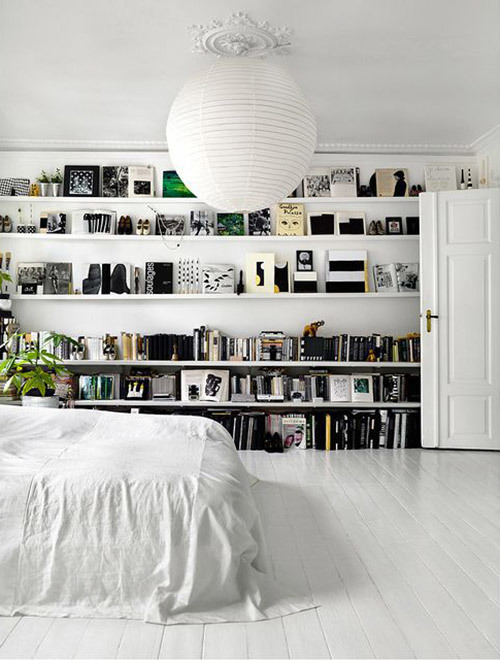 Image via Pinterest (source unknown)
Which leads me neatly to that subject. Look at any self-respecting living room and the coffee table is the surface that says the most about the interior. A pile of the latest cookery, architecture, design or interiors books declares your interest and your taste. Often styled with some carefully selected objects, a small vase of flowers and maybe a designer candle, the books become totemic, their graphics and cover design creating an object of desire in their own right – not just the supporting cast.
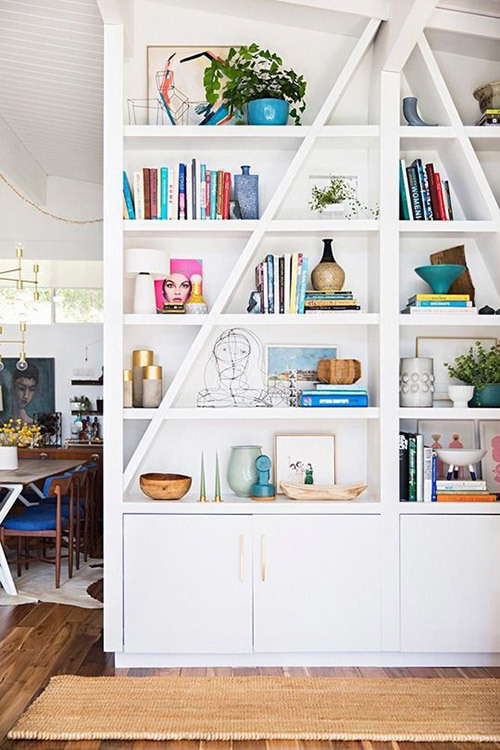 Custom shelves in Emily Henderson's LA home, via Domino.
This idea of book covers as art can be started at an early age with slim display-style shelves for kids’ rooms where the book covers face outwards into the room, their colourful covers adding to the design treatment of the space. I am sure if you want your children, as Anna Quindlen does, to grow up loving books, it is a very good way to start.
Explore More








Head Office (No Showroom)
2/1-7 Unwins Bridge Rd, St Peters,
NSW 2044, Australia
Your customer reference #:
01-X-CSN