



Updated 26 March 2021
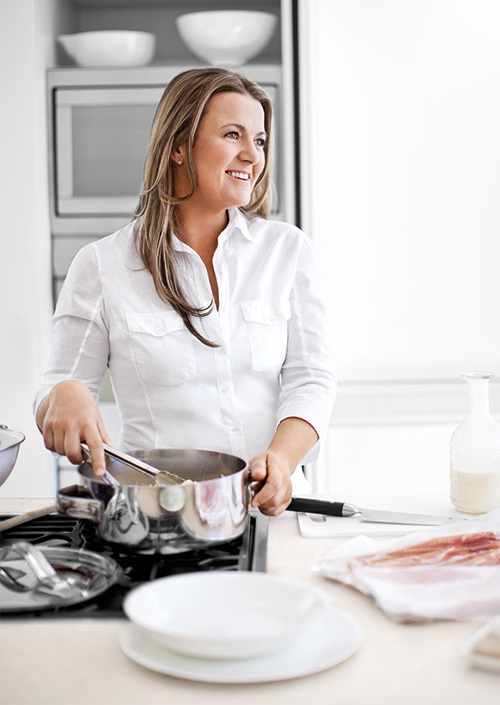
Karen McCartney interviews Donna Hay about family cooking, her unique style and her food philosophy.
Donna Hay, a household name in Australia, is making 2014 the year she takes the brand global in a significant way. From a childhood of chops and boiled veggies, she describes the impetus to create a new way of cooking with an emphasis on simplicity and speed without compromising plate presence.
Food at home
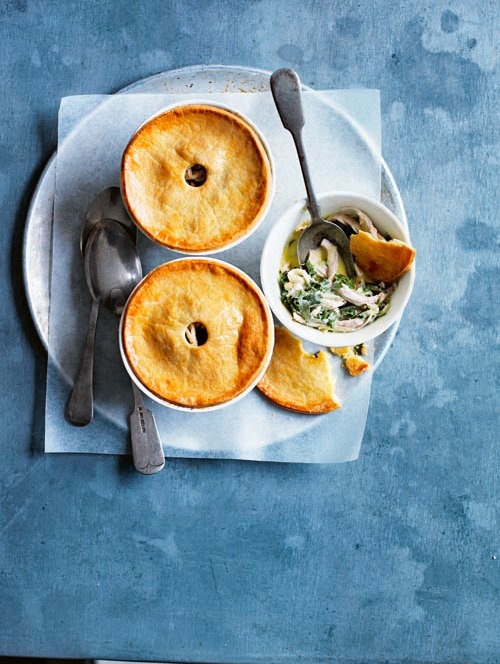
"Food at home was very Anglo, and when I look back, I think the conduit to my present career was my grandparents' enormous vegetable garden and fruit trees. I was given tasks such as picking the beans and peas and shelling them and we shared and bartered with cousins living nearby," says Donna. While her mother found cooking the daily meal a chore (she laments her mother's enthusiasm for healthy eating in the Eighties which involved tasteless wholemeal pastas – a lot), it did give Donna the understanding that cooking is not for everyone and that many people are time poor. "My mother was a nurse doing shift work and so it wasn't always easy for her to cook for her three girls," she says.
Hence Donna's style of cooking evolved out of a mix of appreciating that not everyone loves to cook, let alone has the time, paired with her naturally impatient personality. "I am always looking for fabulous but a little bit faster. Can it all go in one bowl, can the herb leaves be torn rather than chopped? What are the shortcuts?" she says.
A changing culture
While this may seem obvious today it is worth remembering that in the mid-Nineties the food culture in Australia, particularly in the media, was very different. "The dominant cuisines were traditional English and French and images were styled with flowers and napery and quite heavily lit," Donna recalls.
She was working out of a studio in Woolloomooloo alongside fashion editor Edwina McCann (now editor of Australian Vogue) and interiors stylist Sibella Court. "There was a hire studio next door where photographer Ben Watts shot and it was all so glamorous. I felt I was the daggy one – home cooking was so out of fashion – restaurants and take-away were cool – I was the dowdy Miss Doubtfire," she says.
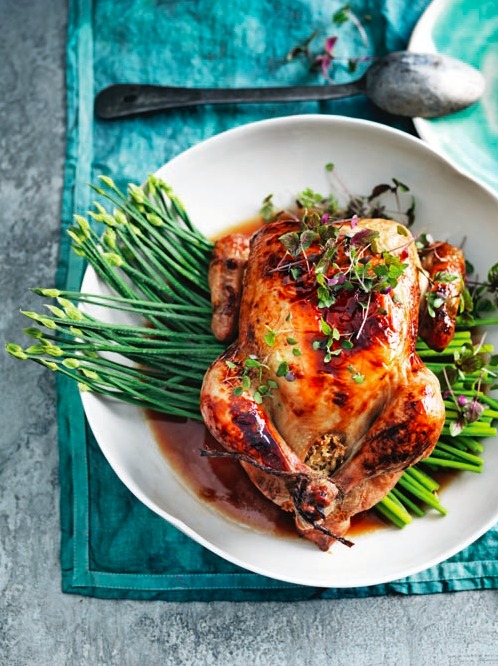
Miss Doubtfire or not, they were all enamoured with her roast chicken dinners and wanted to know the trick to cooking them.
"I knew that no-one could cook and so I would tell them in simple ways what to do, no chef-y language, and I always added any simplifications that made it easier. I wanted it to look beautiful but also I knew it had to be uncomplicated," says Donna.
Creativity first
Donna had won an award for a beer advertisement, shot with the painterly technique of photographic transfers, and had a first book called, 'At My Table' (1995) photographed by Quentin Bacon in the same manner already under her belt when the Fashion Director for Marie Claire came to the studio. Jane Roarty knew about food and knew talent when she saw it and before Donna could blink she was in front of editor Jackie Frank and recruited to the launch team of Marie Claire as Food Editor.
It was at Marie Claire that Donna developed the fresh approach to styling and photography that is her hallmark to this day.
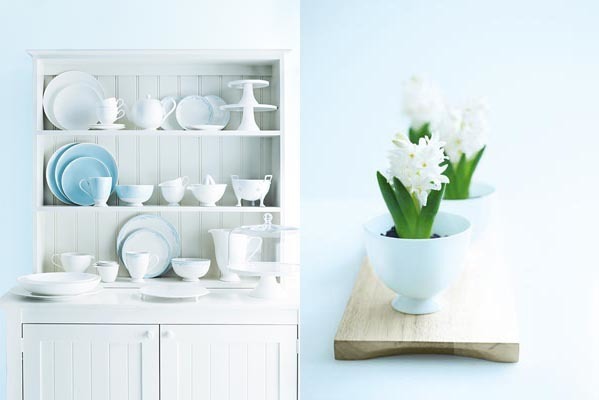
"Quentin was always happy to innovate and we tried the white- on-white approach and gradually moved away from imitating daylight in the studio to actually shooting in daylight," says Donna.
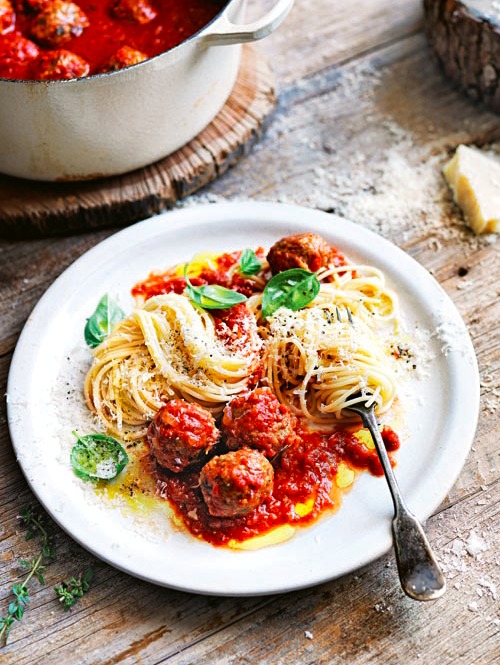
And so visuals came to mirror the philosophy of the food with a minimum of fuss, food that was packed with flavour and a certain casualness of presentation (throwing in the rocket in one bunch was not unheard of) that communicated an attitude of ease and lack of preciousness. It was very Australian and modern and Donna remembers that "The French (who owned the Marie Claire franchise) hated it initially."
A magazine to call her own
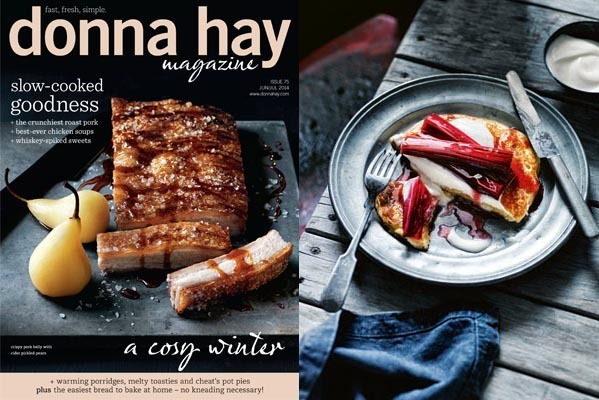
Nowadays with her own magazine (launched in 2001, she is able to push the boundaries of her vision in her test kitchen. "We are always experimenting, always testing the principle of taking it back to something simpler, finding clever shortcuts. It is at the core of the brand's success," she says.
This constant drive to build ease into the very heart of her recipes is matched only by the beauty of the photography and design treatment of the magazine. She understands the power of uplifting imagery - which even extends to those that buy the magazine despite the fact they rarely cook simply to be inspired visually. It is therefore no surprise that she is more frequently in the art department than in her own office. "We like to create a narrative, give the people featured in the shoot a back-story so that it works on many levels beyond that of the food," says Donna.
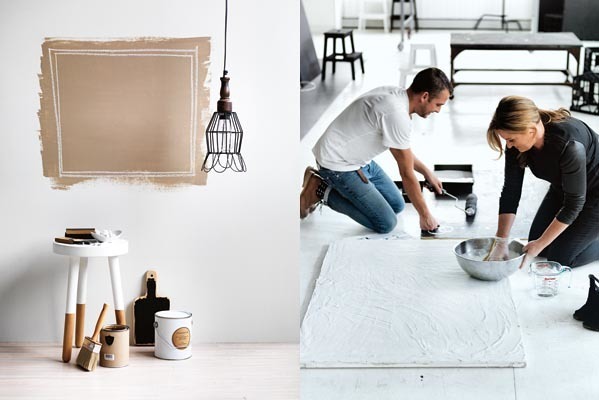
For someone who grew bored with simply plating up food for photography she has pushed creative boundaries to marry food and interior styling, merging these worlds to ensure new narratives are told about an age old art. The same is true of the 23 cook books which have collectively sold over 4.5 million copies globally.
A world of opportunity
When you are enticing so many women (and men, and kids) into the kitchen you are much in demand as a commercial partner and she is not short of offers for collaborations and endorsements. How does she chose? "They need to have a similar brand aesthetic; this isn't always visual, it is more based on what they have done, and also what they have not done," she says. For example Royal Doulton has a Donna Hay range of dinnerware, she is doing a second TV series with the Lifestyle Channel following on from the success of 'Fast Fresh Simple' in 2011 and she has Donna Hay Home Baking (a cookie, brownie and cupcake range which my daughter loves with a passion). Not to mention her own online store – the Donna Hay General Store – selling books, DVDs, cookware, tableware and brands whose function and aesthetic she admires, such as Le Creuset.
Family time
With all this, and more going on, how does she make time for her two boys? "As a mother I now work differently. I genuinely don't sweat the small stuff – I simply don't have the headspace. If one of them gets sick it make me aware of what is important and what is not", says Donna.
When she does agree to speak publically, not something she naturally enjoys, she makes sure that she is clear about not apologising for doing things for her children. But she runs her own show, I point out, and can make up her own rules, "The reason that I say it, such as at a talk for Office Professionals Day, is that the bosses are in the room and it might make them think twice. I am sure attitudes will change albeit slowly", she says.
But if this is to be a year of expansion how does she balance global travel plans with the children's schedule? "We travel in the school holidays and they are now old enough to appreciate the experience and for it to create memories for life" says Donna.
And, as one of her eldest son's ambitions is to meet Jamie Oliver it is handy he has Donna Hay as a mum.
You can also follow Donna on Pinterest or on Instagram @donnahaymagazine.
Karen McCartney interviews Donna Hay
Karen McCartney interviews Donna Hay about family cooking, her unique style and her food philosophy.
Donna Hay, a household name in Australia, is making 2014 the year she takes the brand global in a significant way. From a childhood of chops and boiled veggies, she describes the impetus to create a new way of cooking with an emphasis on simplicity and speed without compromising plate presence.
Food at home
"Food at home was very Anglo, and when I look back, I think the conduit to my present career was my grandparents' enormous vegetable garden and fruit trees. I was given tasks such as picking the beans and peas and shelling them and we shared and bartered with cousins living nearby," says Donna. While her mother found cooking the daily meal a chore (she laments her mother's enthusiasm for healthy eating in the Eighties which involved tasteless wholemeal pastas – a lot), it did give Donna the understanding that cooking is not for everyone and that many people are time poor. "My mother was a nurse doing shift work and so it wasn't always easy for her to cook for her three girls," she says.
Hence Donna's style of cooking evolved out of a mix of appreciating that not everyone loves to cook, let alone has the time, paired with her naturally impatient personality. "I am always looking for fabulous but a little bit faster. Can it all go in one bowl, can the herb leaves be torn rather than chopped? What are the shortcuts?" she says.
A changing culture
While this may seem obvious today it is worth remembering that in the mid-Nineties the food culture in Australia, particularly in the media, was very different. "The dominant cuisines were traditional English and French and images were styled with flowers and napery and quite heavily lit," Donna recalls.
She was working out of a studio in Woolloomooloo alongside fashion editor Edwina McCann (now editor of Australian Vogue) and interiors stylist Sibella Court. "There was a hire studio next door where photographer Ben Watts shot and it was all so glamorous. I felt I was the daggy one – home cooking was so out of fashion – restaurants and take-away were cool – I was the dowdy Miss Doubtfire," she says.
Miss Doubtfire or not, they were all enamoured with her roast chicken dinners and wanted to know the trick to cooking them.
"I knew that no-one could cook and so I would tell them in simple ways what to do, no chef-y language, and I always added any simplifications that made it easier. I wanted it to look beautiful but also I knew it had to be uncomplicated," says Donna.
Creativity first
Donna had won an award for a beer advertisement, shot with the painterly technique of photographic transfers, and had a first book called, 'At My Table' (1995) photographed by Quentin Bacon in the same manner already under her belt when the Fashion Director for Marie Claire came to the studio. Jane Roarty knew about food and knew talent when she saw it and before Donna could blink she was in front of editor Jackie Frank and recruited to the launch team of Marie Claire as Food Editor.
It was at Marie Claire that Donna developed the fresh approach to styling and photography that is her hallmark to this day.
"Quentin was always happy to innovate and we tried the white- on-white approach and gradually moved away from imitating daylight in the studio to actually shooting in daylight," says Donna.
And so visuals came to mirror the philosophy of the food with a minimum of fuss, food that was packed with flavour and a certain casualness of presentation (throwing in the rocket in one bunch was not unheard of) that communicated an attitude of ease and lack of preciousness. It was very Australian and modern and Donna remembers that "The French (who owned the Marie Claire franchise) hated it initially."
A magazine to call her own
Nowadays with her own magazine (launched in 2001, she is able to push the boundaries of her vision in her test kitchen. "We are always experimenting, always testing the principle of taking it back to something simpler, finding clever shortcuts. It is at the core of the brand's success," she says.
This constant drive to build ease into the very heart of her recipes is matched only by the beauty of the photography and design treatment of the magazine. She understands the power of uplifting imagery - which even extends to those that buy the magazine despite the fact they rarely cook simply to be inspired visually. It is therefore no surprise that she is more frequently in the art department than in her own office. "We like to create a narrative, give the people featured in the shoot a back-story so that it works on many levels beyond that of the food," says Donna.
For someone who grew bored with simply plating up food for photography she has pushed creative boundaries to marry food and interior styling, merging these worlds to ensure new narratives are told about an age old art. The same is true of the 23 cook books which have collectively sold over 4.5 million copies globally.
A world of opportunity
When you are enticing so many women (and men, and kids) into the kitchen you are much in demand as a commercial partner and she is not short of offers for collaborations and endorsements. How does she chose? "They need to have a similar brand aesthetic; this isn't always visual, it is more based on what they have done, and also what they have not done," she says. For example Royal Doulton has a Donna Hay range of dinnerware, she is doing a second TV series with the Lifestyle Channel following on from the success of 'Fast Fresh Simple' in 2011 and she has Donna Hay Home Baking (a cookie, brownie and cupcake range which my daughter loves with a passion). Not to mention her own online store – the Donna Hay General Store – selling books, DVDs, cookware, tableware and brands whose function and aesthetic she admires, such as Le Creuset.
Family time
With all this, and more going on, how does she make time for her two boys? "As a mother I now work differently. I genuinely don't sweat the small stuff – I simply don't have the headspace. If one of them gets sick it make me aware of what is important and what is not", says Donna.
When she does agree to speak publically, not something she naturally enjoys, she makes sure that she is clear about not apologising for doing things for her children. But she runs her own show, I point out, and can make up her own rules, "The reason that I say it, such as at a talk for Office Professionals Day, is that the bosses are in the room and it might make them think twice. I am sure attitudes will change albeit slowly", she says.
But if this is to be a year of expansion how does she balance global travel plans with the children's schedule? "We travel in the school holidays and they are now old enough to appreciate the experience and for it to create memories for life" says Donna.
And, as one of her eldest son's ambitions is to meet Jamie Oliver it is handy he has Donna Hay as a mum.
You can also follow Donna on Pinterest or on Instagram @donnahaymagazine.
Explore More








Head Office (No Showroom)
2/1-7 Unwins Bridge Rd, St Peters,
NSW 2044, Australia
Your customer reference #:
01-X-CSN