



Updated 16 February 2021
In a new series, Natalie Walton, creator of the recently relaunched Daily Imprint, revisits a few of her many interview subjects to find out about their continuing creative journeys. To kick off: architect, designer and homewares innovator Marika Järv (pictured above).
It's been almost eight years since Daily Imprint was launched. During that time I have interviewed more than 1000 people in the visual arts – from artists to designers, photographers to writers and architects to florists. The site is about to be archived by the National Library of Australia, which is a huge honour. After relaunching the site recently, I thought it would be interesting to revisit some of the interviews from the early days and learn how these people have progressed on their creative journeys.
Meet Marika Järv, architect and designer. She was originally featured on Daily Imprint on 17 March 2009.
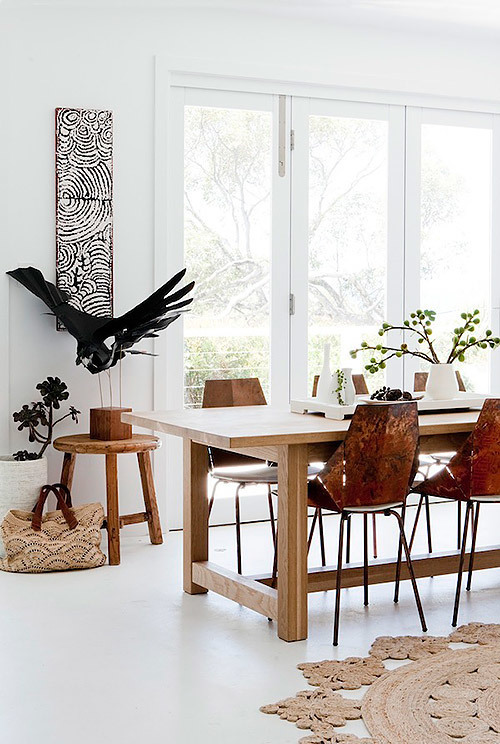
Marika's Avalon home.
You were featured on Daily Imprint at the start of 2009 and at the time we featured your Print Dolls "All Stops To" prints, which went on to be copied all over the world. What was that experience like and why did you decide to do another art series with "Wall of Sound"?
Oh gosh yes, the "All Stops To" destination scrolls were copied everywhere. I've even seen destination scrolls printed on beach towels and surf rash vests! Look, I can laugh about the copycats now, but at the time it was admittedly a bit heartbreaking. The worst thing was that the copies were so poorly done, and once they started flooding the retail stores, people would think they were my designs and I'd be like "Noooooo! Please don't think that!" There were numerous examples of others not only copying my work, but then blatantly lying about it, which I found totally bizarre. You know, it's bad enough to steal/copy another's work, but to then not even have the decency to admit it… However, my approach has always been to learn from negative experiences, and so those incidences simply reinforced how important it is for me to live life with honesty and integrity.
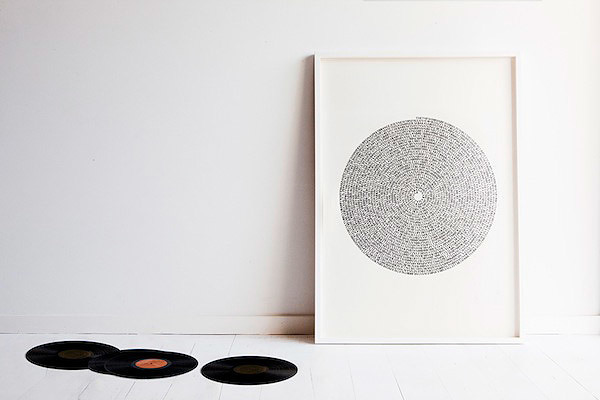
As for "Wall of Sound" (pictured above), it started out as a game, and then turned into a concept I dreamt up not long after "All Stops To" was released. Before kids, one of my favourite pastimes was attending music festivals – and this piece was envisaged as a homage to all the super-fun times I'd had frolicking around at them with my friends. I guess I thought Wall of Sound was an amusing, clever little idea, that was worth sharing with all the other music lovers out there.
You trained as an architect, and have always worked in this field, what do you enjoy about this type of work? Is this your first love?
Yes, architecture is definitely my first love, creating prints has always been a side project for me. After high school I knew my career had to be creative, but I also wanted to be able to use my technical side – yes, the nerd in me loved maths, as well as art. Thankfully I ended up being one of those lucky people who loves their work. I really missed it when on maternity leave. Architecture is such a diverse, complex profession – it's so rewarding. There is obviously the creative side, but I also really enjoy the problem-solving aspects, and being logical; you have to be able to see the project as a whole, even whilst designing the tiniest detail.
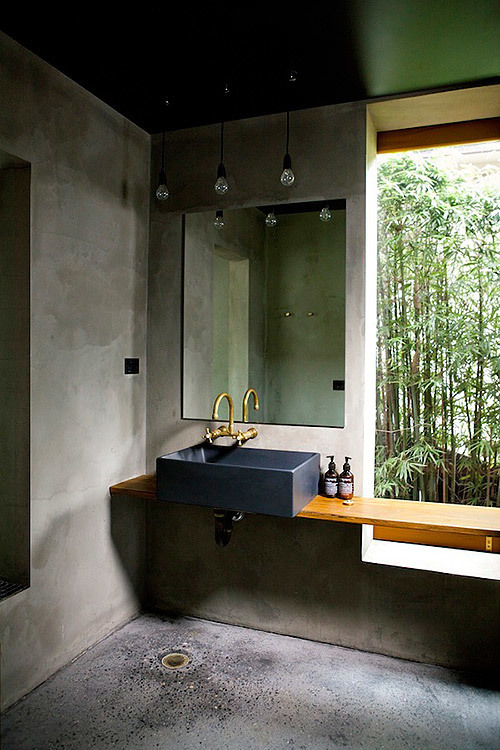
Marika designed this North Bondi bathroom with rendered walls, polished concrete floors and recycled timber benches.
Previously you spoke about your role in the architectural firm of Peter Stutchbury – does that time continue to influence your aesthetic? Or has a new one emerged? And how would you describe your style?
Working for Pete was a huge blessing, he's such a generous teacher, and will forever have an influence on my work. There are fundamental principles I learnt from him – like the importance of the connection between the inside and outside environments, and the use of a restrained material palette – that will always apply to my projects. Pete is such an original thinker though, and is not at all concerned with trends, whereas I have to admit to my fondness for fashion, so that can't help but spill a little into my work. Living by the beach has always influenced me, so I'd describe my style as pretty relaxed and understated, but with a deep appreciation for thoughtful and beautiful design, as I do like a bit of luxury. Our own home is very white, with hits of black, along with pale timbers and coppers for warmth, and lots of plants for greenery.
How much of a role do you play in creating interiors for clients? What do you consider to be important about the balance between architecture and interior design?
Architecture is never only about the shell of a building; what's inside is just as important. When I'm in the initial spatial planning stage, I always imagine how a space is going to be used, where the furniture will be placed, how the occupants will walk around the room, and the relationship to the outside, which in turn influences the location of openings, light and structure. My role with interiors depends a little on the job, however I always try to be involved with the selection of fixtures and finishes. I believe the most successful projects are those where both inside and outside have been considered as one. For example, my current project is the refurbishment of an existing property in Mosman, where the majority of work involves the complete overhaul of the interior. However, the re-planning has also generated changes to the entry, other openings, roof and landscaping.
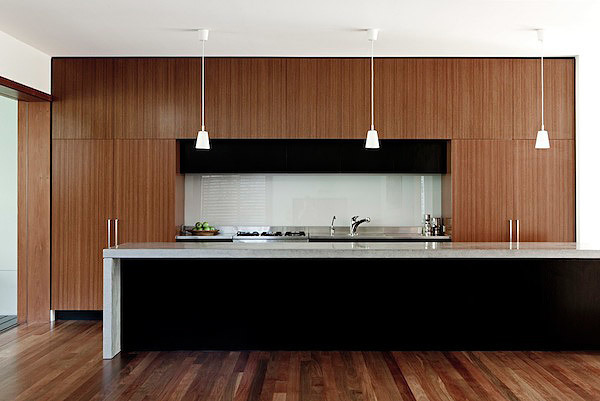
An Avalon kitchen designed by Marika.
What are your current career goals?
After recently purchasing our first home, I've become quite inspired to offer clients a service where their project is dealt with as a totality – that is, in addition to architectural services, to also assist with the finer details, such as the selection of furniture, soft furnishings and artwork – allowing for the design aesthetic to be truly considered, cohesive and refined in its entirety. I'd also like to start doing some commercial work, a wine-bar or restaurant would be fun. I've previously designed the graphics for a close friend's restaurant, and it'd be great to combine something like that with the architectural side of things as well.
Images courtesy of Marika Jarv
Subscribe to Daily Imprint for a daily dose of creativity, or follow on Instagram @imprint_house.
Daily Imprint presents Marika Jarv
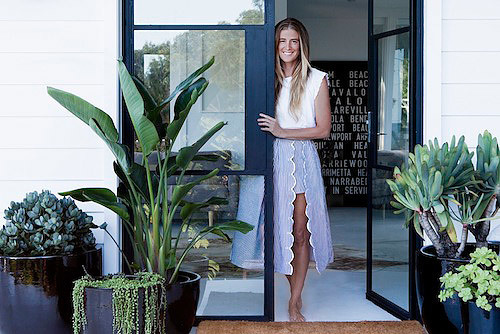
In a new series, Natalie Walton, creator of the recently relaunched Daily Imprint, revisits a few of her many interview subjects to find out about their continuing creative journeys. To kick off: architect, designer and homewares innovator Marika Järv (pictured above).
It's been almost eight years since Daily Imprint was launched. During that time I have interviewed more than 1000 people in the visual arts – from artists to designers, photographers to writers and architects to florists. The site is about to be archived by the National Library of Australia, which is a huge honour. After relaunching the site recently, I thought it would be interesting to revisit some of the interviews from the early days and learn how these people have progressed on their creative journeys.
Meet Marika Järv, architect and designer. She was originally featured on Daily Imprint on 17 March 2009.
Marika's Avalon home.
You were featured on Daily Imprint at the start of 2009 and at the time we featured your Print Dolls "All Stops To" prints, which went on to be copied all over the world. What was that experience like and why did you decide to do another art series with "Wall of Sound"?
Oh gosh yes, the "All Stops To" destination scrolls were copied everywhere. I've even seen destination scrolls printed on beach towels and surf rash vests! Look, I can laugh about the copycats now, but at the time it was admittedly a bit heartbreaking. The worst thing was that the copies were so poorly done, and once they started flooding the retail stores, people would think they were my designs and I'd be like "Noooooo! Please don't think that!" There were numerous examples of others not only copying my work, but then blatantly lying about it, which I found totally bizarre. You know, it's bad enough to steal/copy another's work, but to then not even have the decency to admit it… However, my approach has always been to learn from negative experiences, and so those incidences simply reinforced how important it is for me to live life with honesty and integrity.
As for "Wall of Sound" (pictured above), it started out as a game, and then turned into a concept I dreamt up not long after "All Stops To" was released. Before kids, one of my favourite pastimes was attending music festivals – and this piece was envisaged as a homage to all the super-fun times I'd had frolicking around at them with my friends. I guess I thought Wall of Sound was an amusing, clever little idea, that was worth sharing with all the other music lovers out there.
You trained as an architect, and have always worked in this field, what do you enjoy about this type of work? Is this your first love?
Yes, architecture is definitely my first love, creating prints has always been a side project for me. After high school I knew my career had to be creative, but I also wanted to be able to use my technical side – yes, the nerd in me loved maths, as well as art. Thankfully I ended up being one of those lucky people who loves their work. I really missed it when on maternity leave. Architecture is such a diverse, complex profession – it's so rewarding. There is obviously the creative side, but I also really enjoy the problem-solving aspects, and being logical; you have to be able to see the project as a whole, even whilst designing the tiniest detail.
Marika designed this North Bondi bathroom with rendered walls, polished concrete floors and recycled timber benches.
Previously you spoke about your role in the architectural firm of Peter Stutchbury – does that time continue to influence your aesthetic? Or has a new one emerged? And how would you describe your style?
Working for Pete was a huge blessing, he's such a generous teacher, and will forever have an influence on my work. There are fundamental principles I learnt from him – like the importance of the connection between the inside and outside environments, and the use of a restrained material palette – that will always apply to my projects. Pete is such an original thinker though, and is not at all concerned with trends, whereas I have to admit to my fondness for fashion, so that can't help but spill a little into my work. Living by the beach has always influenced me, so I'd describe my style as pretty relaxed and understated, but with a deep appreciation for thoughtful and beautiful design, as I do like a bit of luxury. Our own home is very white, with hits of black, along with pale timbers and coppers for warmth, and lots of plants for greenery.
How much of a role do you play in creating interiors for clients? What do you consider to be important about the balance between architecture and interior design?
Architecture is never only about the shell of a building; what's inside is just as important. When I'm in the initial spatial planning stage, I always imagine how a space is going to be used, where the furniture will be placed, how the occupants will walk around the room, and the relationship to the outside, which in turn influences the location of openings, light and structure. My role with interiors depends a little on the job, however I always try to be involved with the selection of fixtures and finishes. I believe the most successful projects are those where both inside and outside have been considered as one. For example, my current project is the refurbishment of an existing property in Mosman, where the majority of work involves the complete overhaul of the interior. However, the re-planning has also generated changes to the entry, other openings, roof and landscaping.
An Avalon kitchen designed by Marika.
What are your current career goals?
After recently purchasing our first home, I've become quite inspired to offer clients a service where their project is dealt with as a totality – that is, in addition to architectural services, to also assist with the finer details, such as the selection of furniture, soft furnishings and artwork – allowing for the design aesthetic to be truly considered, cohesive and refined in its entirety. I'd also like to start doing some commercial work, a wine-bar or restaurant would be fun. I've previously designed the graphics for a close friend's restaurant, and it'd be great to combine something like that with the architectural side of things as well.
Images courtesy of Marika Jarv
Subscribe to Daily Imprint for a daily dose of creativity, or follow on Instagram @imprint_house.
Explore More








Head Office (No Showroom)
2/1-7 Unwins Bridge Rd, St Peters,
NSW 2044, Australia
Your customer reference #:
01-X-CSN