


Blog

Updated 25 May 2021
Anne-Maree Sargeant on Milan 2012
Anne-Maree Sargeant describes the Milan International Furniture Fair (or Salone Internazionale del Mobile, which sounds much more romantic) as "five days of calamity, where one absorbs as much design inspiration as possible whilst enduring sore feet, lengthening arms (thanks to increasingly being laden with bags of brochures and press kits), and little sleep – all set to the picturesque backdrop of historic central Milan, topped off with lashings of pasta, a whirl of cocktail events, and inevitably – several new pairs of shoes!!"
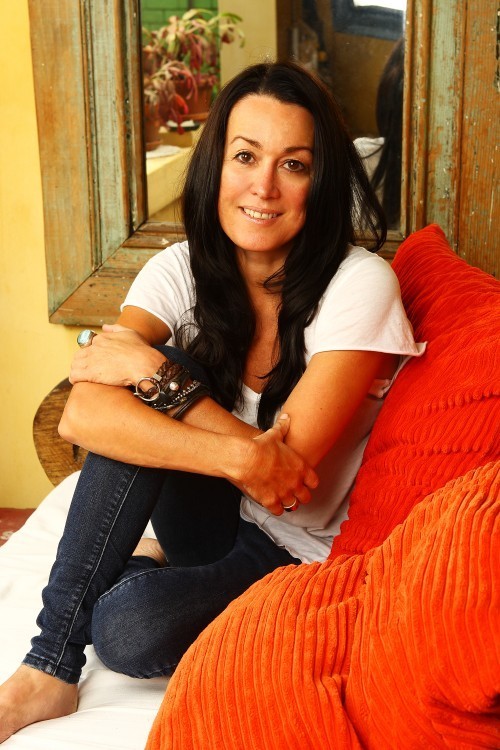
It sounds like a fabulous but completely overwhelming experience. Anne-Maree is well equipped to navigate the event, having attended regularly since 1988. Now editor-at-large for Belle magazine, creator of (and blogger at) The SNAP Assembly and brand & business consultant, we asked her to share with us her take on Milan 2012 and what it means for the Australian market.
Can you tell us about the Salone Internazionale del Mobile?
Now in its 52nd year, the Milan International Furniture Fair, or Salone del Mobile, began as a trade fair for Italian furniture, lighting, kitchen and bathroom manufacturers to target lucrative export markets. Milan Design Week is now the largest global creative gathering, attracting the biggest concentration of style-makers, innovators, influencers and design pundits – all seeking the newest and most inspiring interior products and trends.
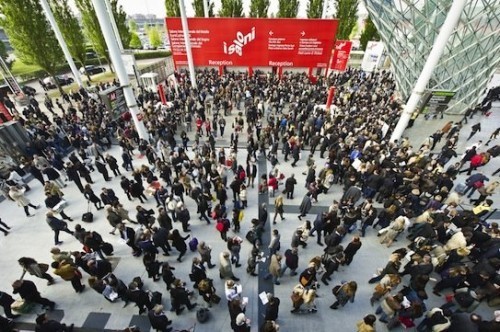
What began in the former 'official' exhibition grounds has, over time, expanded into a newer, vastly expanded exhibition area that plays host to 300,000 visitors, more than half of the attendees foreign. Aside from the 'official' exhibition grounds there are satellite events across Milan – where EVERY available showroom, gallery, piazza, shop window, even car park and garden, is dedicated to an affiliated installation. In reality, the entire event is simply impossible to cover in 5 days; and the impact of Milan Fashion Week on the city is completely dwarfed by comparison to Salone.
What is the purpose of the event now?
Everyone is there for different reasons. Product designers aiming to connect with elite manufacturers in the hope of licensing their own designs for mass production; interior designers & architects honing knowledge on the latest directions in product / colour / texture / materials; the assembled media contingent sniffing out trends and new hot design talent; buyers fulfilling their buying quotas; design brands fulfilling sales targets; collectors and private customers directly purchasing for themselves – the reasons for attending are as vast as the diversity of what's on display.
What trends did you identify this year?
Colour trends are still jumping off the catwalk and into the living room. COLOUR blocking dominating, this year joined by its near cousin – PATTERN blocking – colour blocking with inserted of blocks of pattern. This is seen on tabletops at Missoni Home, outdoor tables at B&B Italia, shelving by RAW EDGES at Established&Sons, and low table surfaces at Moroso. In terms of colour, shades of yellow and teal remain, but the dominant colour is undoubtedly blue – from royal to cobalt, blue appears in many guises.
Europe is still very firmly affected by the recent global recession, and this year was noticeably tame. Marketing budgets were savagely shaved, reflective of sombre sales expectations. As with the last recession, many big brands opted to re-issue existing products in new finishes or colourways – a cost-effective way of attempting to present something 'new' whilst avoiding the huge expense of research and development, tooling for production, and extensive marketing costs associated with launch an entirely new product.
A successful example of re-jigging an existing product in new finishes was the limited edition POLDER Sofa by Hella Jongerius for Vitra. Being made in a limited run of 100 pieces, Jongerius deftly melded tartan-esque patterns, layering the same tone of brown, reinventing the product as a result.
What about kitchens and bathrooms?
The bi-annual international kitchen and bathroom installation Euro-Cucina followed suit, with the conspicuous absence of a few key players, and those who did participate at RHO FIERA – the official exhibition ground – were largely showing existing kitchen models in new finishes – with rough sawn timber (stained light or dark) destined to be the next big thing to take off in kitchen and bathroom design. Larch, a timber used to clad building exteriors, is set to spike in popularity both in kitchen benches, walls and cabinetry – rough & unfinished; although more refined when used for a bath, basin and shower base.
What product(s) or designer(s) did you love?
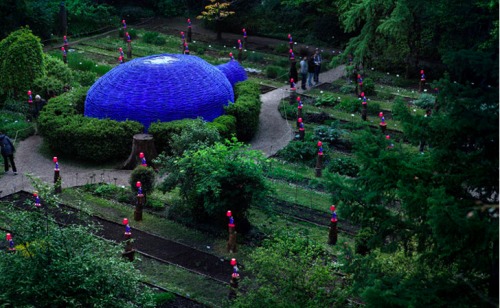
Architect, designer and creative director Paola Navone created The Secret Garden for 700 year-old Italian luxury glassmakers Barovier & Toso – in a private botanical garden in the cobbled Brera district, a space so private that few of my Milanese friends have visited. Walled on three sides by patrician housing, and the Brera Academy on the fourth, the setting so magical it is difficult to re-describe. Pathways meander through the structured gardens, each plant tagged with a hand written botanical name; amid this, Navone set large woven bamboo pods, finished in her signature cobalt blue, each encasing mind-blowingly beautiful over-scale chandeliers, viewed through peep holes that reveal the lumieres juxtaposed against scrunched up builders foil that lined the pod interior. The experience of The Secret Garden best describes a 'Milan Moment,' one not to be found elsewhere, and an experience that's not readily forgotten!
Oki Sato who heads up Nendo, is young, hot, happening and everywhere. Nendo's work was with too many brands to list, but the bathroom furniture collection for luxury Italian brand Bisazza was standout, as was the Growing Vases chandelier they did for Czech glass company LASVIT.
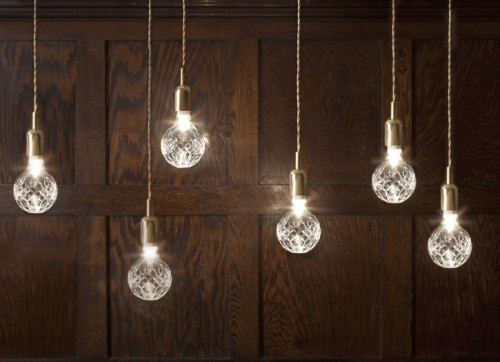
Brit designer Lee Broom, recipient of 'Elle Decoration Young Designer of Year 2011', held one of the best debut installations in recent years. Having purchased the interior of an old English pub, Broom reused that timber cabinetry, mirrors and even the bar as the backdrop of his new collection of lighting, and existing line of furniture, carpets and lighting. In essence his work is bespoke in the true sense of the word – consistently collaborating with ateliers and drawing their tradition and craft into the contemporary - his new collection of crystal lighting made by Britain's oldest crystal house.
What impact does Milan have on the Australian market?
What is on display in Milan arrives in store locally here within 4 – 18 months of the product first being exhibited. With the advent of the internet, the impact of Salone on the Australian market is pretty instant – as visitors and media Tweet / Pinterest / Facebook & YouTube events as they happen – it's now much easier (not to mention cheaper!!) to experience the event vicariously, as the internet gives broad, accurate and in the moment coverage – and leaves extended taxi queues, sardine-like crowded trains, and dashes across piazzas in torrential downpours for dead!
Like any industry, innovation happens at the top. This may be the result of refined material use, or a newly developed material, a new manufacturing capability, the inventive re-use of existing materials, or texture and pattern innovation - the innovation list goes on - there's an inevitability that leaders are followed. On an intelligent level, following can mean the trends are reapplied and reinterpretated. And, unfortunately, there are those who simply plagiarize these original ideas, perpetuating the proliferation of the 'copy' designer furniture market – the dark side of 'following', where no regard is applied for the original idea a designer developed, or the several years it took for the designer to collaborate with the manufacturer, and vast investment into tooling for manufacture and marketing required to bring that innovation to market.
It sounds like a fabulous but completely overwhelming experience. Anne-Maree is well equipped to navigate the event, having attended regularly since 1988. Now editor-at-large for Belle magazine, creator of (and blogger at) The SNAP Assembly and brand & business consultant, we asked her to share with us her take on Milan 2012 and what it means for the Australian market.
Can you tell us about the Salone Internazionale del Mobile?
Now in its 52nd year, the Milan International Furniture Fair, or Salone del Mobile, began as a trade fair for Italian furniture, lighting, kitchen and bathroom manufacturers to target lucrative export markets. Milan Design Week is now the largest global creative gathering, attracting the biggest concentration of style-makers, innovators, influencers and design pundits – all seeking the newest and most inspiring interior products and trends.
What began in the former 'official' exhibition grounds has, over time, expanded into a newer, vastly expanded exhibition area that plays host to 300,000 visitors, more than half of the attendees foreign. Aside from the 'official' exhibition grounds there are satellite events across Milan – where EVERY available showroom, gallery, piazza, shop window, even car park and garden, is dedicated to an affiliated installation. In reality, the entire event is simply impossible to cover in 5 days; and the impact of Milan Fashion Week on the city is completely dwarfed by comparison to Salone.
What is the purpose of the event now?
Everyone is there for different reasons. Product designers aiming to connect with elite manufacturers in the hope of licensing their own designs for mass production; interior designers & architects honing knowledge on the latest directions in product / colour / texture / materials; the assembled media contingent sniffing out trends and new hot design talent; buyers fulfilling their buying quotas; design brands fulfilling sales targets; collectors and private customers directly purchasing for themselves – the reasons for attending are as vast as the diversity of what's on display.
What trends did you identify this year?
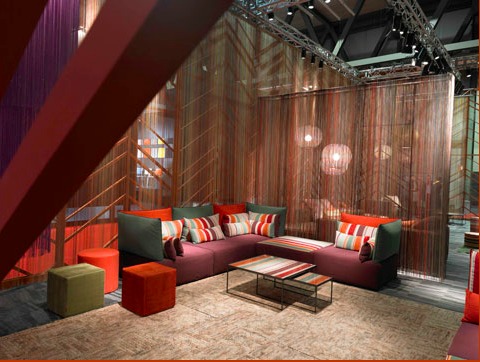
Colour trends are still jumping off the catwalk and into the living room. COLOUR blocking dominating, this year joined by its near cousin – PATTERN blocking – colour blocking with inserted of blocks of pattern. This is seen on tabletops at Missoni Home, outdoor tables at B&B Italia, shelving by RAW EDGES at Established&Sons, and low table surfaces at Moroso. In terms of colour, shades of yellow and teal remain, but the dominant colour is undoubtedly blue – from royal to cobalt, blue appears in many guises.
Europe is still very firmly affected by the recent global recession, and this year was noticeably tame. Marketing budgets were savagely shaved, reflective of sombre sales expectations. As with the last recession, many big brands opted to re-issue existing products in new finishes or colourways – a cost-effective way of attempting to present something 'new' whilst avoiding the huge expense of research and development, tooling for production, and extensive marketing costs associated with launch an entirely new product.
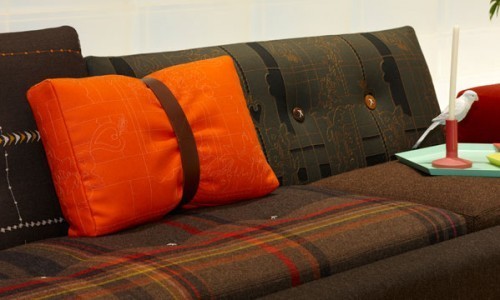
A successful example of re-jigging an existing product in new finishes was the limited edition POLDER Sofa by Hella Jongerius for Vitra. Being made in a limited run of 100 pieces, Jongerius deftly melded tartan-esque patterns, layering the same tone of brown, reinventing the product as a result.
What about kitchens and bathrooms?
The bi-annual international kitchen and bathroom installation Euro-Cucina followed suit, with the conspicuous absence of a few key players, and those who did participate at RHO FIERA – the official exhibition ground – were largely showing existing kitchen models in new finishes – with rough sawn timber (stained light or dark) destined to be the next big thing to take off in kitchen and bathroom design. Larch, a timber used to clad building exteriors, is set to spike in popularity both in kitchen benches, walls and cabinetry – rough & unfinished; although more refined when used for a bath, basin and shower base.
What product(s) or designer(s) did you love?
Architect, designer and creative director Paola Navone created The Secret Garden for 700 year-old Italian luxury glassmakers Barovier & Toso – in a private botanical garden in the cobbled Brera district, a space so private that few of my Milanese friends have visited. Walled on three sides by patrician housing, and the Brera Academy on the fourth, the setting so magical it is difficult to re-describe. Pathways meander through the structured gardens, each plant tagged with a hand written botanical name; amid this, Navone set large woven bamboo pods, finished in her signature cobalt blue, each encasing mind-blowingly beautiful over-scale chandeliers, viewed through peep holes that reveal the lumieres juxtaposed against scrunched up builders foil that lined the pod interior. The experience of The Secret Garden best describes a 'Milan Moment,' one not to be found elsewhere, and an experience that's not readily forgotten!
Oki Sato who heads up Nendo, is young, hot, happening and everywhere. Nendo's work was with too many brands to list, but the bathroom furniture collection for luxury Italian brand Bisazza was standout, as was the Growing Vases chandelier they did for Czech glass company LASVIT.
Brit designer Lee Broom, recipient of 'Elle Decoration Young Designer of Year 2011', held one of the best debut installations in recent years. Having purchased the interior of an old English pub, Broom reused that timber cabinetry, mirrors and even the bar as the backdrop of his new collection of lighting, and existing line of furniture, carpets and lighting. In essence his work is bespoke in the true sense of the word – consistently collaborating with ateliers and drawing their tradition and craft into the contemporary - his new collection of crystal lighting made by Britain's oldest crystal house.
What impact does Milan have on the Australian market?
What is on display in Milan arrives in store locally here within 4 – 18 months of the product first being exhibited. With the advent of the internet, the impact of Salone on the Australian market is pretty instant – as visitors and media Tweet / Pinterest / Facebook & YouTube events as they happen – it's now much easier (not to mention cheaper!!) to experience the event vicariously, as the internet gives broad, accurate and in the moment coverage – and leaves extended taxi queues, sardine-like crowded trains, and dashes across piazzas in torrential downpours for dead!
Like any industry, innovation happens at the top. This may be the result of refined material use, or a newly developed material, a new manufacturing capability, the inventive re-use of existing materials, or texture and pattern innovation - the innovation list goes on - there's an inevitability that leaders are followed. On an intelligent level, following can mean the trends are reapplied and reinterpretated. And, unfortunately, there are those who simply plagiarize these original ideas, perpetuating the proliferation of the 'copy' designer furniture market – the dark side of 'following', where no regard is applied for the original idea a designer developed, or the several years it took for the designer to collaborate with the manufacturer, and vast investment into tooling for manufacture and marketing required to bring that innovation to market.
Explore More



Payment options





Head Office (No Showroom)
2/1-7 Unwins Bridge Rd, St Peters,
NSW 2044, Australia
Your customer reference #:
01-X-CSN