



Updated 16 February 2021
6 tips and tricks for choosing & hanging art
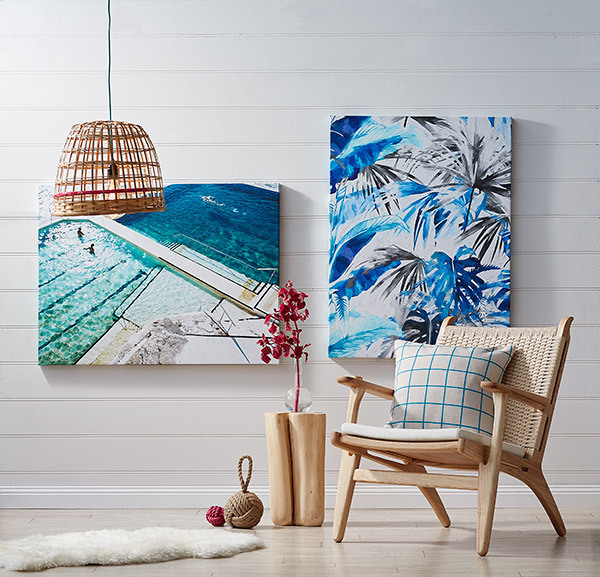
When we interviewed Suzie Atkin back in March 2012, the creator of Urban Road said her aim was "to make large canvas prints gorgeous and affordable". Since then she has expanded the business to cover cushions, rugs and accessories and her popular products have featured in numerous magazines and on The Block.
With a great collection of canvas prints onsite, the hardest part is picking the right piece for your space. We asked Suzie for some tips…
How do I know when the scale of an artwork is right for my room?
As a general rule, you do not want the artwork to be larger than the piece of furniture it is hanging above, but at the same time you don't want it to small. The goal is to create balance. For example, if you have a huge wall running the length of your living area, don't adorn it with a small, single artwork. Instead, use a bigger artwork or group smaller pieces together.
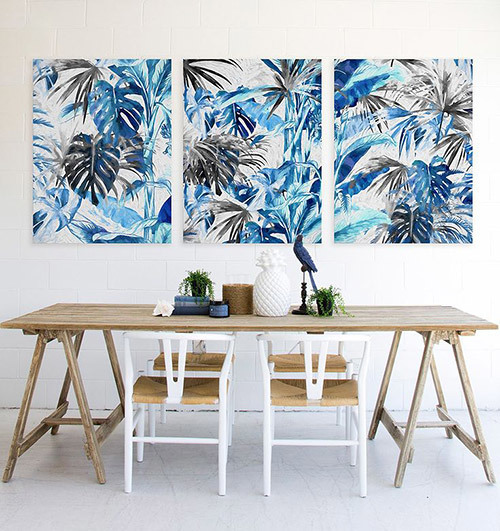
Jungle Nights canvases
Should I choose my art to match my furniture & decor, or vice versa, or neither?
Art doesn't have to match your lounge or furniture, however if, for example, you have mostly neutral tones in your home, hanging a brightly coloured piece of art with out adding any coordinating colour to the rest of the room won't work. Your artwork will always look better when the furniture and decor support the artwork; repeating colour that's in the artwork increases the artworks impact in the room.
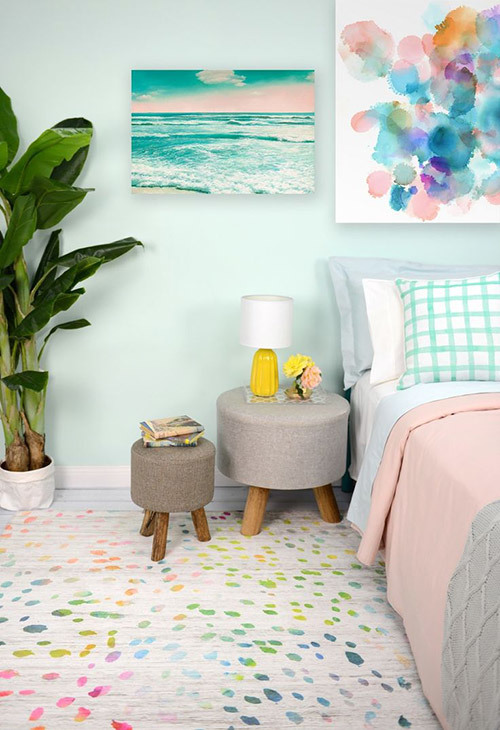
Bliss canvas (right)
What colours work better for bedrooms – is there anything I should avoid?
Personally I prefer cool calming colours for bedrooms: blues, greys, aquas and mauves. However, I have pinned some very vibrantly coloured bedrooms to my Pinterest board that look unreal!! At the end of the day it comes down to what makes you smile.
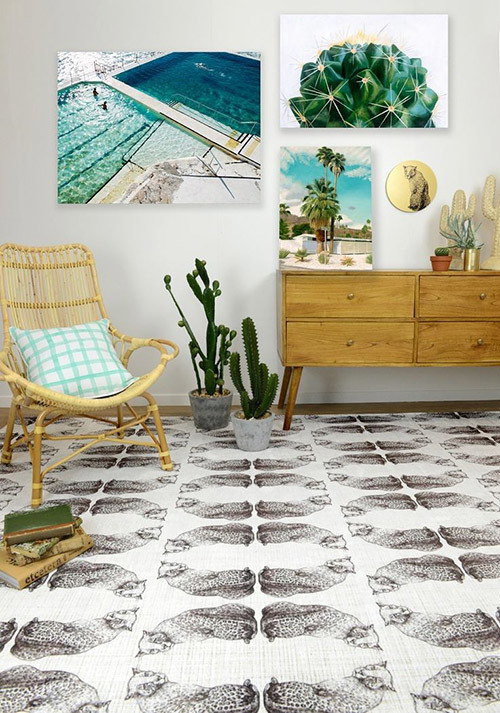
Bondi, Cacti and Topaz St canvas artworks
What's the optimum height for hanging art?
You should position your artwork so that the centre of the piece is at eye level. If you are unsure where eye level is, 152cm off the ground is a good approximation. In a room with high ceilings there might be a desire to hang the art higher. But remember, It needs to relate to human scale, not the room's scale.
If you are hanging multiple pieces in a group or series, treat them as one large piece in order to find the centre point. Then, position this centre point at eye level. You can then hang the rest of the pieces around this central artwork.
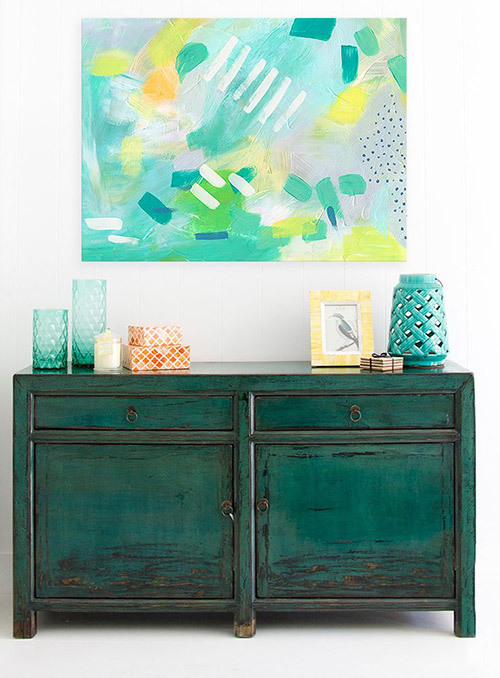
Afternoon Daze canvas
Can I mix antique/vintage furniture or a traditional style home with contemporary art?
I love an eclectic look; I'm not a fan of to much matchy matchy. However I am no expert at interior design, I just know what I like. You can certainly use contemporary art in a traditional space, however it is all about choosing the right piece of contemporary art that will work with room.
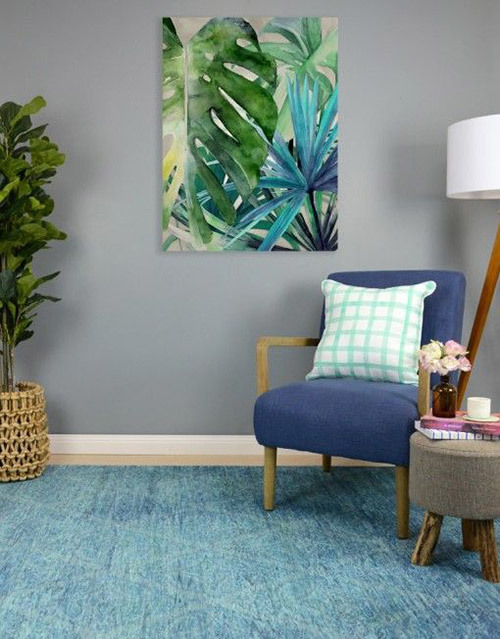
Palm Canyon canvas
Should the art be the focal point of my room?
I think every room should have a focal point, however it doesn't always have to be art. It could be a headboard in a bedroom, a mantel and piece of art in the living room, a window in the dining room. What ever it is, the best place for a focal point is generally opposite the entrance of the room. If you select a piece of art as the focal point of your room, you need to make sure it is the star by allowing the other decor and furniture in the room to take a secondary role. Otherwise it will create too much visual noise.
With a great collection of canvas prints onsite, the hardest part is picking the right piece for your space. We asked Suzie for some tips…
How do I know when the scale of an artwork is right for my room?
As a general rule, you do not want the artwork to be larger than the piece of furniture it is hanging above, but at the same time you don't want it to small. The goal is to create balance. For example, if you have a huge wall running the length of your living area, don't adorn it with a small, single artwork. Instead, use a bigger artwork or group smaller pieces together.
Jungle Nights canvases
Should I choose my art to match my furniture & decor, or vice versa, or neither?
Art doesn't have to match your lounge or furniture, however if, for example, you have mostly neutral tones in your home, hanging a brightly coloured piece of art with out adding any coordinating colour to the rest of the room won't work. Your artwork will always look better when the furniture and decor support the artwork; repeating colour that's in the artwork increases the artworks impact in the room.
Bliss canvas (right)
What colours work better for bedrooms – is there anything I should avoid?
Personally I prefer cool calming colours for bedrooms: blues, greys, aquas and mauves. However, I have pinned some very vibrantly coloured bedrooms to my Pinterest board that look unreal!! At the end of the day it comes down to what makes you smile.
Bondi, Cacti and Topaz St canvas artworks
What's the optimum height for hanging art?
You should position your artwork so that the centre of the piece is at eye level. If you are unsure where eye level is, 152cm off the ground is a good approximation. In a room with high ceilings there might be a desire to hang the art higher. But remember, It needs to relate to human scale, not the room's scale.
If you are hanging multiple pieces in a group or series, treat them as one large piece in order to find the centre point. Then, position this centre point at eye level. You can then hang the rest of the pieces around this central artwork.
Afternoon Daze canvas
Can I mix antique/vintage furniture or a traditional style home with contemporary art?
I love an eclectic look; I'm not a fan of to much matchy matchy. However I am no expert at interior design, I just know what I like. You can certainly use contemporary art in a traditional space, however it is all about choosing the right piece of contemporary art that will work with room.
Palm Canyon canvas
Should the art be the focal point of my room?
I think every room should have a focal point, however it doesn't always have to be art. It could be a headboard in a bedroom, a mantel and piece of art in the living room, a window in the dining room. What ever it is, the best place for a focal point is generally opposite the entrance of the room. If you select a piece of art as the focal point of your room, you need to make sure it is the star by allowing the other decor and furniture in the room to take a secondary role. Otherwise it will create too much visual noise.
Explore More








Head Office (No Showroom)
2/1-7 Unwins Bridge Rd, St Peters,
NSW 2044, Australia
Your customer reference #:
01-X-CSN