



Updated 26 March 2021
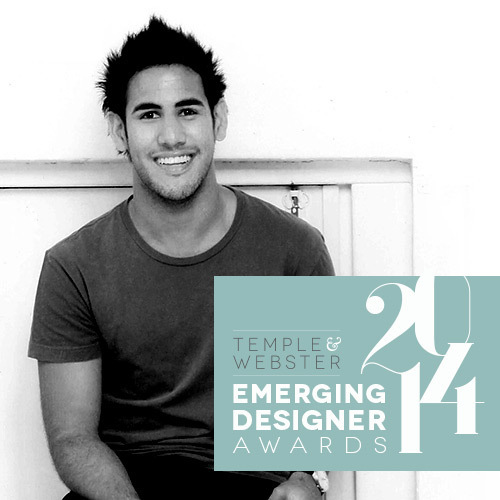
David Harrison introduces Rowen Wagner, one of the ten nominees for the Temple & Webster Emerging Designer Award 2014. Voting starts on 2 May.
Currently working as the Product Design Manager of Moose Toys in Melbourne, Wagner originally hails from Sydney where he completed a Bachelor of Design at the University of Technology (UTS). While living in Mexico in 2007 Wagner worked for AirDesign, designing components for the automobile industry for companies including Peugeot and Volkswagen. Since his return to Australia Wagner has worked for clients as varied as Breville and Railcorp while continuing to develop his own collection of furniture, lighting and homewares. He is the recipient of numerous prestigious awards including the 2011 Melbourne Design Award in the Product Design category for his innovative Ellipse tissue ring. His award-winning bike racks for the RTA and Powerhouse Museum can be spotted around the Sydney CBD.
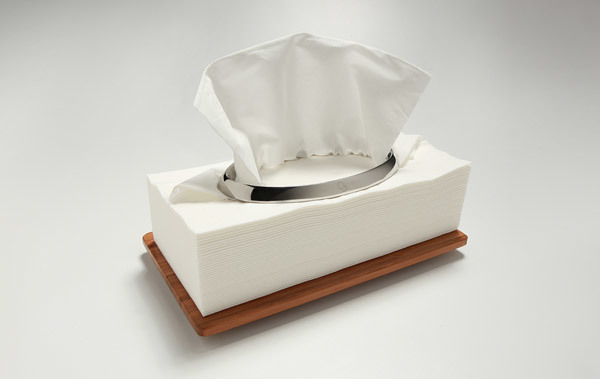
The Ellipse tissue ring is an elegant yet functional solution to the standard tissue box. Image - Penelope Clay.
What is your biggest motivator, muse or inspiration when you are designing?
I find I'm often motivated by frustration; discontentment with products we interact with. These experiences aren't critical or life threatening. Regardless I'd like to think that when people interact with my designs they have an enlightened experience. Seeing enjoyment rather than frustration in the use of day to day objects inspires me.
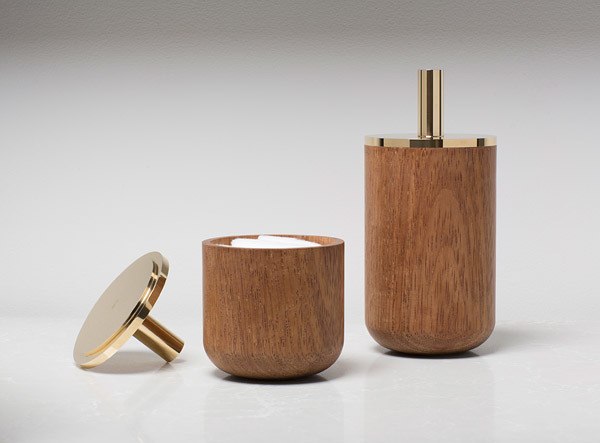
A new design: canisters made from merbau with brass lids. Image - Stu Morley.
What has been the single most pivotal point or event in your design life so far?
Difficult one. What immediately comes to mind is a small moment that happened 4 or 5 years ago on a bullet train from Tokyo. I noticed a sharply dressed Japanese businessman wearing a Tuerca ring, the first product I designed and produced. I wanted to say something but refrained and quietly enjoyed the moment. Looking back I think it was a realisation that my work could be enjoyed more widely than I'd imagined.
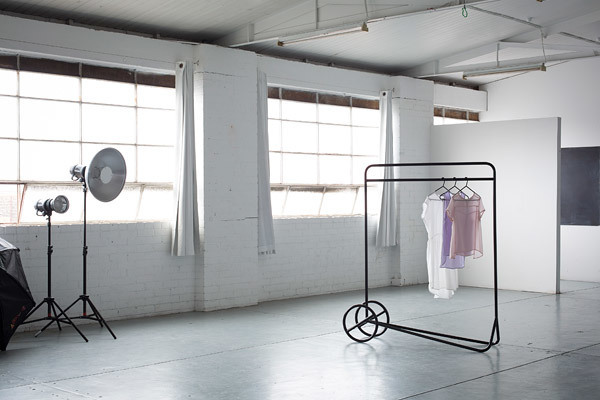
The Mantis clothes rack is designed to easily steer with a free axis wheel mount, and self-locks when rested on its opposite leg. Image - Stu Morley.
What existing object or piece of furniture do you wish you had designed?
The Phillips-head screw (and screwdriver to suit). It has withstood the test of time, most people have interacted with it and his surname is uttered every time someone mentions it. Staple fasteners and tools like this have changed very little since their creation. On a similar thread I strive for design that is timeless and utilitarian.
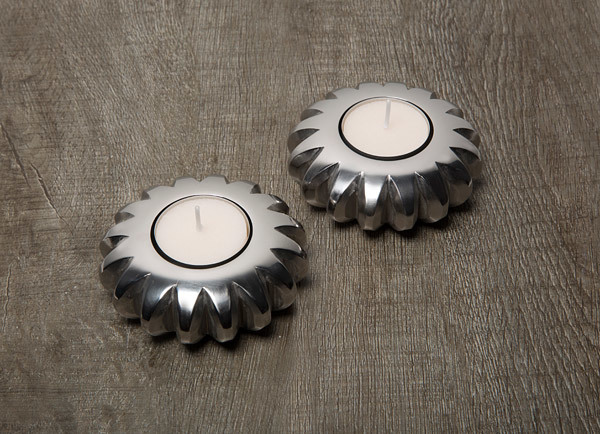
Rowen's new tealight holder, crafted from polished marine grade stainless steel.
Your objects and furniture designs have an elegance of shape that is rare. Is beauty of line a prime motivator in what you do?
Firstly I'm flattered to hear you use words like elegance and beauty! I think generally I'm looking for an overall balance in form. This involves line, proportion, volume created (and volume intentionally left empty). People respond well to design that feels harmonious, which doesn't necessarily mean symmetrical. Ultimately I find people are most comfortable with objects that are honest. That do what they should do, and do it well.
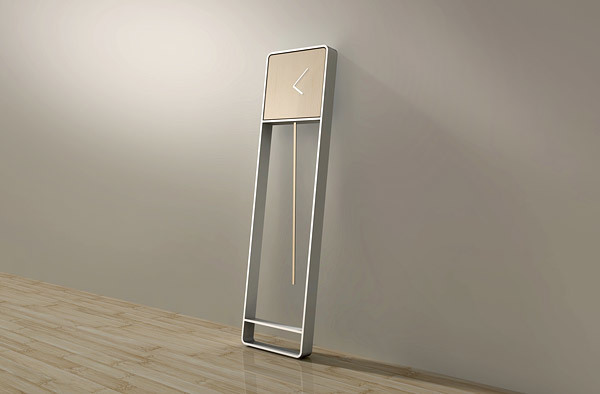
A render of Rowen's Grandson clock, a the modern evolution of the traditional grandfather clock.
Having worked on motorcar design, is working in a small studio and using self-production liberating or limiting?
My corporate design experiences have all involved mass production – cars, street furniture, toys. I spend a significant amount of time in factories in China designing for production in the hundreds of thousands. It is certainly amazing to be exposed to this side of design, however I find the contrast of my personal studio work refreshing. There is something very liberating about a limited production run in an age of mass production.
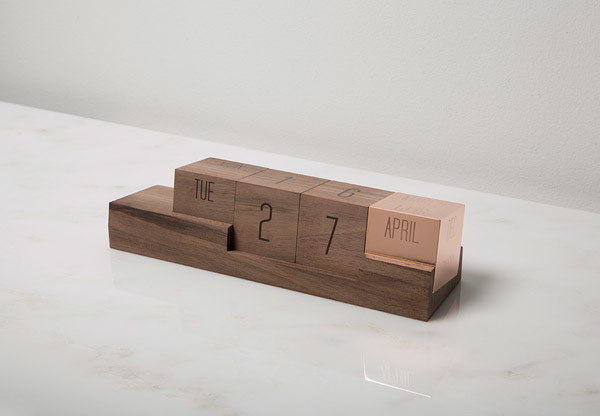
A beautifully crafted perpetual calendar. Image - Stu Morley.
You obviously enjoy designing metal objects - where did this interest originate or is it just a practical solution?
I love the permanence of metal objects. Perhaps it stems from my father who by trade is a jeweller, crafting bespoke pieces made to last beyond the lifespan of their wearer. Besides being malleable and recyclable I love that metal objects are maintainable. Silver, brass, stainless steel – all the alloys I use require a little upkeep. The idea of maintaining things has become foreign in our throw-away culture. I encourage it; my jewellery comes with a polishing cloth.
Follow him on Instagram @rowenwagner
Rowen Wagner - Emerging Designer Award 2014
David Harrison introduces Rowen Wagner, one of the ten nominees for the Temple & Webster Emerging Designer Award 2014. Voting starts on 2 May.
Currently working as the Product Design Manager of Moose Toys in Melbourne, Wagner originally hails from Sydney where he completed a Bachelor of Design at the University of Technology (UTS). While living in Mexico in 2007 Wagner worked for AirDesign, designing components for the automobile industry for companies including Peugeot and Volkswagen. Since his return to Australia Wagner has worked for clients as varied as Breville and Railcorp while continuing to develop his own collection of furniture, lighting and homewares. He is the recipient of numerous prestigious awards including the 2011 Melbourne Design Award in the Product Design category for his innovative Ellipse tissue ring. His award-winning bike racks for the RTA and Powerhouse Museum can be spotted around the Sydney CBD.
The Ellipse tissue ring is an elegant yet functional solution to the standard tissue box. Image - Penelope Clay.
What is your biggest motivator, muse or inspiration when you are designing?
I find I'm often motivated by frustration; discontentment with products we interact with. These experiences aren't critical or life threatening. Regardless I'd like to think that when people interact with my designs they have an enlightened experience. Seeing enjoyment rather than frustration in the use of day to day objects inspires me.
A new design: canisters made from merbau with brass lids. Image - Stu Morley.
What has been the single most pivotal point or event in your design life so far?
Difficult one. What immediately comes to mind is a small moment that happened 4 or 5 years ago on a bullet train from Tokyo. I noticed a sharply dressed Japanese businessman wearing a Tuerca ring, the first product I designed and produced. I wanted to say something but refrained and quietly enjoyed the moment. Looking back I think it was a realisation that my work could be enjoyed more widely than I'd imagined.
The Mantis clothes rack is designed to easily steer with a free axis wheel mount, and self-locks when rested on its opposite leg. Image - Stu Morley.
What existing object or piece of furniture do you wish you had designed?
The Phillips-head screw (and screwdriver to suit). It has withstood the test of time, most people have interacted with it and his surname is uttered every time someone mentions it. Staple fasteners and tools like this have changed very little since their creation. On a similar thread I strive for design that is timeless and utilitarian.
Rowen's new tealight holder, crafted from polished marine grade stainless steel.
Your objects and furniture designs have an elegance of shape that is rare. Is beauty of line a prime motivator in what you do?
Firstly I'm flattered to hear you use words like elegance and beauty! I think generally I'm looking for an overall balance in form. This involves line, proportion, volume created (and volume intentionally left empty). People respond well to design that feels harmonious, which doesn't necessarily mean symmetrical. Ultimately I find people are most comfortable with objects that are honest. That do what they should do, and do it well.
A render of Rowen's Grandson clock, a the modern evolution of the traditional grandfather clock.
Having worked on motorcar design, is working in a small studio and using self-production liberating or limiting?
My corporate design experiences have all involved mass production – cars, street furniture, toys. I spend a significant amount of time in factories in China designing for production in the hundreds of thousands. It is certainly amazing to be exposed to this side of design, however I find the contrast of my personal studio work refreshing. There is something very liberating about a limited production run in an age of mass production.
A beautifully crafted perpetual calendar. Image - Stu Morley.
You obviously enjoy designing metal objects - where did this interest originate or is it just a practical solution?
I love the permanence of metal objects. Perhaps it stems from my father who by trade is a jeweller, crafting bespoke pieces made to last beyond the lifespan of their wearer. Besides being malleable and recyclable I love that metal objects are maintainable. Silver, brass, stainless steel – all the alloys I use require a little upkeep. The idea of maintaining things has become foreign in our throw-away culture. I encourage it; my jewellery comes with a polishing cloth.
Follow him on Instagram @rowenwagner
Explore More








Head Office (No Showroom)
2/1-7 Unwins Bridge Rd, St Peters,
NSW 2044, Australia
Your customer reference #:
01-X-CSN