


Blog

Updated 9 March 2021
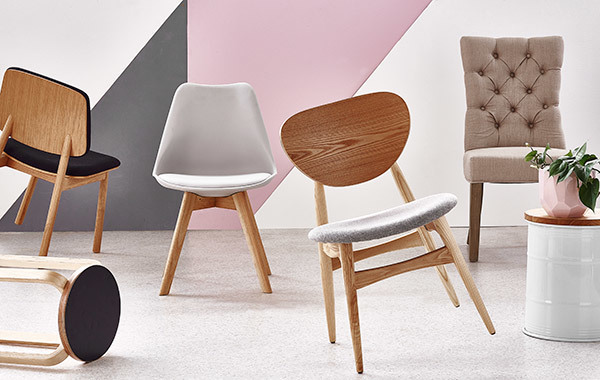
We're chairly sure we've sold most kinds of seating options that exist in the entire universe over the past four years. But we've never really delved into the different styles, so here's a look at 5 popular chairs...
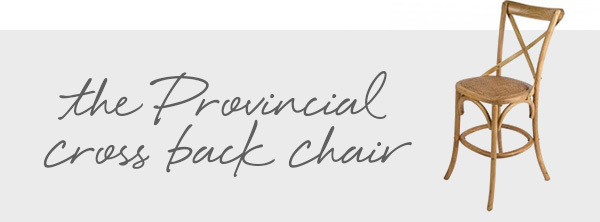
It all started when cane from Asia found its way to English and French furniture makers in the 17th century and found popularity as a bug-free alternative to upholstery. Yes, really. Then, French cabinet maker Michael Thonet perfected a method of bending light timber with steam, providing a lighter alternative to the heavier, carved styles of the time.
We love this chair's relaxed elegance - the cross back and curved braces provide both stability and a pretty decorative element.
Choose this chair if French Provincial style is your crème de la crème. In white, it's great for a coast-meets-country Hamptons look. Family friendly? Rustic charm? Tick and tick.
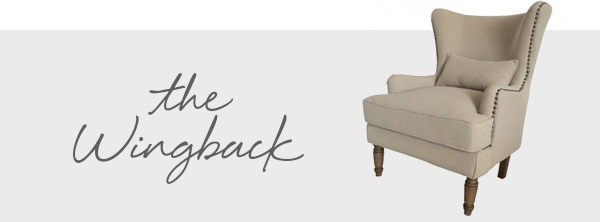
It all started in Winter. The high-backed chair with wings is thought to have been developed in the early 1700s to create a cosy 'snug', keeping out cold draughts and protecting the sitter from too much heat from an open fire.
We love the way this chair has evolved - designers the world over have riffed on the wingback armchair for hundreds of years. Think Arne Jacobsen's iconic 'Egg' chair, and Jaime Hayon's more recent 'Ro'.
Choose this chair, or a pair, to create a formal feel. A single wingback armchair works in a study, bedroom or reading corner. Don't be turned off by the old-school vibe - choose an unexpected fabric or add brightly coloured piping for a modern take on the style. We've seen them used as end-chairs for a dining setting, adding an air of grandeur and comfort.
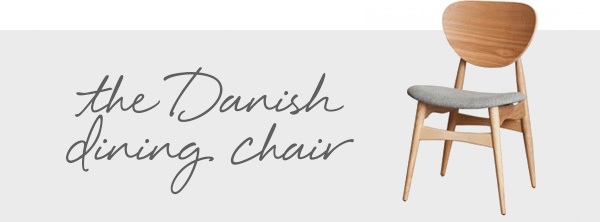
It all started with organic functionalism. Say what? In the early to mid 20th century, Danish architects and designers focused on uniting form and function. Decoration for decoration's sake was shunned in favour of beautifully understated timber furniture designed with comfort in mind. Hans Wegner, Arne Jacobsen and Borge Mogensen designed chairs that are still revered and widely copied today.
We love its clean lines and quiet good looks. Think Cate Blanchett, not Lady Gaga. Lean, even spare, the gentle curves of these chairs evoke an organic feel.
Choose this chair when there's no need to shout. Display your design chops, while keeping your space light, minimal and modern.
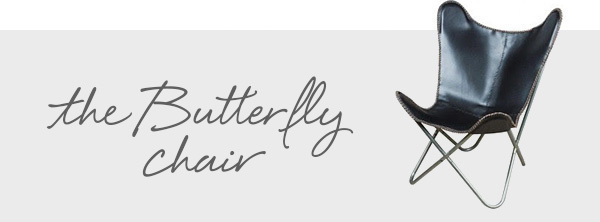
It all started in Buenos Aires. Architects Antonio Bonet, Juan Kurchan and Jorge Ferrari Hardoy designed the chair in 1938 - it's sometimes called the BKF chair or the Hardoy chair. Immediately popular, it didn't take long to reach iconic status and has been part of MOMA's collection since the 1940s.
We love the simplicity. The chair was based around a timber 'campaign' chair - so named because it ws easy to fold and transport. The simple tubular frame allows it to sit lightly, while rich and sturdy leather ticks the box on comfort.
Choose this chair for a lightweight take on comfort that fits with many interior styles. It's a design feature, without dominating. Be prepared to commit to relaxation, because there's no option of sitting up straight in this one.
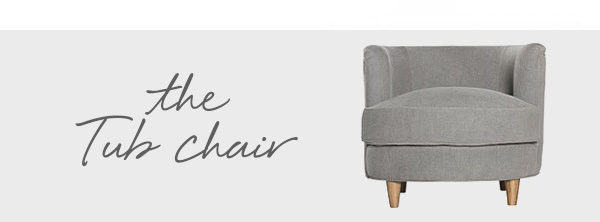
It all started with jazz. Between the wars, the jazz age heralded a streamlined approach to design and a focus on luxurious wood veneers and exotic materials. The low-backed tub chair, with its clean curves, was an Art Deco hero and still has currency today.
We love a low chair in a conversation area. Don't forget a side table for your cocktail.
Choose this chair for a slightly retro air, for upholstered comfort, and for its beautiful curves. A pair is even more delightful, but take care - too many tub chairs says hotel lobby.
Our guide to 5 popular chair styles
We're chairly sure we've sold most kinds of seating options that exist in the entire universe over the past four years. But we've never really delved into the different styles, so here's a look at 5 popular chairs...
It all started when cane from Asia found its way to English and French furniture makers in the 17th century and found popularity as a bug-free alternative to upholstery. Yes, really. Then, French cabinet maker Michael Thonet perfected a method of bending light timber with steam, providing a lighter alternative to the heavier, carved styles of the time.
We love this chair's relaxed elegance - the cross back and curved braces provide both stability and a pretty decorative element.
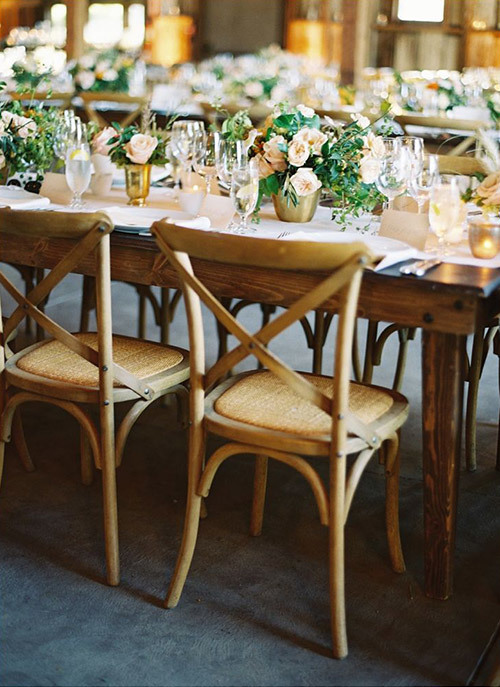 Image - Jose Villa via flowerwild.com
Choose this chair if French Provincial style is your crème de la crème. In white, it's great for a coast-meets-country Hamptons look. Family friendly? Rustic charm? Tick and tick.
It all started in Winter. The high-backed chair with wings is thought to have been developed in the early 1700s to create a cosy 'snug', keeping out cold draughts and protecting the sitter from too much heat from an open fire.
We love the way this chair has evolved - designers the world over have riffed on the wingback armchair for hundreds of years. Think Arne Jacobsen's iconic 'Egg' chair, and Jaime Hayon's more recent 'Ro'.
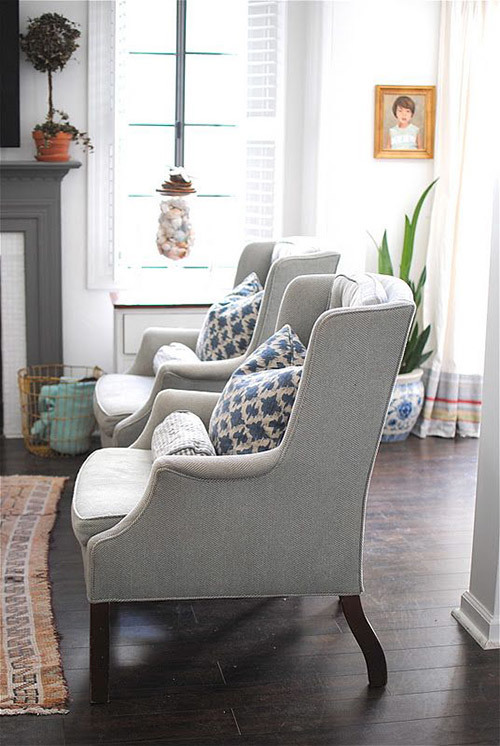 Image - Grace Happens via Pinterest
Choose this chair, or a pair, to create a formal feel. A single wingback armchair works in a study, bedroom or reading corner. Don't be turned off by the old-school vibe - choose an unexpected fabric or add brightly coloured piping for a modern take on the style. We've seen them used as end-chairs for a dining setting, adding an air of grandeur and comfort.
It all started with organic functionalism. Say what? In the early to mid 20th century, Danish architects and designers focused on uniting form and function. Decoration for decoration's sake was shunned in favour of beautifully understated timber furniture designed with comfort in mind. Hans Wegner, Arne Jacobsen and Borge Mogensen designed chairs that are still revered and widely copied today.
We love its clean lines and quiet good looks. Think Cate Blanchett, not Lady Gaga. Lean, even spare, the gentle curves of these chairs evoke an organic feel.
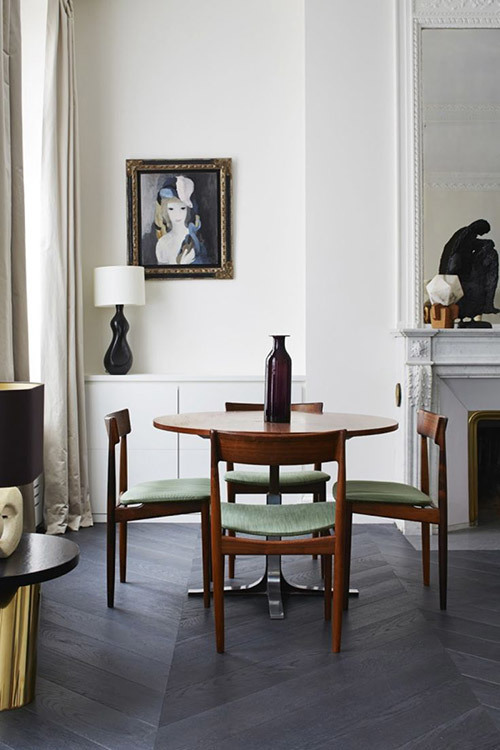 Parisian apartment designed by Sarah Lavoine
Choose this chair when there's no need to shout. Display your design chops, while keeping your space light, minimal and modern.
It all started in Buenos Aires. Architects Antonio Bonet, Juan Kurchan and Jorge Ferrari Hardoy designed the chair in 1938 - it's sometimes called the BKF chair or the Hardoy chair. Immediately popular, it didn't take long to reach iconic status and has been part of MOMA's collection since the 1940s.
We love the simplicity. The chair was based around a timber 'campaign' chair - so named because it ws easy to fold and transport. The simple tubular frame allows it to sit lightly, while rich and sturdy leather ticks the box on comfort.
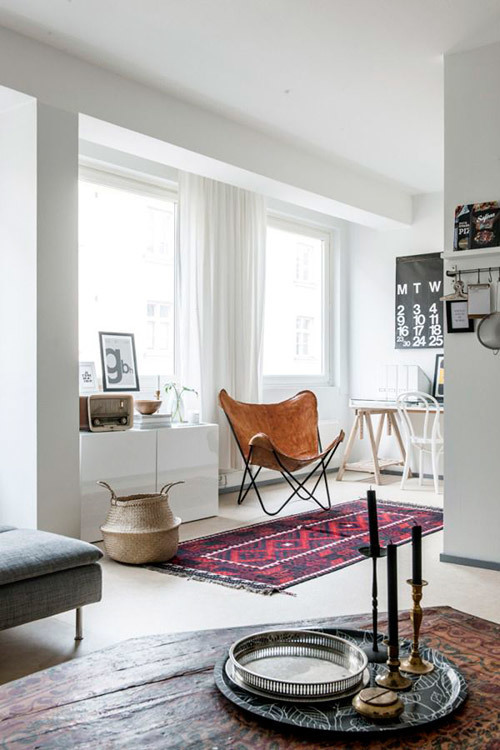 Interior decorator Laura Seppånen's home. Image - Pauliina Salonen
Choose this chair for a lightweight take on comfort that fits with many interior styles. It's a design feature, without dominating. Be prepared to commit to relaxation, because there's no option of sitting up straight in this one.
It all started with jazz. Between the wars, the jazz age heralded a streamlined approach to design and a focus on luxurious wood veneers and exotic materials. The low-backed tub chair, with its clean curves, was an Art Deco hero and still has currency today.
We love a low chair in a conversation area. Don't forget a side table for your cocktail.
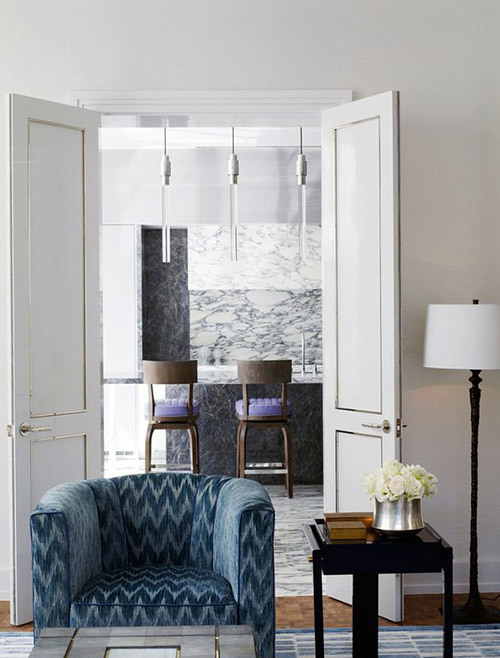 Bangkok residence by David Collins. Image via AD Russia.
Choose this chair for a slightly retro air, for upholstered comfort, and for its beautiful curves. A pair is even more delightful, but take care - too many tub chairs says hotel lobby.
Explore More



Payment options





Head Office (No Showroom)
2/1-7 Unwins Bridge Rd, St Peters,
NSW 2044, Australia
Your customer reference #:
01-X-CSN