



Updated 26 March 2021

David Harrison introduces Liam Mugavin, one of ten nominees for the Temple & Webster Emerging Designer Award 2014. Voting starts on 2 May.
Prior to graduating with a Bachelor of Industrial Design at The University of South Australia, Mugavin worked in Mexico for twelve months as an automotive designer. He then travelled to Japan where he ended up living for four years and developed a deep love of wood and Japanese crafts. Mugavin was offered a position at Adelaide's Jam Factory as a furniture design associate in 2013. This role enables the recipients to explore their craft through commissions and the study of techniques and materials under the guidance of some of Australia's most highly regarded practitioners.
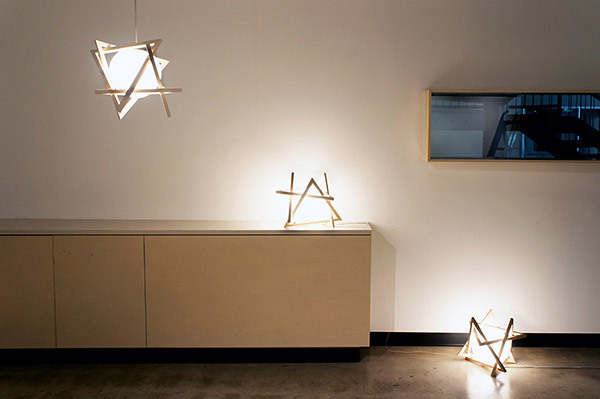
The Tangle light combines triangles with a central sphere.
What is your biggest motivator, muse or inspiration when you are designing?
I find that the good ideas come during those quiet moments when my conscious mind isn't preoccupied. Concepts often appear just before I go to sleep. If I'm excited by them in the morning I'll make a prototype. If I'm still excited by the prototype after a month or so I'll develop a product. For me excitement comes from the unexpected, small surprises that make a good design and that excitement is what motivates me to see a design through to production.
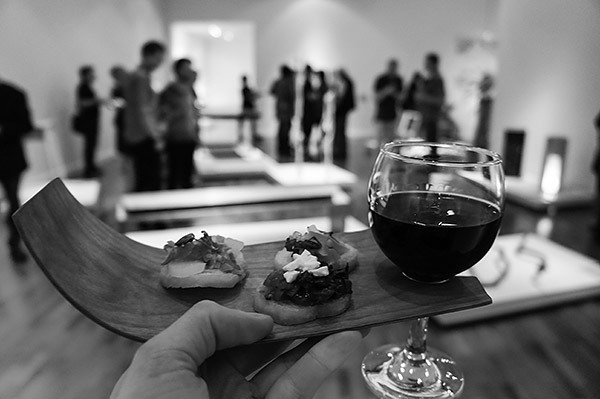
The Palate cheese and wine platter solves one of the greatest problems facing partygoers. Made from laminated American cherry veneer, it is perfect for functions, picnics, and dinner parties.
What has been the single most pivotal point or event in your design life so far?
Coming to Adelaide in the start of 2013 to join the Jam Factory and to launch my own practice was definitely a turning point. At the Jam I'm surrounded by so many talented craftspeople, designers and opportunities. This year there is an awesome design buzz in the furniture studio with the appointment of John Goulder as our Creative Director. As a mentor, he brings so much to the table with his industry experience and approach to Australian made design. The other furniture associates are a talented bunch and all come from different backgrounds. We're constantly evaluating, criticising and pushing each other's work. It's simply the best environment for me to be in at this point in my life.
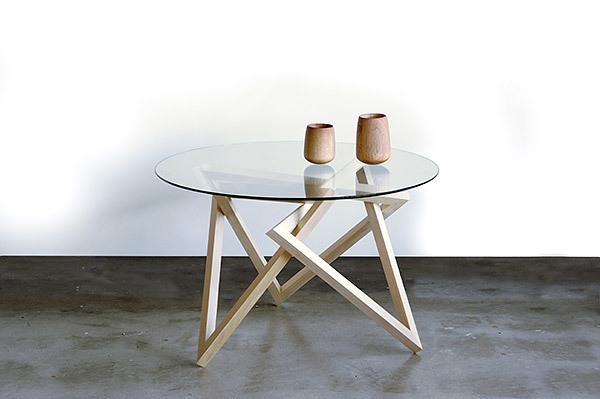
The Tangle table in American oak is constructed using three equilateral triangles, reinforced with hidden joints.
What existing object or piece of furniture do you wish you had designed?
Anything by Oki Sato the founder of Nendo. His designs instantly express such strong narratives without the need of words; they simply speak for themselves yet know when to shut up. I especially enjoy how his paired back aesthetic offers only what is needed in order to tell a story and nothing more.
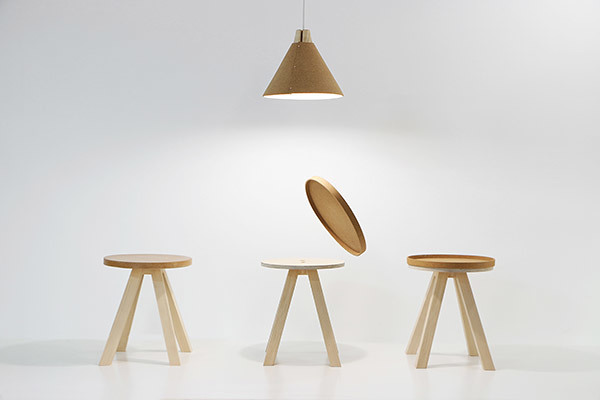
The Circles table, inspired by the process in which cork is literally peeled off the cork oak, serves as a stool, side table and tray.
Can you summarise what 4 years of living in Japan has done for your design work?
Living in Japan really helped refined my aesthetic understanding and appreciation of details and craftsmanship. Much of Japanese design is about the underlying meaning and metaphors it presents. I've learnt that the more modest and understated a design might be, the more it has to offer in contemplation and imagination. My designs don't strictly follow along these lines; I still like to mix in the Australian influence in my work.
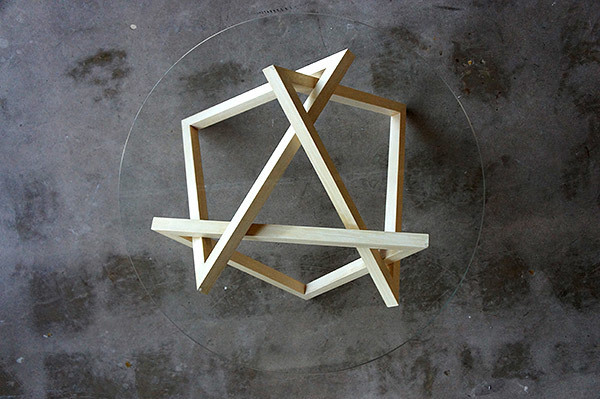
The Tangle table, seen from above.
You love triangles – what is it about them that you find so appealing?
Triangles are like beards at the moment; they're in fashion. But there's more to it than that. I love the simplicity and elegance of triangles and geometry in general. Triangles also happen to be the strongest structural shape. There is another common but less obvious element in my work, the line. The Toro lights are more about negative and positive space and lines, triangles are just the best shape to express this. Last year each design lead to the next so I ended up with lots of triangles. This year I'm exploring some new materials and new shapes, enter the circle…
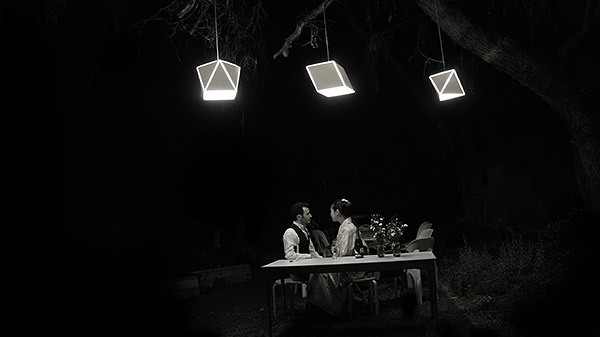
Your 'Toro' lights are your first foray into a ceramic material - you tend to favour timber. Is this a material you would like to explore more?
I love the tactile and warm nature of timber, but don't want my designs to be limited by it. I'm currently exploring copper and cork which are also very visceral earthy materials. The Toro light, which is a modern take on Japanese lanterns, needed a material that was lightweight and completely opaque. I explored numerous materials before I came across a high pressure laminated ceramic that's manufactured in Italy and perfect for the design.
To find out more, follow him on twitter @mugavin
Liam Mugavin - Emerging Designer Award 2014
David Harrison introduces Liam Mugavin, one of ten nominees for the Temple & Webster Emerging Designer Award 2014. Voting starts on 2 May.
Prior to graduating with a Bachelor of Industrial Design at The University of South Australia, Mugavin worked in Mexico for twelve months as an automotive designer. He then travelled to Japan where he ended up living for four years and developed a deep love of wood and Japanese crafts. Mugavin was offered a position at Adelaide's Jam Factory as a furniture design associate in 2013. This role enables the recipients to explore their craft through commissions and the study of techniques and materials under the guidance of some of Australia's most highly regarded practitioners.
The Tangle light combines triangles with a central sphere.
What is your biggest motivator, muse or inspiration when you are designing?
I find that the good ideas come during those quiet moments when my conscious mind isn't preoccupied. Concepts often appear just before I go to sleep. If I'm excited by them in the morning I'll make a prototype. If I'm still excited by the prototype after a month or so I'll develop a product. For me excitement comes from the unexpected, small surprises that make a good design and that excitement is what motivates me to see a design through to production.
The Palate cheese and wine platter solves one of the greatest problems facing partygoers. Made from laminated American cherry veneer, it is perfect for functions, picnics, and dinner parties.
What has been the single most pivotal point or event in your design life so far?
Coming to Adelaide in the start of 2013 to join the Jam Factory and to launch my own practice was definitely a turning point. At the Jam I'm surrounded by so many talented craftspeople, designers and opportunities. This year there is an awesome design buzz in the furniture studio with the appointment of John Goulder as our Creative Director. As a mentor, he brings so much to the table with his industry experience and approach to Australian made design. The other furniture associates are a talented bunch and all come from different backgrounds. We're constantly evaluating, criticising and pushing each other's work. It's simply the best environment for me to be in at this point in my life.
The Tangle table in American oak is constructed using three equilateral triangles, reinforced with hidden joints.
What existing object or piece of furniture do you wish you had designed?
Anything by Oki Sato the founder of Nendo. His designs instantly express such strong narratives without the need of words; they simply speak for themselves yet know when to shut up. I especially enjoy how his paired back aesthetic offers only what is needed in order to tell a story and nothing more.
The Circles table, inspired by the process in which cork is literally peeled off the cork oak, serves as a stool, side table and tray.
Can you summarise what 4 years of living in Japan has done for your design work?
Living in Japan really helped refined my aesthetic understanding and appreciation of details and craftsmanship. Much of Japanese design is about the underlying meaning and metaphors it presents. I've learnt that the more modest and understated a design might be, the more it has to offer in contemplation and imagination. My designs don't strictly follow along these lines; I still like to mix in the Australian influence in my work.
The Tangle table, seen from above.
You love triangles – what is it about them that you find so appealing?
Triangles are like beards at the moment; they're in fashion. But there's more to it than that. I love the simplicity and elegance of triangles and geometry in general. Triangles also happen to be the strongest structural shape. There is another common but less obvious element in my work, the line. The Toro lights are more about negative and positive space and lines, triangles are just the best shape to express this. Last year each design lead to the next so I ended up with lots of triangles. This year I'm exploring some new materials and new shapes, enter the circle…
Your 'Toro' lights are your first foray into a ceramic material - you tend to favour timber. Is this a material you would like to explore more?
I love the tactile and warm nature of timber, but don't want my designs to be limited by it. I'm currently exploring copper and cork which are also very visceral earthy materials. The Toro light, which is a modern take on Japanese lanterns, needed a material that was lightweight and completely opaque. I explored numerous materials before I came across a high pressure laminated ceramic that's manufactured in Italy and perfect for the design.
To find out more, follow him on twitter @mugavin
Explore More








Head Office (No Showroom)
2/1-7 Unwins Bridge Rd, St Peters,
NSW 2044, Australia
Your customer reference #:
01-X-CSN