



Updated 6 November 2020
We chat to Kate Gordon, head of design for Australian ceramics brand Robert Gordon, about her process, working in the family business, and the new tableware range she’s designed exclusively for Temple & Webster.
One of Australia’s last remaining larger-scale potteries, Robert Gordon has gone from strength to strength over the past decade. Sold around the world, the label is celebrated for its bespoke, handmade stoneware with an organic edge, a trend that has made its way from high-end restaurants onto home dining tables.
Three generations are intertwined with the success of Robert Gordon. The brand’s namesake and his wife Barbara established their production pottery in Victoria’s Dandenong region in 1979, following the path of his mother June Dyson, a renowned potter who first set up in the region in 1945. Now Robert and Barbara’s four children also work together across the business at their Pakenham headquarters. We caught up with head of design Kate Gordon to reflect on the family’s story, their ongoing success, and the tableware range that she has just designed exclusively for Temple and Webster.
How did you come to join the family business? I’ve been glazing and designing at the pottery since I was 15. I left to study textile design at university, then walked straight into the vacant design role here when I finished.
And what role does the rest of the family play? We joke that my parents planned it all out when they had us four children. I head up design, Hannah looks after marketing and the import range as well as design and product development, Sam's patch is sales and the hospitality industry, and leading production is Bobby – he's an architect by training and also designed our restaurant, The Independent, in Gembrook.
What’s your favourite part of the creative process? Definitely glazing, playing with the ingredients we have on hand and seeing how the finished product comes out of the kiln the next day. You can layer different glazes or put them in a different spot in the kiln to adjust the temperature to alter the result. It gets under your skin.
How has the Robert Gordon range changed over the years? For the Australian-made collection, nothing we do has really changed, but the market has shifted to appreciate what we do. People are more accepting of runs and colour variations and they want that handmade, organic feel to their ceramics. It’s a massive throwback to the 1970s and the glazes my parents were working with.
Do you look back at their past work for inspiration? Definitely. A few years ago I picked up one of Dad’s pieces I hadn’t seen before in an op shop. It had a mottled grey glaze that I went on to use as inspiration for the Saltbush range, which is now one of our bestsellers.
What are the latest trends you see coming through in tableware? I think we’re developing a stronger Australian aesthetic – a fresh look, simplicity, not a lot of detail. For us this means using reactive-style glazes to add depth and create the coastal look that has become very popular.
Tell us about the exclusive Robert Gordon range you've created for Temple and Webster. How did you develop the concept, and how is it made? It's a stoneware collection with a modern take on classic ceramic colours, using one of our most popular recent glazes, Coast, as a base. The white base glaze contains rutile, which results in flecks and runs. The Coastal Splash pieces are part raw and part glazed, and the Blue Coast pieces are accented with blue.
How would you like to see this collection used in people’s homes? The pieces are designed for every day, so you should absolutely love using them all the time, but they're also special enough to dress up for an occasion.
Shop the exclusive Robert Gordon for Temple & Webster collection here.
In the studio: Kate Gordon of Robert Gordon
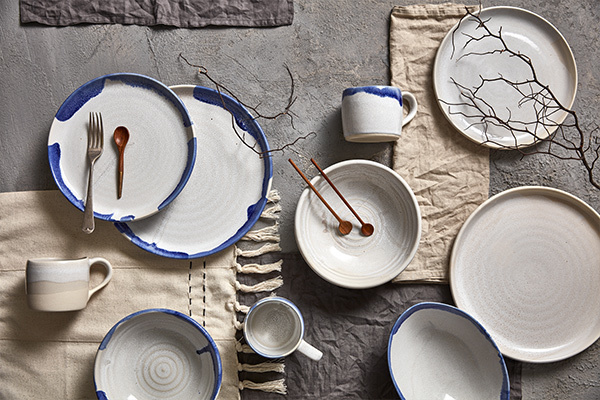 Introducing Temple & Webster's exciting new collaboration with Robert Gordon.
Styling - Jono Fleming. Photography - Denise Braki.
We chat to Kate Gordon, head of design for Australian ceramics brand Robert Gordon, about her process, working in the family business, and the new tableware range she’s designed exclusively for Temple & Webster.
One of Australia’s last remaining larger-scale potteries, Robert Gordon has gone from strength to strength over the past decade. Sold around the world, the label is celebrated for its bespoke, handmade stoneware with an organic edge, a trend that has made its way from high-end restaurants onto home dining tables.
Three generations are intertwined with the success of Robert Gordon. The brand’s namesake and his wife Barbara established their production pottery in Victoria’s Dandenong region in 1979, following the path of his mother June Dyson, a renowned potter who first set up in the region in 1945. Now Robert and Barbara’s four children also work together across the business at their Pakenham headquarters. We caught up with head of design Kate Gordon to reflect on the family’s story, their ongoing success, and the tableware range that she has just designed exclusively for Temple and Webster.
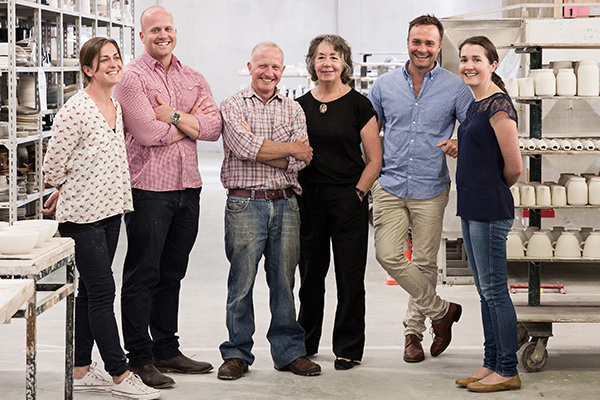 The talented Gordon family at their pottery, from left: Kate, Sam, Robert, Barbara, Bobby and Hannah.
Photography - Sean Fennessy.
How did you come to join the family business? I’ve been glazing and designing at the pottery since I was 15. I left to study textile design at university, then walked straight into the vacant design role here when I finished.
And what role does the rest of the family play? We joke that my parents planned it all out when they had us four children. I head up design, Hannah looks after marketing and the import range as well as design and product development, Sam's patch is sales and the hospitality industry, and leading production is Bobby – he's an architect by training and also designed our restaurant, The Independent, in Gembrook.
What’s your favourite part of the creative process? Definitely glazing, playing with the ingredients we have on hand and seeing how the finished product comes out of the kiln the next day. You can layer different glazes or put them in a different spot in the kiln to adjust the temperature to alter the result. It gets under your skin.
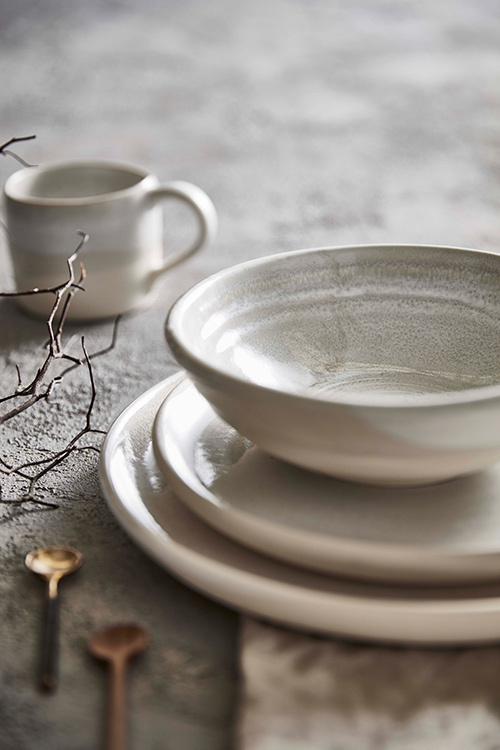 Coastal Splash.
Styling - Jono Fleming. Photography - Denise Braki.
How has the Robert Gordon range changed over the years? For the Australian-made collection, nothing we do has really changed, but the market has shifted to appreciate what we do. People are more accepting of runs and colour variations and they want that handmade, organic feel to their ceramics. It’s a massive throwback to the 1970s and the glazes my parents were working with.
Do you look back at their past work for inspiration? Definitely. A few years ago I picked up one of Dad’s pieces I hadn’t seen before in an op shop. It had a mottled grey glaze that I went on to use as inspiration for the Saltbush range, which is now one of our bestsellers.
What are the latest trends you see coming through in tableware? I think we’re developing a stronger Australian aesthetic – a fresh look, simplicity, not a lot of detail. For us this means using reactive-style glazes to add depth and create the coastal look that has become very popular.
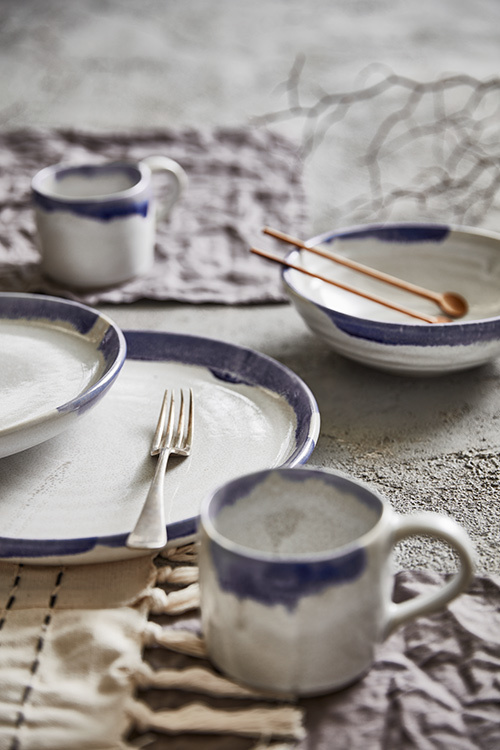 Blue Coast. Styling - Jono Fleming. Photography - Denise Braki.
Tell us about the exclusive Robert Gordon range you've created for Temple and Webster. How did you develop the concept, and how is it made? It's a stoneware collection with a modern take on classic ceramic colours, using one of our most popular recent glazes, Coast, as a base. The white base glaze contains rutile, which results in flecks and runs. The Coastal Splash pieces are part raw and part glazed, and the Blue Coast pieces are accented with blue.
How would you like to see this collection used in people’s homes? The pieces are designed for every day, so you should absolutely love using them all the time, but they're also special enough to dress up for an occasion.
Shop the exclusive Robert Gordon for Temple & Webster collection here.
Explore More








Head Office (No Showroom)
2/1-7 Unwins Bridge Rd, St Peters,
NSW 2044, Australia
Your customer reference #:
01-X-CSN