


Blog

Updated 26 March 2021
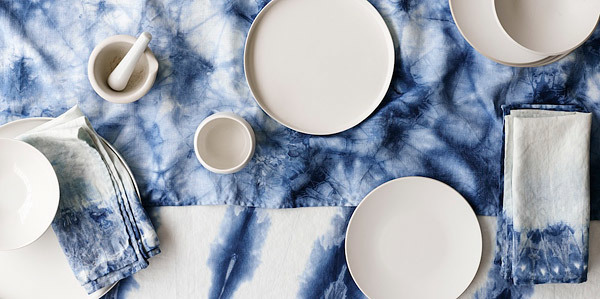
Image via orishibori
What does it mean? And how does it fit in to your home? Everything you need to know about the blue-hued shibori trend…
Shibori who?
Shibori refers to the Japanese art of manipulating fabric to create patterns using indigo dye, which dates back to the 8th century. The process can involve binding, folding, twisting or compressing, with chance and accident influencing how the patterns evolve in the dye vat. The organic nature of the outcome is celebrated, true to the fundamental Japanese philosophy of finding beauty in imperfection.
That sounds like tie dye?
Resist-dying techniques have been used in many ancient cultures but "tie dye" first hit the big time in the 1960s when it was seen on Grateful Dead t-shirts around the world. Since then, it's popped up on the happy pants of the 1980's raver and the crop tops of the 90's fashion grunge kids. This is a more sophisticated take on the technique, executed in beautiful blues.
Why we love it
The blue and white palette is fresh and serene, while the varied and organic pattern adds an interesting, natural element. In Australia, Pepa Martin and Karen Davis have done much to promote this ancient art, producing beautiful and unique textiles and even leather from their Sydney studio. Their wallpaper range is a designer favourite, and shibori-style patterns are now popping up on all sort of surfaces.
6 ways to make it work
The varied nature of shibori means it can work in many spaces. The blues can be deep or soft and the patterns can be boldly geometric or loose and washy. For as many unique homes there are in the world, there is a shibori application to match.
T&W's Head of Styling Jessica Bellef shares her top tips on decorating with shibori.
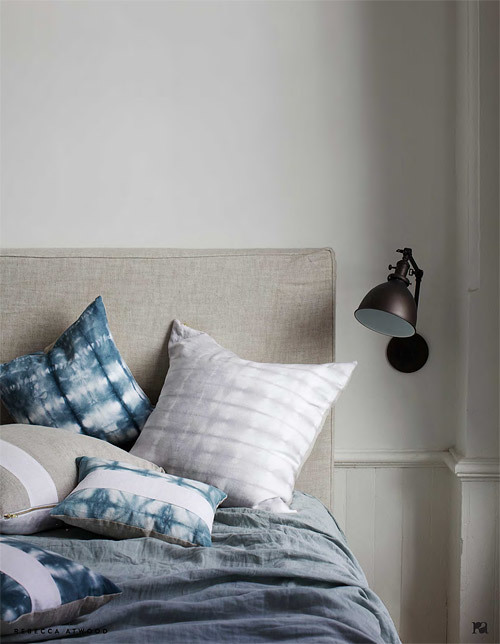
Match back with linens and neutrals for a softer look, as seen here in the beautiful work of textile designer Rebecca Atwood.
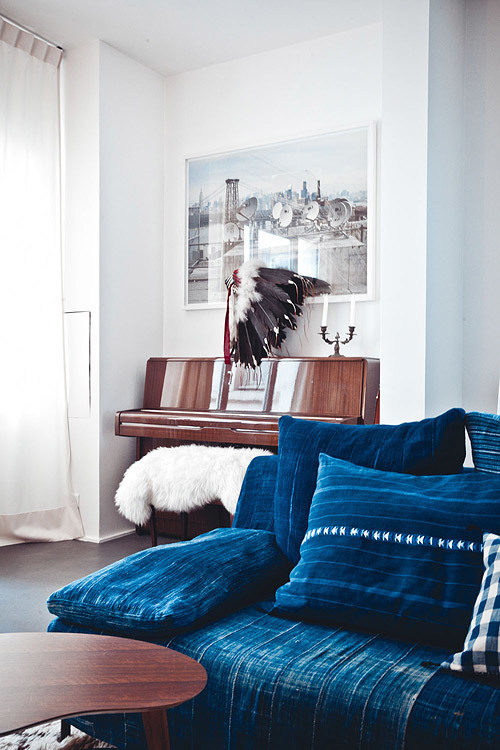
The deep indigo of traditional shibori works well with rich timbers, giving it a masculine feel. Image by Karel Balas for Milk Magazine.
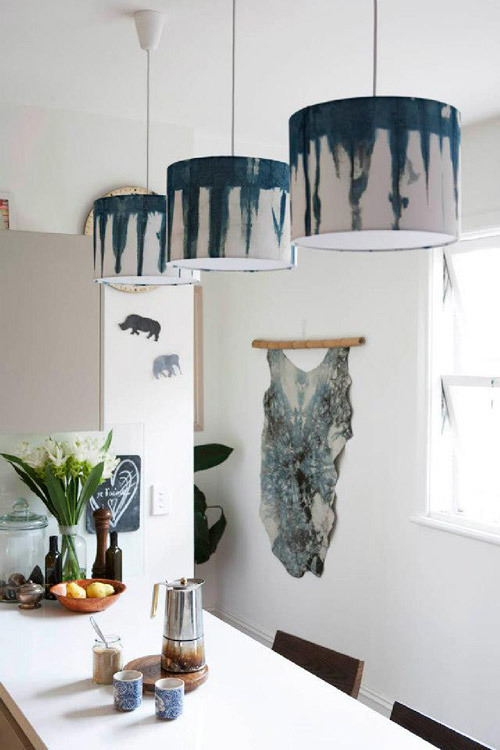
Shibori pendant lights all in a row make a strong statement in this space - you are hit with the organic beauty of the pieces before you have even seen the lights turned on. For the brave, a shibori leather hide can work as a unique piece of art. Image by Pepa Martin & Karen Davis's Shibori.
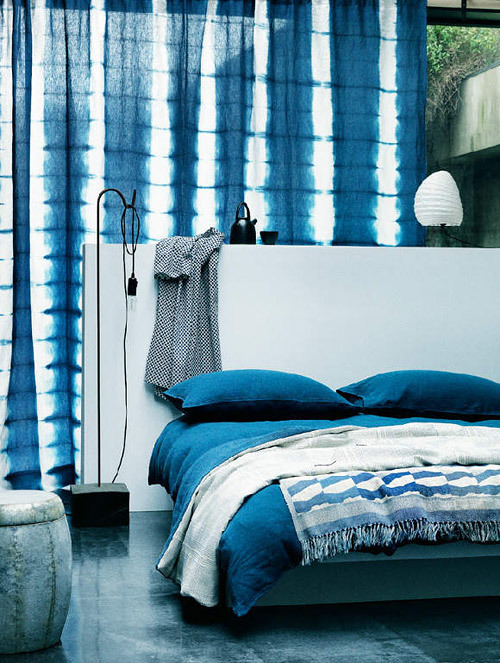
Curtains made from shibori material highlight the organic nature of the pattern. Light filters through the relief, the parts of the material that have not been dyed by indigo. Image by London based photographer Damian Russell.
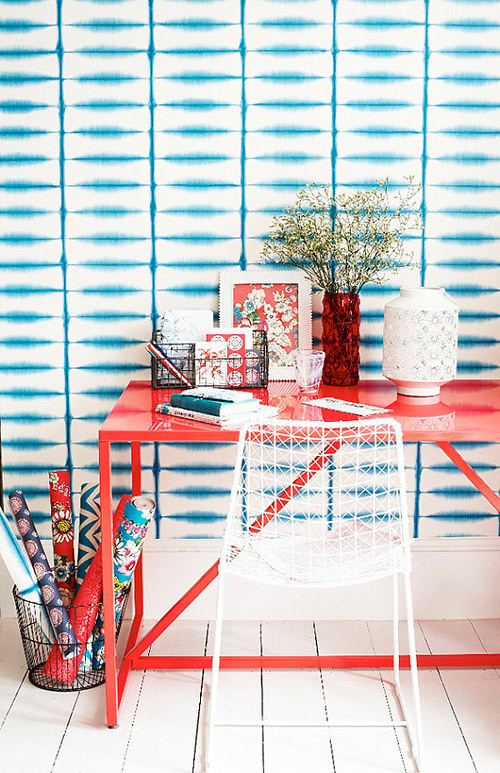
Shibori inspired wall coverings found on Etsy. Paired with a colour pop desk and a geometric chair, this is a fun application of the look.
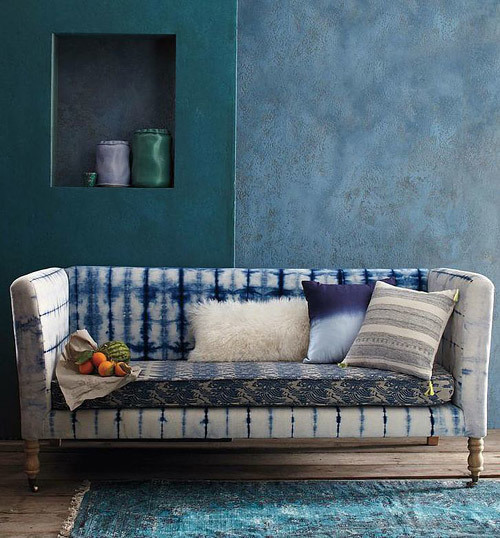
Or, if you are really committed to the cause, cover your sofa in shibori fabric, finish it off with dip dyed cushions and lay an over dyed rug in shades of blue. Image via Anthropologie
Explore the trend: Shibori
Image via orishibori
What does it mean? And how does it fit in to your home? Everything you need to know about the blue-hued shibori trend…
Shibori who?
Shibori refers to the Japanese art of manipulating fabric to create patterns using indigo dye, which dates back to the 8th century. The process can involve binding, folding, twisting or compressing, with chance and accident influencing how the patterns evolve in the dye vat. The organic nature of the outcome is celebrated, true to the fundamental Japanese philosophy of finding beauty in imperfection.
That sounds like tie dye?
Resist-dying techniques have been used in many ancient cultures but "tie dye" first hit the big time in the 1960s when it was seen on Grateful Dead t-shirts around the world. Since then, it's popped up on the happy pants of the 1980's raver and the crop tops of the 90's fashion grunge kids. This is a more sophisticated take on the technique, executed in beautiful blues.
Why we love it
The blue and white palette is fresh and serene, while the varied and organic pattern adds an interesting, natural element. In Australia, Pepa Martin and Karen Davis have done much to promote this ancient art, producing beautiful and unique textiles and even leather from their Sydney studio. Their wallpaper range is a designer favourite, and shibori-style patterns are now popping up on all sort of surfaces.
6 ways to make it work
The varied nature of shibori means it can work in many spaces. The blues can be deep or soft and the patterns can be boldly geometric or loose and washy. For as many unique homes there are in the world, there is a shibori application to match.
T&W's Head of Styling Jessica Bellef shares her top tips on decorating with shibori.
Match back with linens and neutrals for a softer look, as seen here in the beautiful work of textile designer Rebecca Atwood.
The deep indigo of traditional shibori works well with rich timbers, giving it a masculine feel. Image by Karel Balas for Milk Magazine.
Shibori pendant lights all in a row make a strong statement in this space - you are hit with the organic beauty of the pieces before you have even seen the lights turned on. For the brave, a shibori leather hide can work as a unique piece of art. Image by Pepa Martin & Karen Davis's Shibori.
Curtains made from shibori material highlight the organic nature of the pattern. Light filters through the relief, the parts of the material that have not been dyed by indigo. Image by London based photographer Damian Russell.
Shibori inspired wall coverings found on Etsy. Paired with a colour pop desk and a geometric chair, this is a fun application of the look.
Or, if you are really committed to the cause, cover your sofa in shibori fabric, finish it off with dip dyed cushions and lay an over dyed rug in shades of blue. Image via Anthropologie
Explore More



Payment options





Head Office (No Showroom)
2/1-7 Unwins Bridge Rd, St Peters,
NSW 2044, Australia
Your customer reference #:
01-X-CSN