


Blog

Updated 8 January 2021
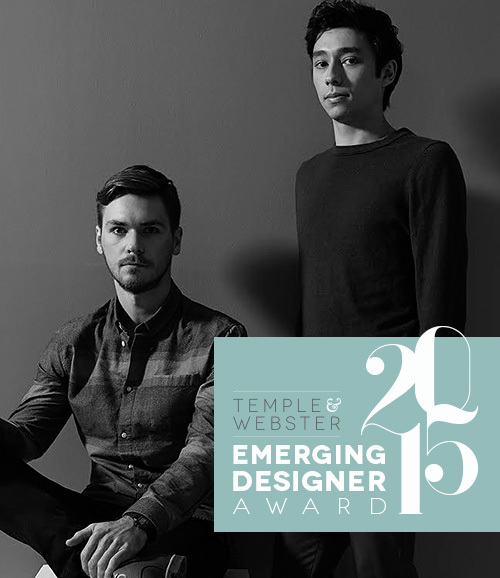
Daast is a multidisciplinary design studio in Sydney founded by Andrew Southwood-Jones and Alexander Kashin, who met while studying architecture at UTS and bonded over a shared fascination for finding innovative uses for unusual materials. Their work has achieved critical success, including a Qantas SOYA Award, and their approach has been described as 'smoothly elegant'.
How would you describe your design philosophy and aesthetic?
We would like to think that we don't have a certain style or aesthetic to our designs, instead we want to be distinguished by the ideas behind them. We just try to keep it exciting for us and for people looking at or using them.
What is your biggest motivator or muse when you are designing?
We get really excited about the translation from idea into a physical object. It feels like Christmas every time we receive the first prototype of something we have designed. Maybe that's why we have so many ALMOST finished projects. We tend to lose interest once the product is 90% resolved and it comes to production and marketing... that definitely kills the joy for us.
What has been the most pivotal point or event in your design life so far?
Winning QANTAS SOYA 2013 in the Craft and Object Design category judged by Marc Newson. That was the moment when we realised that we actually might be doing something good.
What (or who) inspired your most recent design?
Our latest Harpoon Joint collection was inspired by the huge amount of design within the joinery and hardware in furniture which is generally hidden and unappreciated in order to create clean minimalist pieces of furniture. We wanted to do the opposite and celebrate all the engineering thinking which goes into holding a piece of furniture together. This is how we approached designing a multifunctional joint which can hold together a stool or a table in compression. Only one nut needs to be tightened to put together a piece of furniture using the joint. We also wanted it to be a centrepiece of the design and have some monumental qualities.
Do you have a favourite design in your portfolio, and why?
Our Spyder light - this was one of those ideas that just hits you and after 30 minutes we already had a resolved prototype. This design still makes us smile when we walk past it. It's like a living creature. It's very simple but versatile and it is still fascinating to find new applications for it.
What materials, processes or new categories do you hope to explore in future?
Too many to list. Every time we see something that is well designed or built we start thinking about how would we approach it. It doesn't matter if it is a pair of chopsticks or a doorstop. Everything around us is designed to a certain degree. We really want to try as many different categories as we can. It's not very exciting to design only furniture or lighting. We think that this market is already overflowing with good designs.
Do you have one piece of styling/ /design advice for home decorators?
We highly recommend allowing yourself freedom of self expression, instead of 'replicating' existing spaces/designs, which is the common practice. We also definitely prefer creative mess over well-organised and balanced space.
Quickfire questions:
My favourite iconic design is: Clay chair by Maarten Baas
My dream project would be: project without a client
My guilty design secret is: can't draw
My favourite era for design is: now
I am creatively fuelled by: procrastination
Follow daast on Facebook or in Instagram @daastdesign
Voting in our Emerging Designer Award 2015 has now closed.
Emerging Designers: daast
Daast is a multidisciplinary design studio in Sydney founded by Andrew Southwood-Jones and Alexander Kashin, who met while studying architecture at UTS and bonded over a shared fascination for finding innovative uses for unusual materials. Their work has achieved critical success, including a Qantas SOYA Award, and their approach has been described as 'smoothly elegant'.
How would you describe your design philosophy and aesthetic?
We would like to think that we don't have a certain style or aesthetic to our designs, instead we want to be distinguished by the ideas behind them. We just try to keep it exciting for us and for people looking at or using them.
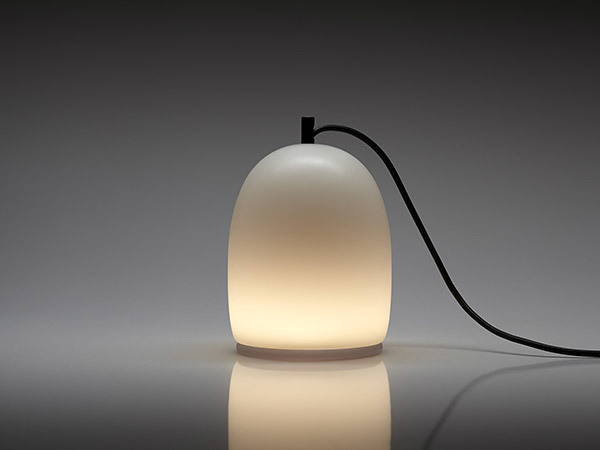 The 'Gradient' lamp uses varying thicknesses of cast resin. Image - Rodrick Bond.
What is your biggest motivator or muse when you are designing?
We get really excited about the translation from idea into a physical object. It feels like Christmas every time we receive the first prototype of something we have designed. Maybe that's why we have so many ALMOST finished projects. We tend to lose interest once the product is 90% resolved and it comes to production and marketing... that definitely kills the joy for us.
What has been the most pivotal point or event in your design life so far?
Winning QANTAS SOYA 2013 in the Craft and Object Design category judged by Marc Newson. That was the moment when we realised that we actually might be doing something good.
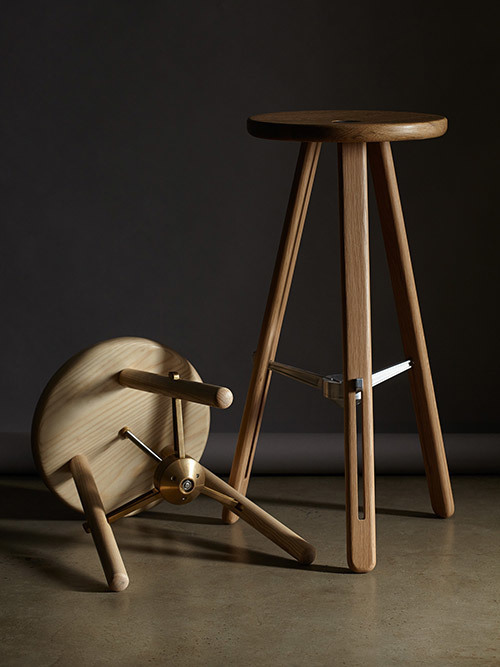 'Harpoon' is a universal joint uniting material strength and simplicity of form. Image - Rodrick Bond.
What (or who) inspired your most recent design?
Our latest Harpoon Joint collection was inspired by the huge amount of design within the joinery and hardware in furniture which is generally hidden and unappreciated in order to create clean minimalist pieces of furniture. We wanted to do the opposite and celebrate all the engineering thinking which goes into holding a piece of furniture together. This is how we approached designing a multifunctional joint which can hold together a stool or a table in compression. Only one nut needs to be tightened to put together a piece of furniture using the joint. We also wanted it to be a centrepiece of the design and have some monumental qualities.
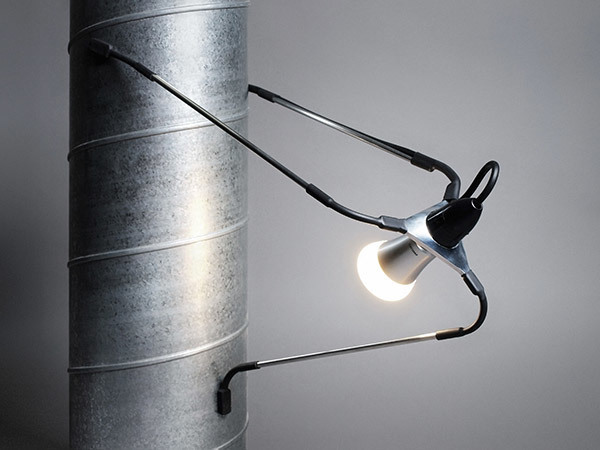 The 'Spyder' light was born from a need for a flexible light in the daast studio.
Do you have a favourite design in your portfolio, and why?
Our Spyder light - this was one of those ideas that just hits you and after 30 minutes we already had a resolved prototype. This design still makes us smile when we walk past it. It's like a living creature. It's very simple but versatile and it is still fascinating to find new applications for it.
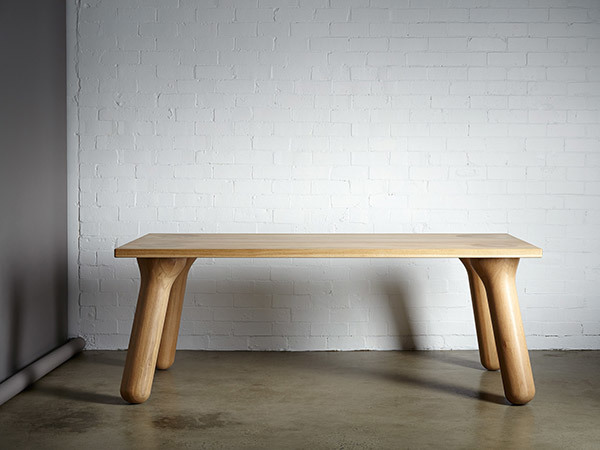 The 'Bg Foot' table accentuates the natural properties of American oak. Image - Rodrick Bond.
What materials, processes or new categories do you hope to explore in future?
Too many to list. Every time we see something that is well designed or built we start thinking about how would we approach it. It doesn't matter if it is a pair of chopsticks or a doorstop. Everything around us is designed to a certain degree. We really want to try as many different categories as we can. It's not very exciting to design only furniture or lighting. We think that this market is already overflowing with good designs.
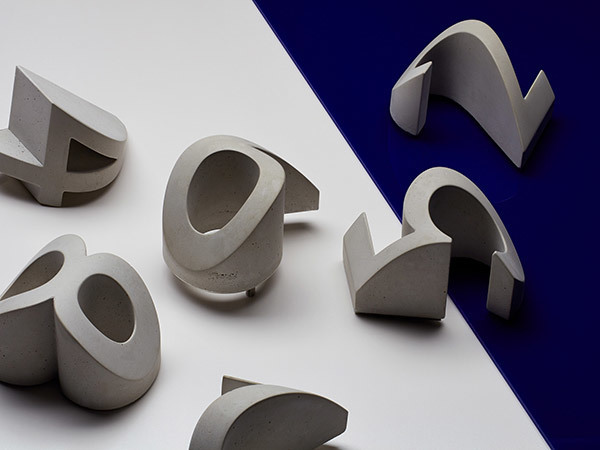 3D house numbers in cast concrete illustrate a playful approach. Image - Rodrick Bond.
Do you have one piece of styling/ /design advice for home decorators?
We highly recommend allowing yourself freedom of self expression, instead of 'replicating' existing spaces/designs, which is the common practice. We also definitely prefer creative mess over well-organised and balanced space.
Quickfire questions:
My favourite iconic design is: Clay chair by Maarten Baas
My dream project would be: project without a client
My guilty design secret is: can't draw
My favourite era for design is: now
I am creatively fuelled by: procrastination
Follow daast on Facebook or in Instagram @daastdesign
Voting in our Emerging Designer Award 2015 has now closed.
Explore More



Payment options





Head Office (No Showroom)
2/1-7 Unwins Bridge Rd, St Peters,
NSW 2044, Australia
Your customer reference #:
01-X-CSN