


Blog

Updated 26 March 2021
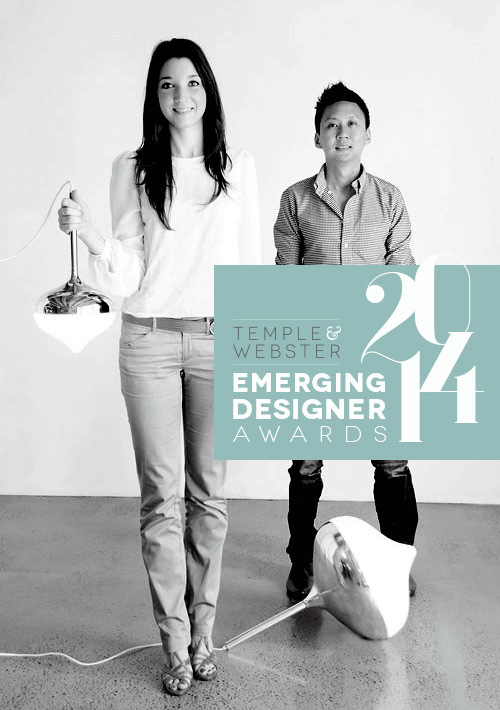
David Harrison introduces Alex Gilmour and Dominic Chong, whose Evie Group is one of the ten nominees for the Temple & Webster Emerging Designer Award.
Both Chong and Gilmour have completed degrees in Industrial Design and a Masters in Design at Sydney's University of Technology. The two met while studying and formed the Evie Group design studio together in 2010. Gilmour was talented enough to win the Qantas Spirit of Youth Award for Industrial and Object Design in 2010, and that led to an internship with Marc Newson in London in the same year. She also gained valuable experience working for some high profile global companies such as Missoni Home, Georg Jensen and GM Motors. In combination with Chong who also holds a degree in Engineering Manufacturing, the Evie Group is able to offer services across graphic, product lighting and furniture design while producing their own collection of interior products such as the highly acclaimed 'Spun' light.
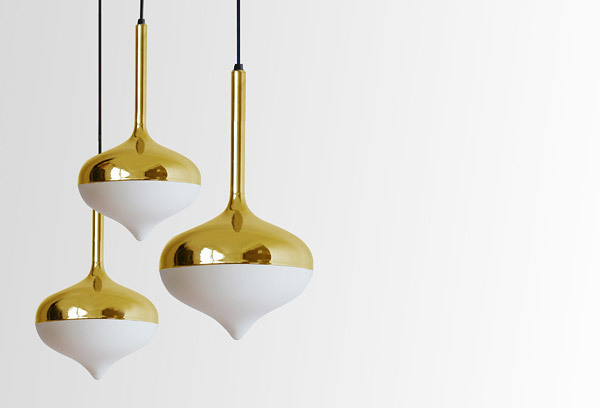
Inspired by the classic spinning top, the Spun lights are available in several finishes.
What is your biggest motivator, muse or inspiration when you are designing?
We are inspired by simplicity in design and iconic Scandinavian, Japanese and American modernism, but have our own unique take on something that looks classic, yet modern.
Each product we design tends to take on its own form or character. We try not to restrict our design process by locking in an idea too early. We look and experiment with various forms, materials, assembly details and ideas on how the user will interact with the design, which in turn drives the direction of the finished product.
The positive feedback we receive from people that enjoy using our products as well as the design community also motivates and inspires us in our work.
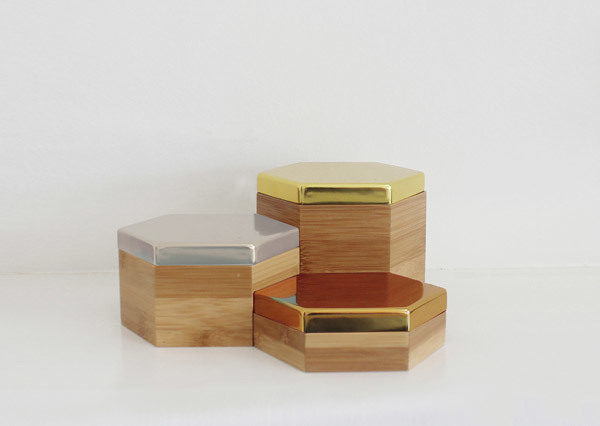
Stackable Hex boxes in three sizes are hand-made from bamboo with aluminium lids and a felt insert.
What has been the single most pivotal point or event in your design life so far?
Dominic: Getting my first industrial design job while still at university was pivotal for me. This made me see the importance of not just the pure design aesthetics and technicalities, but a holistic approach to design that had to consider deadlines, budgets, sustainability practicality, shipping, client demands, the end user etc.
Alex: The moment I decided to give up the stability of working for a company and start my own design business. This was a calculated risk that I was willing to take, being motivated to do my own designs and be my own boss! The pivotal point knowing that I made the right decision was winning the Qantas SOYA award for my first 2 designs and a mentorship with Marc Newson in London.
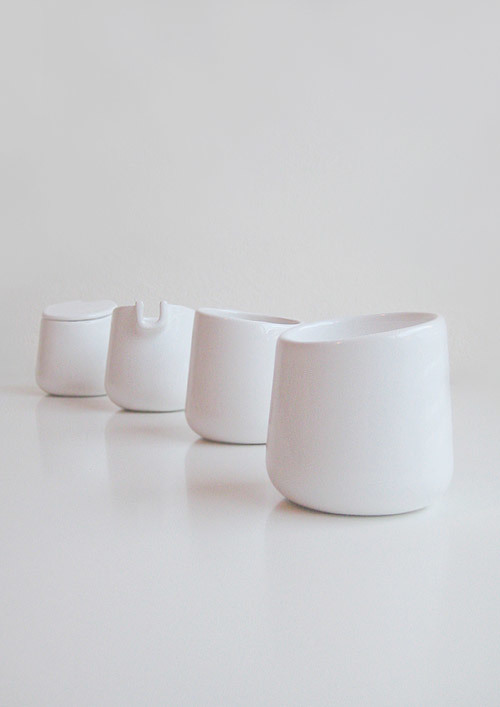
The charming Emily tea set features subtle curves and slight angles.
What existing object or piece of furniture do you wish you had designed?
We have many favourite iconic designs, however the Eames DCW would be the piece we wish we had designed. We love the simplicity of form that has lasted decades, innovation in materials and production for the time and of course its ability to not look out of place in any setting/environment.
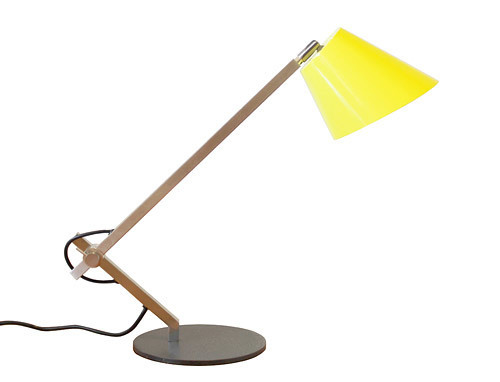
The Robin lamp, also available with a black or white shade, has a bird-like aesthetic.
Can you summarise some of the benefits of working as a duo?
Our little duo is great! It has the benefits of constructive feedback, competitiveness to improve designs as well as the ability to bounce ideas off each other. We have similar skill sets but also each has our own strengths that really benefit our personal and client projects. This is a main reason why we are able to do a diverse range of designs from products, interior projects, desktop publishing, presentation and digital design for events. Some might say it is best to focus on one field, however, we enjoy the diversity this multidisciplinary approach allows us to utilise different skill sets across projects. This also makes each work day new and exciting.
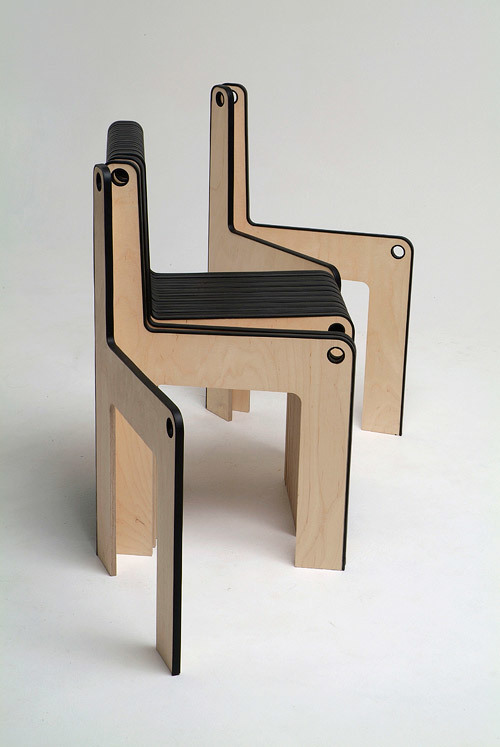
The Silhouette is an exploration in conceptual design and material interaction - both an interactive art piece (above) and a seat for one (below).
Dominic, you are originally from Singapore. Do you think that this comes through in your work? If so, how?
Even though Singapore is a westernised country, culturally, it has influences from the Chinese, Malay and India. Growing up surrounded by this diversity, I feel I am not locked into a single design approach or style but rather inspired by a range of elements and experiences.
Because Singapore is a modern hub, I was able grow up with access to wide range of interesting new products from Asia, Europe and America, which helped to take an international view of design early on (all before the Internet took off).
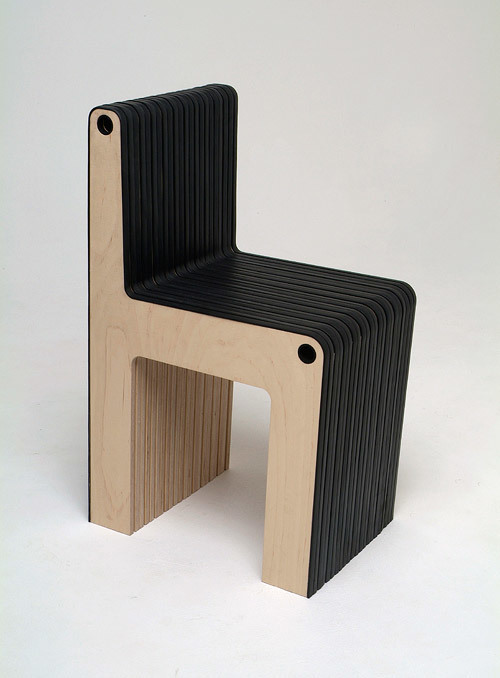
The Silhouette, a modular seating system.
There is a delicacy to your designs that comes either from the minimal amount of material used or the materials themselves (glass, ceramic etc). Do you prefer visually light objects over solid massive ones?
We do like simplicity in design. The minimalist approach is something we bring into our designs as we are not complicated people by nature. We like things to appear simple, be beautiful, and have pieces that just work.
The key for us is finding the balance in materials and form, rather than intentionally designing a light over a heavy object. The aim in each finished product is to convey a timeless aesthetic rather than being dictated by trends.
Find out more at the Evie Group website or follow them on Facebook or on Instagram @eviegroup.
Alex Gilmour & Dominic Chong – Evie Group - Emerging Designer Award 2014
David Harrison introduces Alex Gilmour and Dominic Chong, whose Evie Group is one of the ten nominees for the Temple & Webster Emerging Designer Award.
Both Chong and Gilmour have completed degrees in Industrial Design and a Masters in Design at Sydney's University of Technology. The two met while studying and formed the Evie Group design studio together in 2010. Gilmour was talented enough to win the Qantas Spirit of Youth Award for Industrial and Object Design in 2010, and that led to an internship with Marc Newson in London in the same year. She also gained valuable experience working for some high profile global companies such as Missoni Home, Georg Jensen and GM Motors. In combination with Chong who also holds a degree in Engineering Manufacturing, the Evie Group is able to offer services across graphic, product lighting and furniture design while producing their own collection of interior products such as the highly acclaimed 'Spun' light.
Inspired by the classic spinning top, the Spun lights are available in several finishes.
What is your biggest motivator, muse or inspiration when you are designing?
We are inspired by simplicity in design and iconic Scandinavian, Japanese and American modernism, but have our own unique take on something that looks classic, yet modern.
Each product we design tends to take on its own form or character. We try not to restrict our design process by locking in an idea too early. We look and experiment with various forms, materials, assembly details and ideas on how the user will interact with the design, which in turn drives the direction of the finished product.
The positive feedback we receive from people that enjoy using our products as well as the design community also motivates and inspires us in our work.
Stackable Hex boxes in three sizes are hand-made from bamboo with aluminium lids and a felt insert.
What has been the single most pivotal point or event in your design life so far?
Dominic: Getting my first industrial design job while still at university was pivotal for me. This made me see the importance of not just the pure design aesthetics and technicalities, but a holistic approach to design that had to consider deadlines, budgets, sustainability practicality, shipping, client demands, the end user etc.
Alex: The moment I decided to give up the stability of working for a company and start my own design business. This was a calculated risk that I was willing to take, being motivated to do my own designs and be my own boss! The pivotal point knowing that I made the right decision was winning the Qantas SOYA award for my first 2 designs and a mentorship with Marc Newson in London.
The charming Emily tea set features subtle curves and slight angles.
What existing object or piece of furniture do you wish you had designed?
We have many favourite iconic designs, however the Eames DCW would be the piece we wish we had designed. We love the simplicity of form that has lasted decades, innovation in materials and production for the time and of course its ability to not look out of place in any setting/environment.
The Robin lamp, also available with a black or white shade, has a bird-like aesthetic.
Can you summarise some of the benefits of working as a duo?
Our little duo is great! It has the benefits of constructive feedback, competitiveness to improve designs as well as the ability to bounce ideas off each other. We have similar skill sets but also each has our own strengths that really benefit our personal and client projects. This is a main reason why we are able to do a diverse range of designs from products, interior projects, desktop publishing, presentation and digital design for events. Some might say it is best to focus on one field, however, we enjoy the diversity this multidisciplinary approach allows us to utilise different skill sets across projects. This also makes each work day new and exciting.
The Silhouette is an exploration in conceptual design and material interaction - both an interactive art piece (above) and a seat for one (below).
Dominic, you are originally from Singapore. Do you think that this comes through in your work? If so, how?
Even though Singapore is a westernised country, culturally, it has influences from the Chinese, Malay and India. Growing up surrounded by this diversity, I feel I am not locked into a single design approach or style but rather inspired by a range of elements and experiences.
Because Singapore is a modern hub, I was able grow up with access to wide range of interesting new products from Asia, Europe and America, which helped to take an international view of design early on (all before the Internet took off).
The Silhouette, a modular seating system.
There is a delicacy to your designs that comes either from the minimal amount of material used or the materials themselves (glass, ceramic etc). Do you prefer visually light objects over solid massive ones?
We do like simplicity in design. The minimalist approach is something we bring into our designs as we are not complicated people by nature. We like things to appear simple, be beautiful, and have pieces that just work.
The key for us is finding the balance in materials and form, rather than intentionally designing a light over a heavy object. The aim in each finished product is to convey a timeless aesthetic rather than being dictated by trends.
Find out more at the Evie Group website or follow them on Facebook or on Instagram @eviegroup.
Explore More



Payment options





Head Office (No Showroom)
2/1-7 Unwins Bridge Rd, St Peters,
NSW 2044, Australia
Your customer reference #:
01-X-CSN