


Blog

Updated 30 April 2021
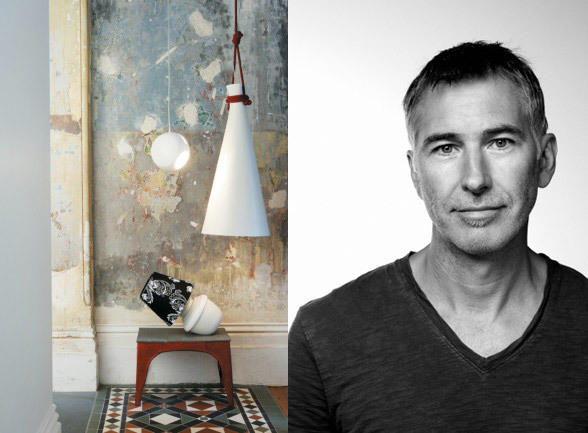
Design expert David Harrison writes and styles for magazines including Inside Out. Here he shares his highlights from the Milan Furniture Fair, held earlier this month. For more of his knowledgeable perspective on design both new and old, follow him on Instagram @designdaily.
As a writer on design and an interiors stylist, I look forward with great excitement each year to visiting Milan for Salone del Mobile, the world's most renowned furniture fair. Still the biggest and best collection of everything from the commercial to the conceptual in furniture, lighting and interior objects, Milan is inspiring in so many ways it's hard not to be overcome with anticipation as soon as you arrive.
With well over a thousand exhibitors at the official fairgrounds on the outskirts of Milan (in the small town of Rho) plus the myriad of events at showrooms in the city centre and the more alternative events in Tortona and Lambrata, covering the Milan fair in total is a big, if not impossible task.
I always try to see as much as possible, come hell or high water. Sore feet, lack of sleep and general jet-lag just have to be overcome. This is my main injection of international design for the year and I need to absorb as much as I can and do interviews with designers and manufacturers about their work and how the design business is going in general.
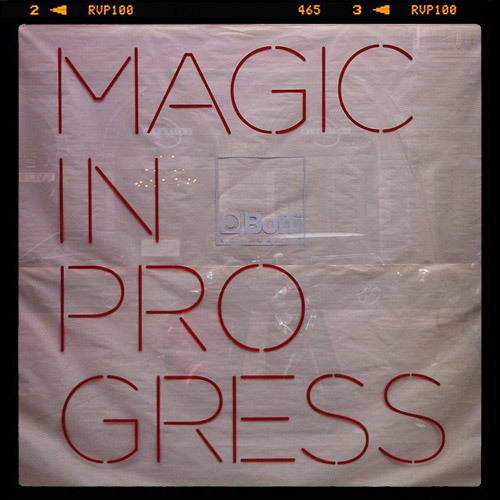
Okay, it's a corny line but in Milan during design week it's true. Behind papered shop windows across the city, a myriad of companies spend large amounts of time and money redoing their showrooms or creating installations to impress the hordes of visitors that descend on the city each year. This little pre-unveiling explanation featured in the windows of the Boffi showroom on via Solferino in Brera - the traditional design district of Milan.
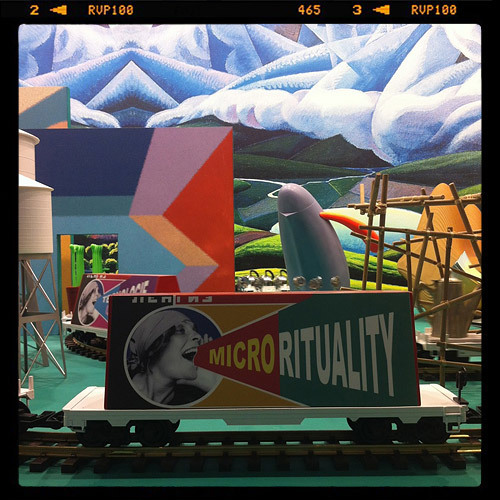
At the Triennale Design Museum, an exhibition celebrating Italian design heroes and companies included what was a well, yes, 'magical' installation for Alessi by Alessandro Mendini. Basically it was a room-sized box with a train track carrying miniature Alessi products around and around. The combination of colour, movement and childhood fascination was a winning combo. It was a big year for model railways - Vitra also featured one at their enormous stand at the main fairgrounds.
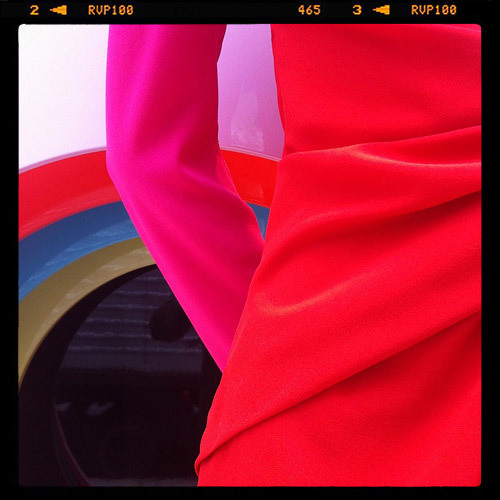
The combination of fluoro pink and bright red with the muddier blues, taupes and greens could be seen everywhere from fashion houses to the furniture stands. Changing colour palettes are now an essential part of a furniture company's master plan as they have learnt that a change of colour can totally reinvent their products - without having to spend any money on expensive R&D of new products.
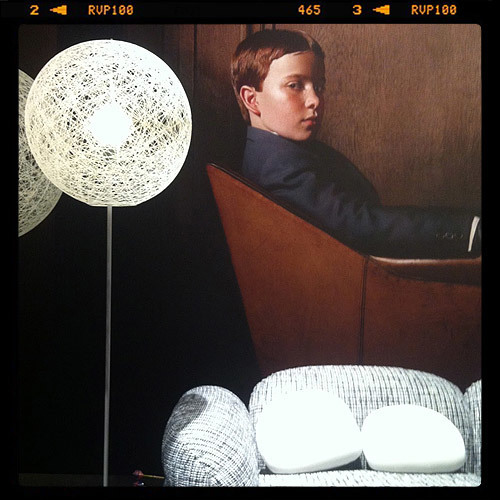
On a gobsmacking scale was the incredible 'Unexpected Welcome' show held by provocative Dutch company Moooi in via Savona. Taking over a building used by Cappellini, Cassina and Poltrona Frau for the last few years, Moooi transformed the space with room sets featuring huge 4.5m high photographs by Dutch photographer Erwin Olaf. A regular contributor of images to Moooi's catalogues, Olaf's work on this occasion was from his personal portfolio and the haughty fashion treatment of a variety of subjects from children to female nudes created a somewhat eerie mood of constantly being watched. The play on scale contributed to what was an amazing visual treat.
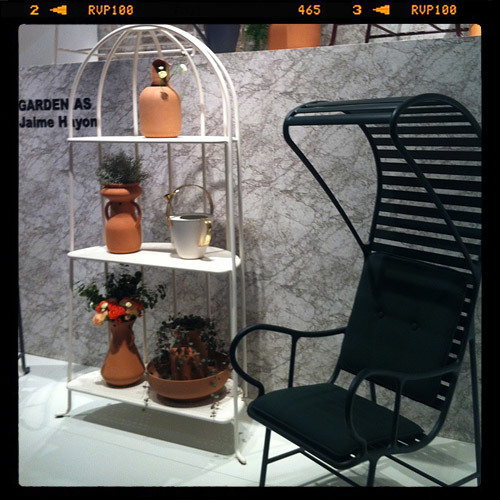
Jaime Hayon, the ever-enthusiastic Spanish designer, loves to chat, particularly when talking about one of his new products. The launch of his whimsical new outdoor range 'Gardenias' for Spanish manufacturer BD Barcelona therefore had him very excited. The all aluminium range includes chairs, shelving, benches and eventually a swinging loveseat. A special new paint by Dupont has been utilised that keeps the metal 20 degrees cooler - perfect for the types of temperatures shared by Spain and Australia. As an added little flourish, Hayon also designed some cute terracotta vases and a watering can to accessorise the range. Check out Hayon's other main product from Milan this year, the 'Ro' chair for Fritz Hansen.
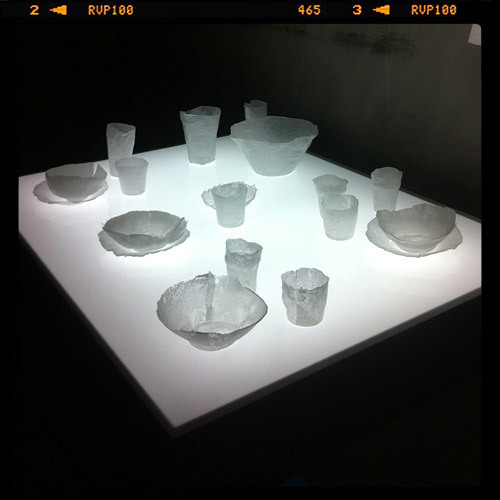
One of the highlights of an event called FOODMADE in Lambrata that was all about food and its possible uses in the production of objects or projects, were these amazingly delicate vessels made from altar bread. Softened with water and reshaped, these forms had the translucency of rice paper. Design studio Ctrlzak created the pieces. Another design group Usedesign, made vessels from baked bread crumbs, salt and flour (with a little natural plant resin) that could actually be used, washed and reused many times.
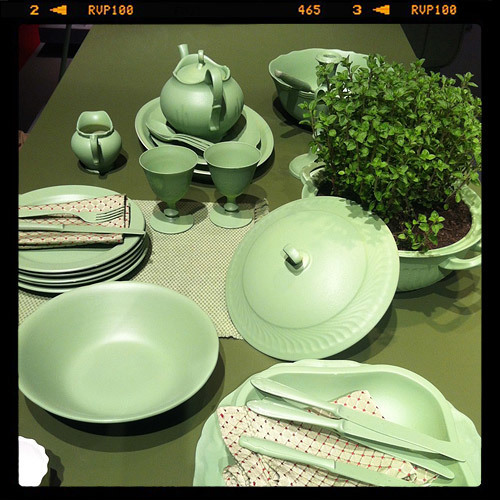
Mint was definitely one of the hottest new colours of the year. Pastels in general remained the colour palette with additional punch being added by fluoro orange, pink and lime. The accessories in this lovely calm green shade shown above, were part of Italian furniture company Casamania's stand at the main fairgrounds at Rho. While not actually for sale these stylist's props did convey the tone of the new colours shown through the range.
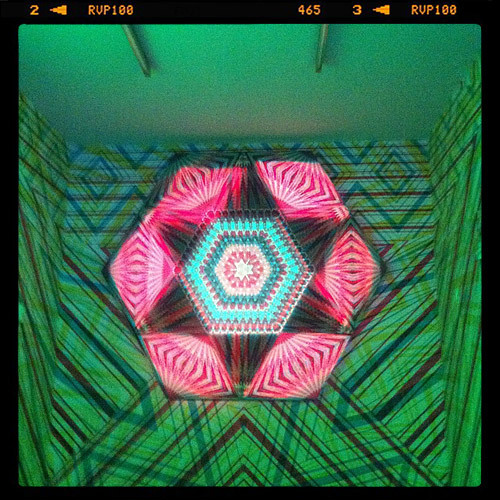
Missoni is family run fabric and homewares business headed by Rosita Missoni. This year one of the brand's three events was held at their showroom in via Solferino. The celebration of light and pattern 'ZigZagging' was designed by artist/designer duo Carnovsky in collaboration with Luca Missoni. The installation was like being in a very artistic nightclub with the projected patterns taking on ever changing neon qualities.
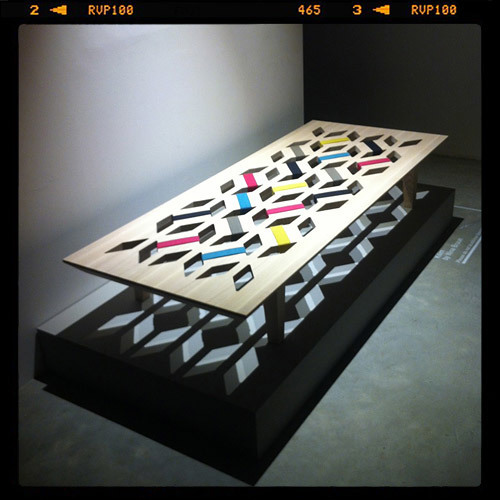
This beautiful simple bench of laser-cut plywood and coloured thread creates not only a visual treat on the surface but intricate shadows on the floor when lit from above. Designed by Nina Bruun, it was part of the Mindcraft 2013 show at Lambrata. Largely funded by the Danish Ministry of Culture, this event has been one of my Milan highlights each year with the cream of new young Danish design talent being selected to show their work.
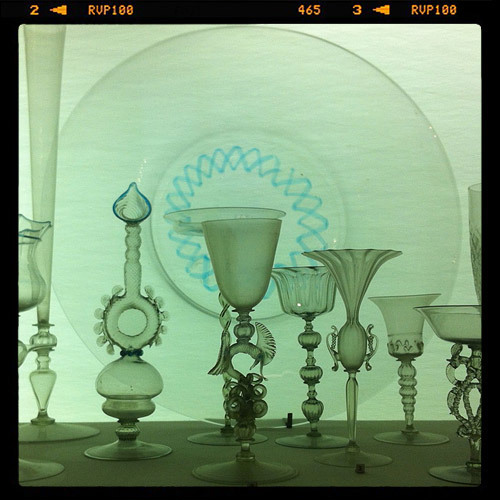
Venetian glass is revered the world over, but to see old examples backlit at the Museo Poldi Pezzoli was a real treat. The workmanship is incredible as the artists attempted to create the lightest most delicate object possible. Fragile but usable works of art.
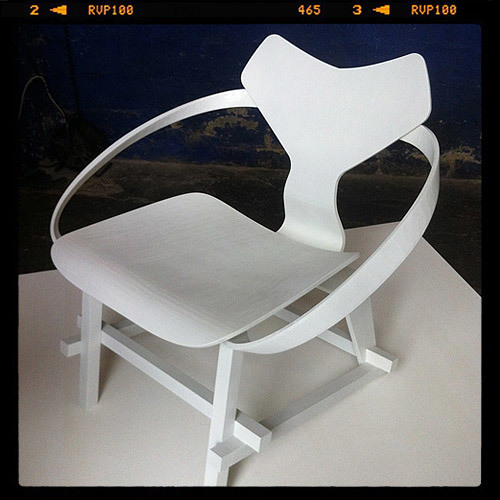
3-D prototyping is destined to become a household reality as manufacturers work towards domestic sized machines that could potentially 'print out' jewellery and cutlery sized objects. Printing a chair is a little further off as the size of the machine required to do so is enormous. The designer Diederik Schneemann decided to exhibit his 'Mash Up' chair to highlight the type of intellectual property issues that are bound to come along once domestic 3-D printers become available. This chair is made up of elements of 5 very famous mainly 20th century chairs: the seat and back legs are from Charles and Ray Eames' 'DCW', the arms are from a Cherner chair, the front legs and side rails from Rietveld's 'Red/blue' chair and the back from Arne Jacobsen's 'Grand Prix' chair. A tiny bit of Ross Lovegrove's 'Orb' chair is only visible from the back.
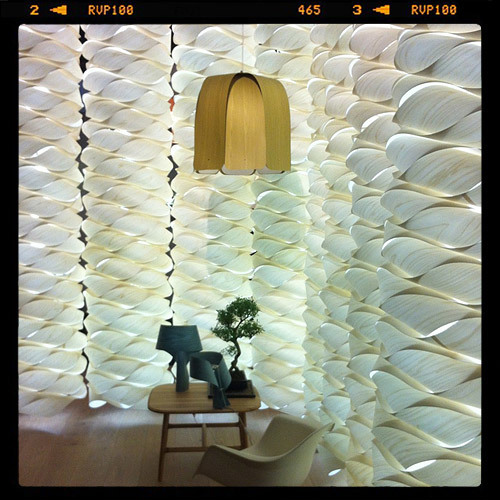
Spanish company LZF works in fine timber veneers to create a wide range of delicate looking, semi transparent lights. They also have developed a small number of other products like room dividers. The combination of the natural timber grain and the organic looping shapes that the company creates, can really add a softness to hard contemporary architecture. The range is available in Australia through Ke-Zu.
David's report on young designers at Milan will appear on the Powerhouse Museum's D*Hub website in coming weeks, and his roundup of new & low-cost design will appear in an upcoming issue of Real Living magazine.
Styled image (top) photographed by Sam McAdam for Inside Out.
Visit the Milan Furniture Fair with David Harrison
Design expert David Harrison writes and styles for magazines including Inside Out. Here he shares his highlights from the Milan Furniture Fair, held earlier this month. For more of his knowledgeable perspective on design both new and old, follow him on Instagram @designdaily.
As a writer on design and an interiors stylist, I look forward with great excitement each year to visiting Milan for Salone del Mobile, the world's most renowned furniture fair. Still the biggest and best collection of everything from the commercial to the conceptual in furniture, lighting and interior objects, Milan is inspiring in so many ways it's hard not to be overcome with anticipation as soon as you arrive.
With well over a thousand exhibitors at the official fairgrounds on the outskirts of Milan (in the small town of Rho) plus the myriad of events at showrooms in the city centre and the more alternative events in Tortona and Lambrata, covering the Milan fair in total is a big, if not impossible task.
I always try to see as much as possible, come hell or high water. Sore feet, lack of sleep and general jet-lag just have to be overcome. This is my main injection of international design for the year and I need to absorb as much as I can and do interviews with designers and manufacturers about their work and how the design business is going in general.
Okay, it's a corny line but in Milan during design week it's true. Behind papered shop windows across the city, a myriad of companies spend large amounts of time and money redoing their showrooms or creating installations to impress the hordes of visitors that descend on the city each year. This little pre-unveiling explanation featured in the windows of the Boffi showroom on via Solferino in Brera - the traditional design district of Milan.
At the Triennale Design Museum, an exhibition celebrating Italian design heroes and companies included what was a well, yes, 'magical' installation for Alessi by Alessandro Mendini. Basically it was a room-sized box with a train track carrying miniature Alessi products around and around. The combination of colour, movement and childhood fascination was a winning combo. It was a big year for model railways - Vitra also featured one at their enormous stand at the main fairgrounds.
The combination of fluoro pink and bright red with the muddier blues, taupes and greens could be seen everywhere from fashion houses to the furniture stands. Changing colour palettes are now an essential part of a furniture company's master plan as they have learnt that a change of colour can totally reinvent their products - without having to spend any money on expensive R&D of new products.
On a gobsmacking scale was the incredible 'Unexpected Welcome' show held by provocative Dutch company Moooi in via Savona. Taking over a building used by Cappellini, Cassina and Poltrona Frau for the last few years, Moooi transformed the space with room sets featuring huge 4.5m high photographs by Dutch photographer Erwin Olaf. A regular contributor of images to Moooi's catalogues, Olaf's work on this occasion was from his personal portfolio and the haughty fashion treatment of a variety of subjects from children to female nudes created a somewhat eerie mood of constantly being watched. The play on scale contributed to what was an amazing visual treat.
Jaime Hayon, the ever-enthusiastic Spanish designer, loves to chat, particularly when talking about one of his new products. The launch of his whimsical new outdoor range 'Gardenias' for Spanish manufacturer BD Barcelona therefore had him very excited. The all aluminium range includes chairs, shelving, benches and eventually a swinging loveseat. A special new paint by Dupont has been utilised that keeps the metal 20 degrees cooler - perfect for the types of temperatures shared by Spain and Australia. As an added little flourish, Hayon also designed some cute terracotta vases and a watering can to accessorise the range. Check out Hayon's other main product from Milan this year, the 'Ro' chair for Fritz Hansen.
One of the highlights of an event called FOODMADE in Lambrata that was all about food and its possible uses in the production of objects or projects, were these amazingly delicate vessels made from altar bread. Softened with water and reshaped, these forms had the translucency of rice paper. Design studio Ctrlzak created the pieces. Another design group Usedesign, made vessels from baked bread crumbs, salt and flour (with a little natural plant resin) that could actually be used, washed and reused many times.
Mint was definitely one of the hottest new colours of the year. Pastels in general remained the colour palette with additional punch being added by fluoro orange, pink and lime. The accessories in this lovely calm green shade shown above, were part of Italian furniture company Casamania's stand at the main fairgrounds at Rho. While not actually for sale these stylist's props did convey the tone of the new colours shown through the range.
Missoni is family run fabric and homewares business headed by Rosita Missoni. This year one of the brand's three events was held at their showroom in via Solferino. The celebration of light and pattern 'ZigZagging' was designed by artist/designer duo Carnovsky in collaboration with Luca Missoni. The installation was like being in a very artistic nightclub with the projected patterns taking on ever changing neon qualities.
This beautiful simple bench of laser-cut plywood and coloured thread creates not only a visual treat on the surface but intricate shadows on the floor when lit from above. Designed by Nina Bruun, it was part of the Mindcraft 2013 show at Lambrata. Largely funded by the Danish Ministry of Culture, this event has been one of my Milan highlights each year with the cream of new young Danish design talent being selected to show their work.
Venetian glass is revered the world over, but to see old examples backlit at the Museo Poldi Pezzoli was a real treat. The workmanship is incredible as the artists attempted to create the lightest most delicate object possible. Fragile but usable works of art.
3-D prototyping is destined to become a household reality as manufacturers work towards domestic sized machines that could potentially 'print out' jewellery and cutlery sized objects. Printing a chair is a little further off as the size of the machine required to do so is enormous. The designer Diederik Schneemann decided to exhibit his 'Mash Up' chair to highlight the type of intellectual property issues that are bound to come along once domestic 3-D printers become available. This chair is made up of elements of 5 very famous mainly 20th century chairs: the seat and back legs are from Charles and Ray Eames' 'DCW', the arms are from a Cherner chair, the front legs and side rails from Rietveld's 'Red/blue' chair and the back from Arne Jacobsen's 'Grand Prix' chair. A tiny bit of Ross Lovegrove's 'Orb' chair is only visible from the back.
Spanish company LZF works in fine timber veneers to create a wide range of delicate looking, semi transparent lights. They also have developed a small number of other products like room dividers. The combination of the natural timber grain and the organic looping shapes that the company creates, can really add a softness to hard contemporary architecture. The range is available in Australia through Ke-Zu.
David's report on young designers at Milan will appear on the Powerhouse Museum's D*Hub website in coming weeks, and his roundup of new & low-cost design will appear in an upcoming issue of Real Living magazine.
Styled image (top) photographed by Sam McAdam for Inside Out.
Explore More



Payment options





Head Office (No Showroom)
2/1-7 Unwins Bridge Rd, St Peters,
NSW 2044, Australia
Your customer reference #:
01-X-CSN