



Updated 25 February 2021
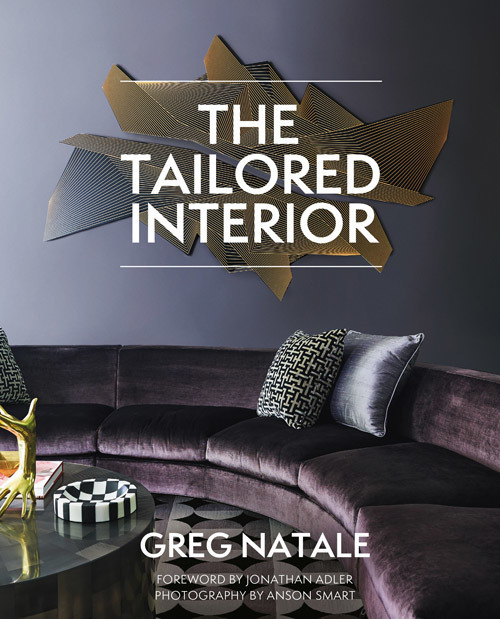
In his new book 'The Tailored Interior' celebrated interior designer Greg Natale is generous enough to share his immense decorating knowledge, accumulated over years of practice. In the words of Jonathan Adler's foreword: 'A Greg Natale space has an almost mathematical precision. The layout, the scale, the comfort, the function are all spot on. He uses an economy of gesture: not too much stuff, just the right amount.' Here we showcase some of Natale's key themes and how he approaches, layering, cohesion, contrast, colour and pattern and objects in an interior space. Leave a comment here for your chance to win a copy - full details below.

"When you're creating the mood for a space, the first step is to find your inspiration. A revamped personal favourite, such as a reupholstered piece of furniture can often set the tone for the room's design": Greg Natale.
Layering
Layering is the most fundamental component in decorating – it adds warmth, comfort and interest to an interior giving it a finished, cohesive look. It's a chance to play with different textures and experiment with balance and contrast. It is also a way of stamping your personality on a room, adding the various elements that tell the story of you.
Assuming that you have created your canvas of walls, floors and ceilings and made your first layering choices, in terms of paint and/or wallpaper, I have detailed an order to follow with your layers. This is the approach I use and find it the best way to build up a cohesive design.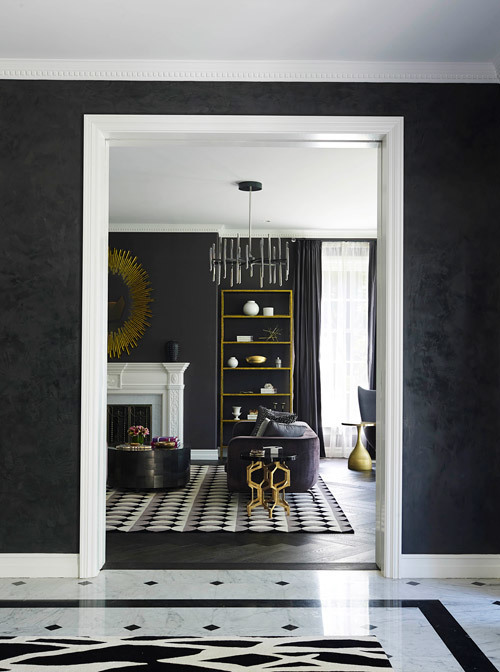
Against the moody charcoal-gray backdrop, gilt elements in the living room create a visual 'conversation' between pieces.
Contrast
Contrast generates visual excitement and creative tension in a room, preventing a space from appearing flat or bland. It uses an interplay of finishes, fabrics, colours and pieces to keep your eyes moving around a space, thereby making a design more dynamic. There is good reason why we pair a black suit with a white shirt. Opposites just don't attract – they look great together.
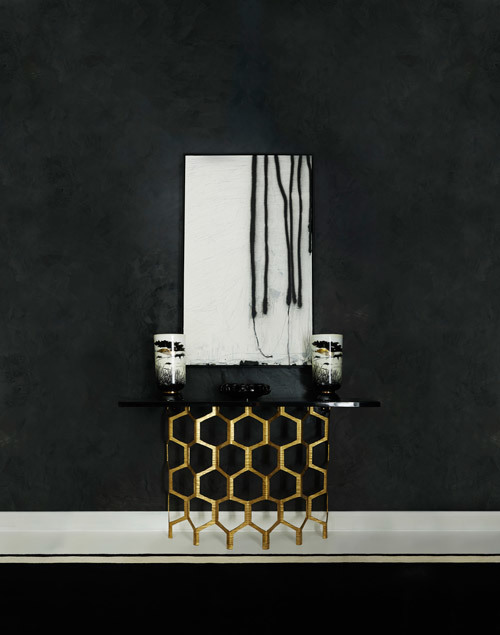
A study in monochromes features on the landing of a Melbourne house, with the tones of the ornaments and painting highlighted by the intricate gold design of a Porta Romana Honeycomb console table.
Colour and pattern
These powerful, enigmatic and enchanting elements can do so much for a space, finishing it by injecting contrast, ensuring balance and creating a particular mood. It is a pleasure to work with them but by no means an easy task. While I am known for my use of both colour and pattern, they are actually among my last considerations in an interior. There's a reason why they should be thought about further along in the conceptual process, particularly colour.
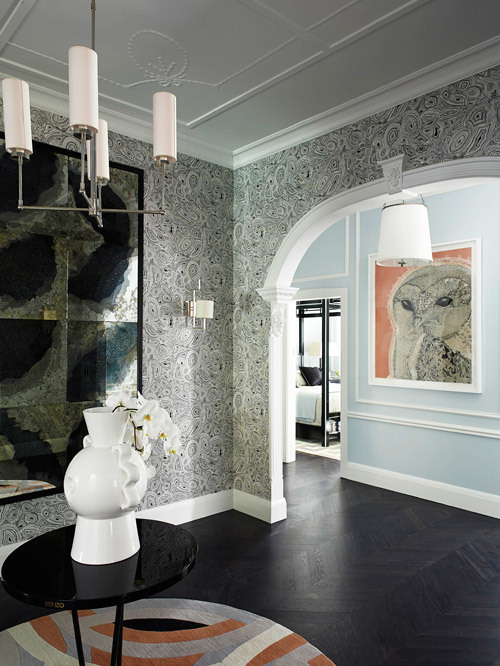
Against the whorls of Fornasetti Malachite wallpaper in an Edwardian house in Croydon, the soft blue of the walls and terracotta of the painting are picked up in the rug's organic curves, forming a subtle connection.
Objects
Once you've ensured that your key pieces and palette appear balanced, it's time for the finishing touches. I'm talking about accessories, flowers, vases, books, artworks, ornaments, trays, and boxes – the final layer of decorating that will complete your house's look. It is the interior equivalent of adding a belt and cufflinks or jewellery and perfume to your outfit. For most people, it's the fun part of the process, but interestingly it is also the part many struggle with. A common mistake is forgetting to budget for this last piece of the design puzzle – I recommend planning for 10% of what you spend on furniture.
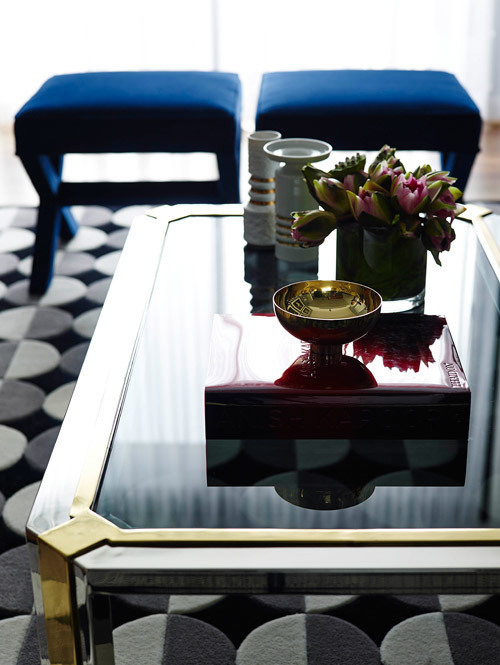
The smaller scale of this Fitzroy apartment was no barrier to creating a successful tabletop vignette. On the Jonathan Adler coffee table, a bowl by Ilse Crawford for Georg Jensen sits atop a book about sculptor Anish Kapoor, with a simple vase of flowers and two vintage candle holders adding intricate details behind.
Cohesion
Cohesion is all about making sure everything flows and fits, with all the different elements coming together to suggest one seamless space. The main reason houses don't come together properly is because people tend to look at things in isolation when they are purchasing pieces and styling rooms. With interiors you need to look at every element as part of one huge composition or collage, where each piece and every treatment has a role in the space and shares a relationship with the others. Cohesion is all about context.
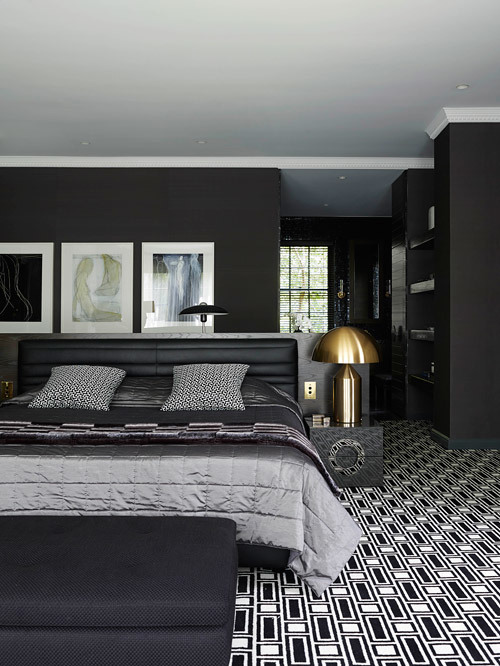
The bed and surrounding pieces make a statement in the ample space of the master bedroom of a Melbourne house.
The Tailored Interior by Greg Natale, with foreword by Jonathan Adler and photography by Anson Smart is published by Hardie Grant Books.
Leave a comment below before 5pm (AEDT) Wednesday 12 November 2014 to win 1 of 2 copies of The Tailored Interior by Greg Natale. You must be a member of Temple & Webster to enter, and you may only enter once. We'll pick our favourite comments and contact the winners via Facebook or email by Friday 21 November 2014. If we are unable to contact the winner(s) within 30 days we'll pick an alternative winner. Competition closed.
The Tailored Interior by Greg Natale
In his new book 'The Tailored Interior' celebrated interior designer Greg Natale is generous enough to share his immense decorating knowledge, accumulated over years of practice. In the words of Jonathan Adler's foreword: 'A Greg Natale space has an almost mathematical precision. The layout, the scale, the comfort, the function are all spot on. He uses an economy of gesture: not too much stuff, just the right amount.' Here we showcase some of Natale's key themes and how he approaches, layering, cohesion, contrast, colour and pattern and objects in an interior space. Leave a comment here for your chance to win a copy - full details below.
"When you're creating the mood for a space, the first step is to find your inspiration. A revamped personal favourite, such as a reupholstered piece of furniture can often set the tone for the room's design": Greg Natale.
Layering
Layering is the most fundamental component in decorating – it adds warmth, comfort and interest to an interior giving it a finished, cohesive look. It's a chance to play with different textures and experiment with balance and contrast. It is also a way of stamping your personality on a room, adding the various elements that tell the story of you.
Assuming that you have created your canvas of walls, floors and ceilings and made your first layering choices, in terms of paint and/or wallpaper, I have detailed an order to follow with your layers. This is the approach I use and find it the best way to build up a cohesive design.
- Window treatments
- Key pieces (sofas, feature chairs, rugs)
- Extra pieces (coffee and side tables)
- Soft furnishings
- Accessories
- Art and wall décor
- Books
- Flowers
Against the moody charcoal-gray backdrop, gilt elements in the living room create a visual 'conversation' between pieces.
Contrast
Contrast generates visual excitement and creative tension in a room, preventing a space from appearing flat or bland. It uses an interplay of finishes, fabrics, colours and pieces to keep your eyes moving around a space, thereby making a design more dynamic. There is good reason why we pair a black suit with a white shirt. Opposites just don't attract – they look great together.
A study in monochromes features on the landing of a Melbourne house, with the tones of the ornaments and painting highlighted by the intricate gold design of a Porta Romana Honeycomb console table.
Colour and pattern
These powerful, enigmatic and enchanting elements can do so much for a space, finishing it by injecting contrast, ensuring balance and creating a particular mood. It is a pleasure to work with them but by no means an easy task. While I am known for my use of both colour and pattern, they are actually among my last considerations in an interior. There's a reason why they should be thought about further along in the conceptual process, particularly colour.
Against the whorls of Fornasetti Malachite wallpaper in an Edwardian house in Croydon, the soft blue of the walls and terracotta of the painting are picked up in the rug's organic curves, forming a subtle connection.
Objects
Once you've ensured that your key pieces and palette appear balanced, it's time for the finishing touches. I'm talking about accessories, flowers, vases, books, artworks, ornaments, trays, and boxes – the final layer of decorating that will complete your house's look. It is the interior equivalent of adding a belt and cufflinks or jewellery and perfume to your outfit. For most people, it's the fun part of the process, but interestingly it is also the part many struggle with. A common mistake is forgetting to budget for this last piece of the design puzzle – I recommend planning for 10% of what you spend on furniture.
The smaller scale of this Fitzroy apartment was no barrier to creating a successful tabletop vignette. On the Jonathan Adler coffee table, a bowl by Ilse Crawford for Georg Jensen sits atop a book about sculptor Anish Kapoor, with a simple vase of flowers and two vintage candle holders adding intricate details behind.
Cohesion
Cohesion is all about making sure everything flows and fits, with all the different elements coming together to suggest one seamless space. The main reason houses don't come together properly is because people tend to look at things in isolation when they are purchasing pieces and styling rooms. With interiors you need to look at every element as part of one huge composition or collage, where each piece and every treatment has a role in the space and shares a relationship with the others. Cohesion is all about context.
The bed and surrounding pieces make a statement in the ample space of the master bedroom of a Melbourne house.
The Tailored Interior by Greg Natale, with foreword by Jonathan Adler and photography by Anson Smart is published by Hardie Grant Books.
Leave a comment below before 5pm (AEDT) Wednesday 12 November 2014 to win 1 of 2 copies of The Tailored Interior by Greg Natale. You must be a member of Temple & Webster to enter, and you may only enter once. We'll pick our favourite comments and contact the winners via Facebook or email by Friday 21 November 2014. If we are unable to contact the winner(s) within 30 days we'll pick an alternative winner. Competition closed.
Explore More








Head Office (No Showroom)
2/1-7 Unwins Bridge Rd, St Peters,
NSW 2044, Australia
Your customer reference #:
01-X-CSN