



Updated 27 May 2021
T&W Guests: David & Mel Hardwick, Hardwick & Cesko
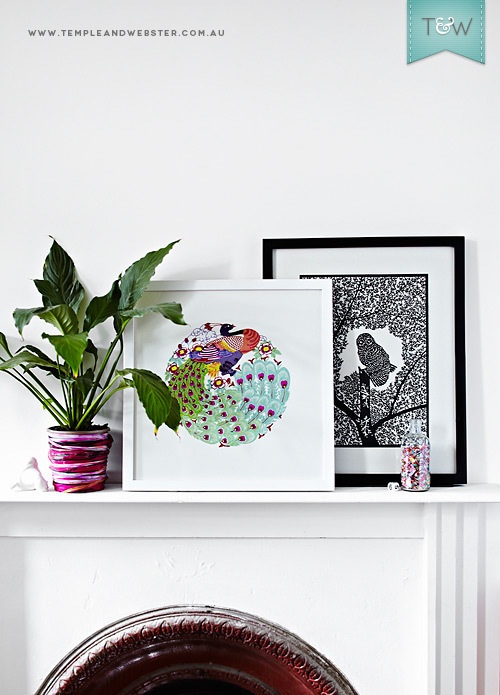
Our Hardwick & Cesko feature includes amazing artworks created using the ancient technique of papercutting - each design has literally been cut out by hand by artist Ai Meng Li. We love that the artworks look so modern, and yet have been created using a technique that has been practiced in China for over a thousand years. We spoke to David Hardwick about paper cutting and creating products with soul.
David, what inspired you and Mel to start Hardwick & Cesko?
I was working for a large furniture retailer as a designer & buyer and decided I wanted to concentrate more on the design side of things, so I started out on my own designing furniture. Once we started on PaperCuts art, Mel joined the business to develop that side of it.
Once we had our first child Evie, everything was turned upside down a bit, and we came to the realisation that we wanted to develop the brand on more of a consumer level rather than working behind the scenes for other companies. This allowed us to instil our own personalities and philosophies into our product direction, and we're having a lot of fun with it now. There's so much more to do though, which can be little overwhelming as it's just the two of us, but exciting at the same time.
What is paper cutting, and how did you learn about it?
I was in China for work and stumbled across the artworks in a local market one night. I fell in love with them and the story behind the traditional form of artwork. Paper cutting is an ancient folk art which can be traced back thousands of years in Chinese, Japanese, Mexican and many other ancient cultures. Traditional papercut artworks are designed to evoke the happiness of festivals, children, and animals and also demonstrate an affinity with the natural world.
Once we discovered the artworks, we spent months making them viable to bring into Australia. We've been selling the artworks for around 2-3yrs now, starting off with a very basic range and slowly building it up, and we've had a great response.
Can you tell us about Ai Meng Li, the artist?
Ai Meng Li lives & works in Shanghai, and has been practicing the art of paper cutting for 17 years. Ai has been wonderful to deal with and we've established a very strong relationship with her over the years.
She taught herself paper cutting in her home village in the north of China, and says she loves the visual vocabulary in paper cutting that has been developed over such a long period of time and by many influential practitioners. The paper cutting artist plays with scale by using tiny silhouettes of humans dancing, playing instruments or interacting with animals which are often juxtaposed with over-sized trees brimming with animal life.
How did you decide on the framing?
The almost primitive forms in the black and white artworks are enhanced by the monochromatic nature of the medium and we decided to stick with plain black frames to maintain simplicity and contrast with the intricacy of the works. We invested a little extra in the framing to reflect the value of the artworks. We have the timber box frames painted after they are assembled to minimize any gaps or joins in the corners.
The beautiful colourful works are best enhanced with a plain white frame. We can also tell you that we're planning to introduce a lot more white-framed pieces in the coming months with bold navy and deep fuschia paper colours. Keep an eye on Hardwick & Cesko for those!
These unique artworks are a great size for fitting into any room in your home, and they also make great wedding gifts. I think they'd be perfect for kids' rooms, too.
Victoria
David, what inspired you and Mel to start Hardwick & Cesko?
I was working for a large furniture retailer as a designer & buyer and decided I wanted to concentrate more on the design side of things, so I started out on my own designing furniture. Once we started on PaperCuts art, Mel joined the business to develop that side of it.
Once we had our first child Evie, everything was turned upside down a bit, and we came to the realisation that we wanted to develop the brand on more of a consumer level rather than working behind the scenes for other companies. This allowed us to instil our own personalities and philosophies into our product direction, and we're having a lot of fun with it now. There's so much more to do though, which can be little overwhelming as it's just the two of us, but exciting at the same time.
What is paper cutting, and how did you learn about it?
I was in China for work and stumbled across the artworks in a local market one night. I fell in love with them and the story behind the traditional form of artwork. Paper cutting is an ancient folk art which can be traced back thousands of years in Chinese, Japanese, Mexican and many other ancient cultures. Traditional papercut artworks are designed to evoke the happiness of festivals, children, and animals and also demonstrate an affinity with the natural world.
Once we discovered the artworks, we spent months making them viable to bring into Australia. We've been selling the artworks for around 2-3yrs now, starting off with a very basic range and slowly building it up, and we've had a great response.
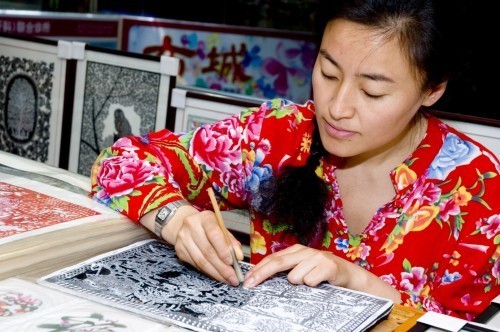 Ai Meng Li at work (Image courtesy of Hardwick & Cesko)
Can you tell us about Ai Meng Li, the artist?
Ai Meng Li lives & works in Shanghai, and has been practicing the art of paper cutting for 17 years. Ai has been wonderful to deal with and we've established a very strong relationship with her over the years.
She taught herself paper cutting in her home village in the north of China, and says she loves the visual vocabulary in paper cutting that has been developed over such a long period of time and by many influential practitioners. The paper cutting artist plays with scale by using tiny silhouettes of humans dancing, playing instruments or interacting with animals which are often juxtaposed with over-sized trees brimming with animal life.
How did you decide on the framing?
The almost primitive forms in the black and white artworks are enhanced by the monochromatic nature of the medium and we decided to stick with plain black frames to maintain simplicity and contrast with the intricacy of the works. We invested a little extra in the framing to reflect the value of the artworks. We have the timber box frames painted after they are assembled to minimize any gaps or joins in the corners.
The beautiful colourful works are best enhanced with a plain white frame. We can also tell you that we're planning to introduce a lot more white-framed pieces in the coming months with bold navy and deep fuschia paper colours. Keep an eye on Hardwick & Cesko for those!
These unique artworks are a great size for fitting into any room in your home, and they also make great wedding gifts. I think they'd be perfect for kids' rooms, too.
Victoria
Explore More








Head Office (No Showroom)
2/1-7 Unwins Bridge Rd, St Peters,
NSW 2044, Australia
Your customer reference #:
01-X-CSN