



Updated 22 February 2021
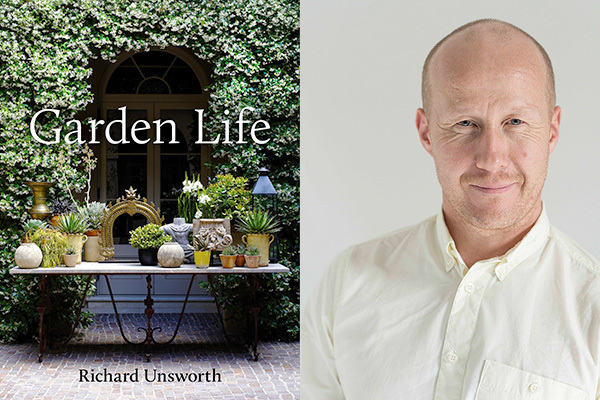
As the owner of Garden Life in Sydney's Redfern, Richard Unsworth has designed and advised on countless inner city gardens and is adept at making the most of small spaces. Here he shares some advice in an extract from his new book Garden Life.
Our gardens and outdoor spaces are becoming smaller as more and more of us are living in the inner city where, if we have a garden at all, it is a small courtyard or balcony. Small spaces are very unforgiving, because everything is on show all at once. In a larger garden, the odd plant that is sick or not performing can be hidden by healthier, flourishing specimens. On a balcony one dead plant will stick out like dog's balls; there is no room for error, or plants that don't perform, or something that clashes or is the wrong shape or size.
So how do you approach small space garden design? What techniques can you employ to transform a harsh space into a verdant, restful and stylish retreat?
CREATING VERTICAL SPACE
When you have limited floor space it is essential to consider what vertical space is available. It might be at either end of a balcony, a garden fence or just the side of a building.
Climbing plants
One solution is climbing plants, but beware as I have seen far too many failed climbers in pots. If you are going to use pots, make sure you choose large ones with reliable irrigation. Climbing plants will often grow well at first, then dry out as they become pot bound, making the entire wall look dead. To avoid this happening, be prepared to re-pot them every few years, and make sure they are kept-watered.
Star Jasmine has always been a great climber for a sunny wall, and it will grow wherever there is a support. The self supporting Boston Ivy on a render boundary or house wall is very stylish and looks terrific in winter when the stems are bare. We use Creeping Fig a lot as it is a versatile climber, which will blanket ugly fences or harsh walls (no wires required) and grow in full sun or shade. It will need clipping four times a year to stop it becoming overgrown (it has a bad name for this)
Screens
Consider installing a screen on the wall as a feature, or for privacy. There are a plethora of laser-cut screens now available in many different styles and finishes, so you should be able to find something you like, whether it is a screen with an earthy, finish or a slick, powder-coated colour that will blend with an interior colour scheme.
I love using our Indian jali screens to create a patchwork pattern on slick rendered walls. We bring them in from Rajasthan, and they are full of character, warmth and history. They work in both a classic and contemporary space; it all depends on how they are configured on a wall. Old Indian doors can also add weight and warmth in the right space, it is just a question of personal taste and what you are drawn towards. You can also use the plants themselves to create a screen.
Hanging pots
Hanging pots are useful in tight corners and other hard-to-plant areas and can easily liven up a small space.
Painted fences
A good solution for making new timber fences look more attractive is to paint them a dark colour and grow a climber up them (depending on the light conditions). Dark colours help green to stand out, so don't be afraid to use something like charcoal – it will help make your boundary fence really disappear and show off your foliage.
Quickfire questions
My favourite gardening culture is incorporating edibles into our own gardens – so we can make fresh mint tea, or pick thyme for a roast chicken.
I would never tolerate Philodendron xanadu in my garden.
The first plant I ever loved was trailing lobelia.
The garden colour combination I can't abide is red, orange and golden yellow
The best garden in Australia is Retford Park in Bowral.
Small space garden ideas - Richard Unsworth
As the owner of Garden Life in Sydney's Redfern, Richard Unsworth has designed and advised on countless inner city gardens and is adept at making the most of small spaces. Here he shares some advice in an extract from his new book Garden Life.
Our gardens and outdoor spaces are becoming smaller as more and more of us are living in the inner city where, if we have a garden at all, it is a small courtyard or balcony. Small spaces are very unforgiving, because everything is on show all at once. In a larger garden, the odd plant that is sick or not performing can be hidden by healthier, flourishing specimens. On a balcony one dead plant will stick out like dog's balls; there is no room for error, or plants that don't perform, or something that clashes or is the wrong shape or size.
So how do you approach small space garden design? What techniques can you employ to transform a harsh space into a verdant, restful and stylish retreat?
CREATING VERTICAL SPACE
When you have limited floor space it is essential to consider what vertical space is available. It might be at either end of a balcony, a garden fence or just the side of a building.
Climbing plants
One solution is climbing plants, but beware as I have seen far too many failed climbers in pots. If you are going to use pots, make sure you choose large ones with reliable irrigation. Climbing plants will often grow well at first, then dry out as they become pot bound, making the entire wall look dead. To avoid this happening, be prepared to re-pot them every few years, and make sure they are kept-watered.
Star Jasmine has always been a great climber for a sunny wall, and it will grow wherever there is a support. The self supporting Boston Ivy on a render boundary or house wall is very stylish and looks terrific in winter when the stems are bare. We use Creeping Fig a lot as it is a versatile climber, which will blanket ugly fences or harsh walls (no wires required) and grow in full sun or shade. It will need clipping four times a year to stop it becoming overgrown (it has a bad name for this)
Screens
Consider installing a screen on the wall as a feature, or for privacy. There are a plethora of laser-cut screens now available in many different styles and finishes, so you should be able to find something you like, whether it is a screen with an earthy, finish or a slick, powder-coated colour that will blend with an interior colour scheme.
I love using our Indian jali screens to create a patchwork pattern on slick rendered walls. We bring them in from Rajasthan, and they are full of character, warmth and history. They work in both a classic and contemporary space; it all depends on how they are configured on a wall. Old Indian doors can also add weight and warmth in the right space, it is just a question of personal taste and what you are drawn towards. You can also use the plants themselves to create a screen.
Hanging pots
Hanging pots are useful in tight corners and other hard-to-plant areas and can easily liven up a small space.
Painted fences
A good solution for making new timber fences look more attractive is to paint them a dark colour and grow a climber up them (depending on the light conditions). Dark colours help green to stand out, so don't be afraid to use something like charcoal – it will help make your boundary fence really disappear and show off your foliage.
Quickfire questions
My favourite gardening culture is incorporating edibles into our own gardens – so we can make fresh mint tea, or pick thyme for a roast chicken.
I would never tolerate Philodendron xanadu in my garden.
The first plant I ever loved was trailing lobelia.
The garden colour combination I can't abide is red, orange and golden yellow
The best garden in Australia is Retford Park in Bowral.
Explore More








Head Office (No Showroom)
2/1-7 Unwins Bridge Rd, St Peters,
NSW 2044, Australia
Your customer reference #:
01-X-CSN