



Updated 8 February 2021
To celebrate its 200th anniversary, Royal Doulton worked with a number of designers to create limited edition pieces, as well as refreshing their own popular 1815 collection. We talked to Dik Delaney, Royal Doulton's Design Director, and to Wayne and Tilly Hemingway and Charlene Mullen to find out more about the collaborations.
Royal Doulton's video showcases the limited edition items created by Jay Osgerby & Edward Barber, Hemingway Design, Charlene Mullen, Nick Walker and Pure Evil.
Wayne Hemingway and his wife Gerardine created the highly successful fashion label Red or Dead before setting up Hemingway Design with their daughter Tilly to work broadly across not only product design but urban housing, interiors and cultural events.
With something like this, it's important that it's about affordability – we believed we could deliver something that was beautiful and could last a long time, and had the backing of a brand that knew what they were doing. It's sturdy and timeless and something that you don't have to keep changing. That was our take on this – plus the fact that Royal Doulton is a British brand that was re-looking at itself after 200 years, when some people saw it as a brand that was not relevant to modern society. We saw that they are embracing design and creativity and allowing designers like us to get really involved and work with their teams to create something new.
You have to keep fresh, you can't keep doing the same thing. Human beings need new stimulation and most of us embrace change. We've thrived on new challenges throughout our careers and we've always enjoyed the challenge of trying something new.
Royal Doulton's video shows Wayne and Tilly talking about their collection.
I started making ceramics around the same time as we started working with Royal Doulton. There's a city farm in Hackney where you can just turn up and use the materials – I started with hand-made pieces and eventually had a go with the wheel. I really liked it and wanted to do it more than just an hour a week, so I've now set up my own studio. It's just for myself and I'll put some in our shop in Brighton, but it's a creative outlet and I like knowing how something works and understanding the raw materials.
Charlene Mullen originally trained in textiles before working in illustration and has her own homewares store in London.
While I'm originally from Nottingham, I've lived in London for 30 years. I love it, and I still find new places and get excited about the city. It was really hard to choose which buildings to include in Little London. The bus was the only one that was a no brainer!
All my ranges start with hand-drawn illustrations and this was no different. They do have to be put into a computer to get the scale exactly right but the pieces retain a hand-drawn feel which I think is why they appeal to people. They have an artisan feel to them.
Charlene explains her special 'Little London' piece.
Royal Doulton's new take on tradition
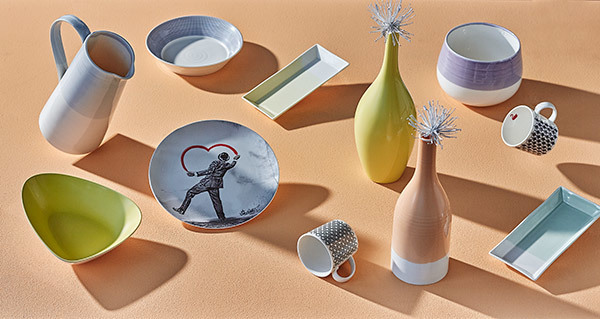 Photography - Denise Braki. Styling - Jessica Bellef.
To celebrate its 200th anniversary, Royal Doulton worked with a number of designers to create limited edition pieces, as well as refreshing their own popular 1815 collection. We talked to Dik Delaney, Royal Doulton's Design Director, and to Wayne and Tilly Hemingway and Charlene Mullen to find out more about the collaborations.
Dik, how did Royal Doulton approach the 200th birthday celebration?
Royal Doulton has always reinvented itself, so this felt like just another moment in time for the company. The new pieces for the 1815 collection were our contribution to the celebration. We looked back at the archives for shapes and techniques, and with this range we focused on the glazing, based on the hold hunting jug, and reinvented it through colour. The pieces are dipped by hand and also hand-stamped which means every piece is slightly different. What's nice about that is that you get a sense of uniqueness.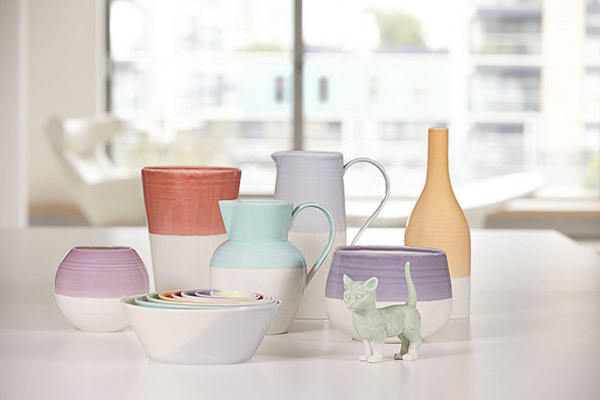 The new additions to Royal Doulton's 1815 collection
How did the collaborations come about?
In all different ways - for example I met Wayne Hemingway at a home show and we were talking about his work with G-Plan furniture and his love for ceramics and worked out that it made sense for us to work together. The only thing we suggested to any of the designers, was that their pieces fit back into our core collections, and you can see that they all approached the task slightly differently. For Charlene {cke_protected_1} that meant translating her work from 2D to 3D. For Nick Walker, we 3D-scanned his whole body to create a modern figurine of his 'Vandal' character.Royal Doulton's video showcases the limited edition items created by Jay Osgerby & Edward Barber, Hemingway Design, Charlene Mullen, Nick Walker and Pure Evil.
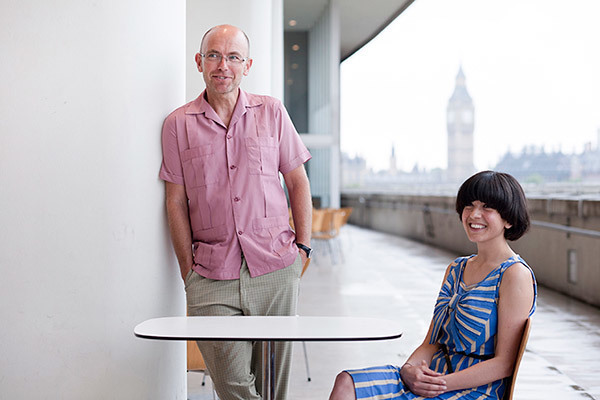 Wayne and Tilly Hemingway
Wayne Hemingway and his wife Gerardine created the highly successful fashion label Red or Dead before setting up Hemingway Design with their daughter Tilly to work broadly across not only product design but urban housing, interiors and cultural events.
Wayne, your philosophy 'Design is about improving things that matter in life.' How did you apply this to your collaboration with Royal Doulton?
We have a philosophy that we don't just design for design's sake. We're in a lucky position that we've been successful for a long time (me and my wife started when we were 18), so we don't need to just take on any old project to chase the dollar. We do lots of social housing and regeneration, but also some product design.With something like this, it's important that it's about affordability – we believed we could deliver something that was beautiful and could last a long time, and had the backing of a brand that knew what they were doing. It's sturdy and timeless and something that you don't have to keep changing. That was our take on this – plus the fact that Royal Doulton is a British brand that was re-looking at itself after 200 years, when some people saw it as a brand that was not relevant to modern society. We saw that they are embracing design and creativity and allowing designers like us to get really involved and work with their teams to create something new.
You have to keep fresh, you can't keep doing the same thing. Human beings need new stimulation and most of us embrace change. We've thrived on new challenges throughout our careers and we've always enjoyed the challenge of trying something new.
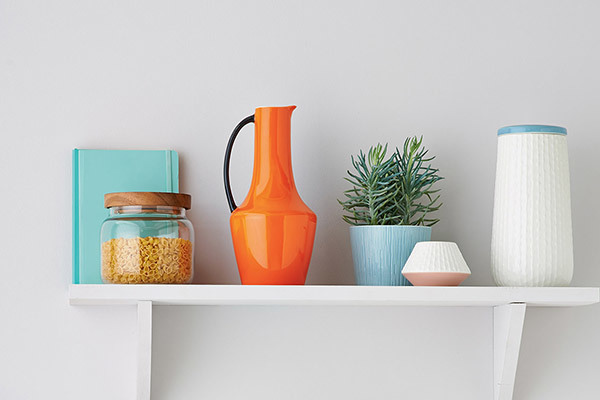 Hemingway Design's range for Royal Doulton
Your collection is influenced by mid-century design. Is this a particular love of yours?
We have always been collectors, and we have a big collection of mid-centry artefacts, furniture and ceramics, so we had a good grounding in this style. It emerged after a rough time in Europe with the war ending and people having been through a time when it wasn't possible to use colour or make decorative products. The Festival of Britain in 1951 changed design from something dowdy to something egalitarian and optimistic. The modernist idea was to bring good design and colour to everyone and to create designs that were timeless. Here in Redfern I saw modern design sitting happily with mid-century pieces, and that's what we tried to achieve with this collection - something that had a nod to that period, that was optimistic, affordable and also very relevant to today. You almost can't tell if it's old or new. You realise that it's contemporary, but it's got roots somewhere, and that gives satisfaction and security to people.How do you hope people will use your designs?
I'd like to think that it's been designed well enough that it could be passed down generations and it will look nice, but I don't think people now buy things and put them in a glass cupboard as collectible. My grandmother would have a dinner set saved to use for a special occasion which never came. That's crazy. This first collection is all decorative, and Tilly is working on a range of tableware to be released later.Royal Doulton's video shows Wayne and Tilly talking about their collection.
Tilly, did you have a strong background in ceramics before this collaboration?
I did know something about ceramics, but I didn't know a lot about Royal Doulton. I had a perception that they were about quite decorative pieces, and that's never really been my parents' style, but my perception has changed now I know they're doing a lot more contemporary stuff. I think the new collections are really forward thinking and I really enjoyed working with the design team and of course with a British business with so much heritage.I started making ceramics around the same time as we started working with Royal Doulton. There's a city farm in Hackney where you can just turn up and use the materials – I started with hand-made pieces and eventually had a go with the wheel. I really liked it and wanted to do it more than just an hour a week, so I've now set up my own studio. It's just for myself and I'll put some in our shop in Brighton, but it's a creative outlet and I like knowing how something works and understanding the raw materials.
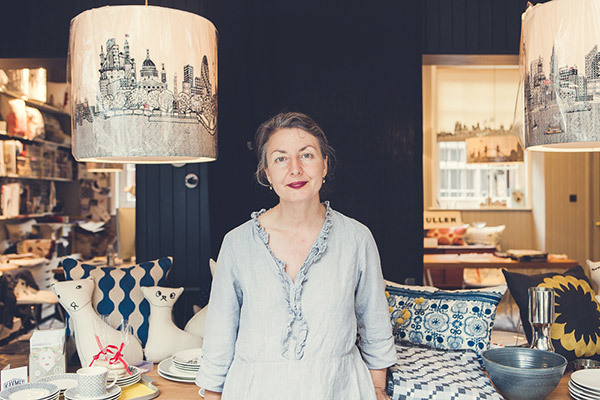 Image via Urban Walkabout
Charlene Mullen originally trained in textiles before working in illustration and has her own homewares store in London.
Charlene, tell us about your Little London piece.
I was already working with Royal Doulton on my London series, which came about because they have a tradition of working with artists and designers. They invited me to make a piece for the 200th anniversary and suggesting it might be nice to create something three dimensional. They wanted it to be like a special present, and limited edition, and something that would stand by itself.While I'm originally from Nottingham, I've lived in London for 30 years. I love it, and I still find new places and get excited about the city. It was really hard to choose which buildings to include in Little London. The bus was the only one that was a no brainer!
All my ranges start with hand-drawn illustrations and this was no different. They do have to be put into a computer to get the scale exactly right but the pieces retain a hand-drawn feel which I think is why they appeal to people. They have an artisan feel to them.
Charlene explains her special 'Little London' piece.
Explore More








Head Office (No Showroom)
2/1-7 Unwins Bridge Rd, St Peters,
NSW 2044, Australia
Your customer reference #:
01-X-CSN