


Blog

How to choose a bunk bed
"I'm not a regular bed, I'm a cool bed." After gaining popularity in the '80s and '90s, bunk beds have become the go-to bed of choice for kids, but the playful design has been around for centuries. A mainstay in smaller houses during the Middle Ages, bunk beds have come a long way since then, but the benefits of the space-saving setup still ring true for modern family homes. With many different types of bunk beds available and safety concerns front of mind, we've put together a guide to help you choose a bunk bed that suits your style, room size and long-term needs.
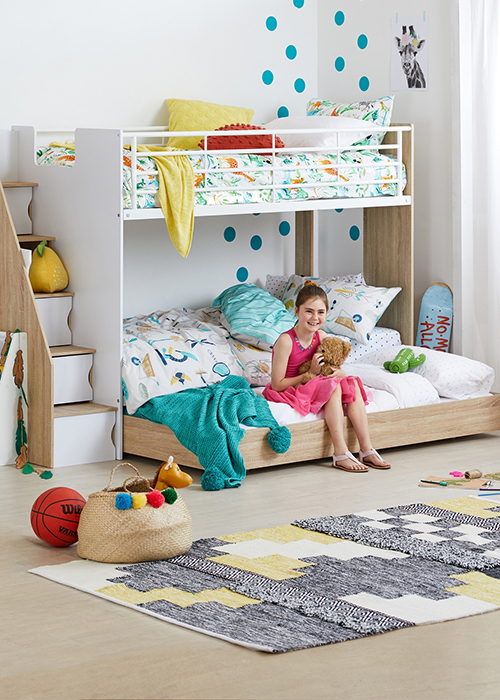
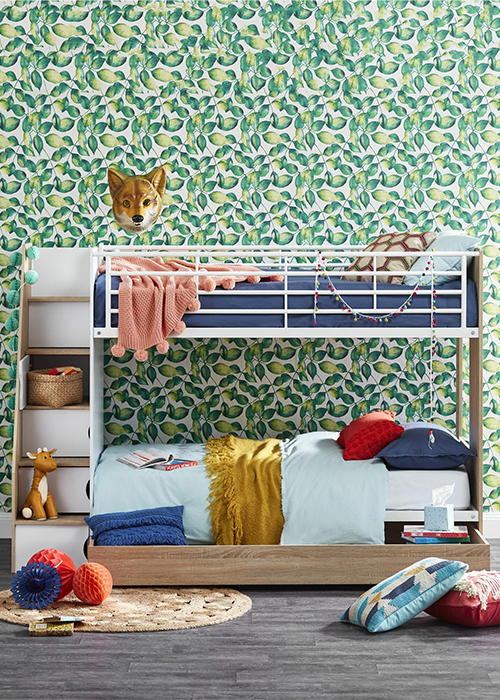
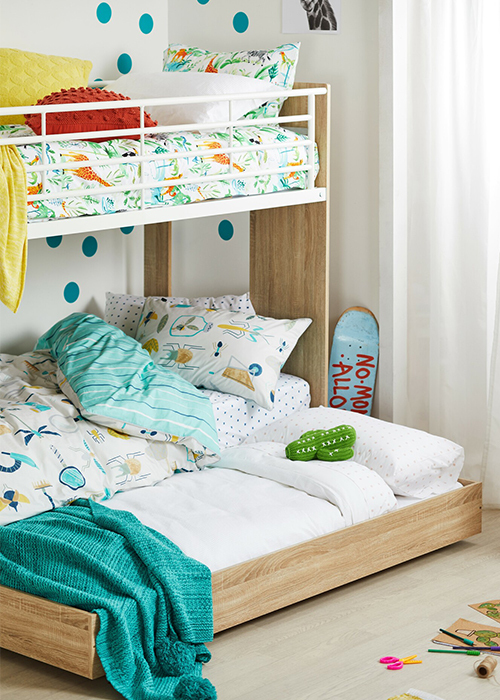
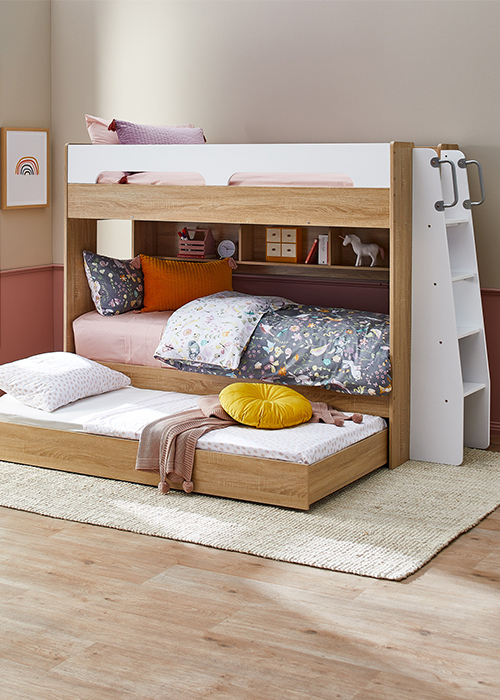
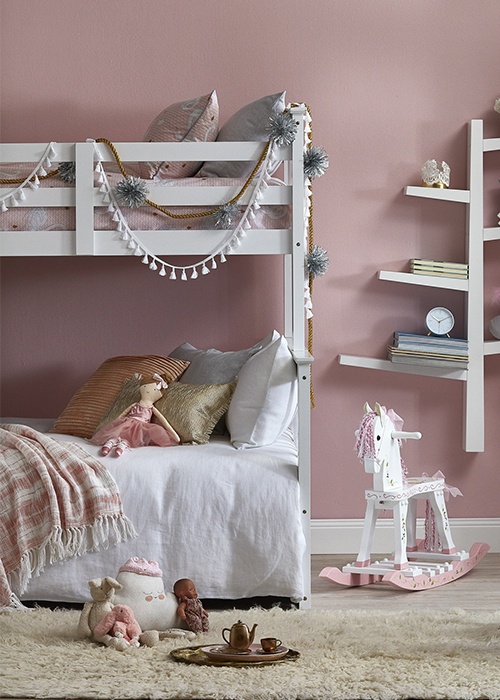
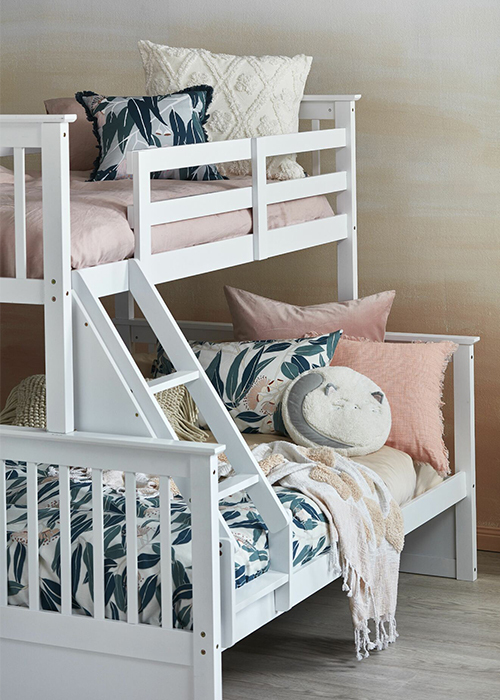
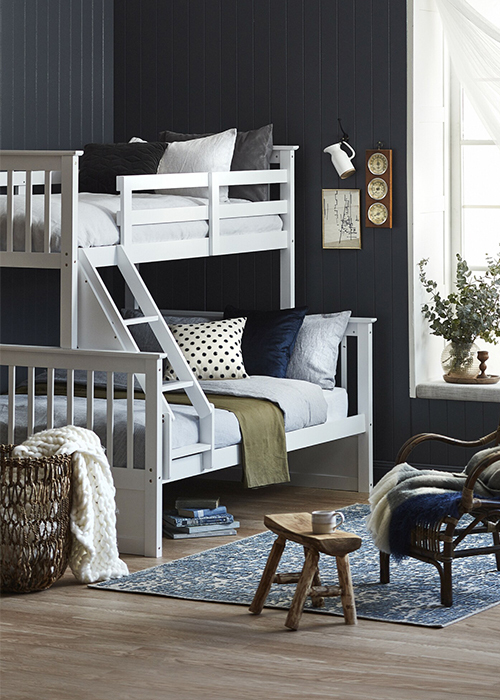
Are your kids ready for a bunk bed?
First things first, bunk beds are not suitable for toddlers and small children, and while the minimum age to use a bunk bed can vary based on a child's maturity, in Australia, it's recommended that you wait until your child is nine years old before they start sleeping on the top bunk.
Measure your space to determine the right fit
If you're ready to introduce a bunk bed, start by measuring your space. Floor space, ceiling height and the space between bunks are all important considerations.Floor space
Single over single bunk beds are the most efficient use of space, but you'll need to factor in the bunk bed's stairs or ladder, which may jut out. Additional features such as drawers or a trundle bed will also require more floor space to access.Ceiling height
Make sure your ceiling is high enough to house a bunk bed. The average bunk bed is 160cm tall, and there should be a minimum of 80cm between the surface of the top bunk mattress and the ceiling. If your home has lower ceilings, you can always opt for a low-line bunk bed—these styles generally clock in at just over a one metre tall.Space between beds
A bunk bed is for sleeping, but chances are the bottom bunk will be used for seating, too. Whether it's storytime or sitting up in the morning, you don't want your child to hit their head on the bunk above, so ensure there's enough space for them to sit up comfortably. If you want a bunk bed to be a long term investment, think about your height—the children of tall parents are more likely to shoot up fast!Understand the purpose of the bunk bed
Once you know how much space you're working with, take some time to establish how your prospective bunk bed will be used. A little forward thinking can save you time, money and effort.Is the bunk bed just for fun?
If your purchase is less about space and more about granting your little one's bunk bed-filled dreams, it's worth considering a single over double bunk. The double mattress underneath will cater to big kids once the excitement of sleeping on top wears off—and you'll always have an extra single bed above for guests.Will you be hosting sleepovers?
Bunk beds featuring a trundle bed are handy if you expect to be hosting friends and family. This configuration includes a third bed that slides out from beneath the lower bunk when needed. Trundles are included with various bunk bed sizes, from single over single to single over double. If you go for a single over double with a double trundle, you'll be able to sleep up to five on the one bunk bed.Is it a short term solution?
Are you buying a bunk bed as a short term solution knowing your kids will eventually have their own bedrooms? If that's the case, it's worth looking out for a convertible bunk bed that you can separate into two single beds when the time comes.
Do you want a bunk bed that includes storage?
If space efficiency is high on your priority list, a bunk bed that includes storage drawers, shelves or spare room underneath is for you.Drawers
Many bunk beds include drawers built into the bottom bunk's frame, but you can also find box steps that double up as storage. In most cases, trundle beds can also be used as storage when the mattress is removed.Shelves
Along with drawers, bunk bed frames that include shelving are a practical choice that allows your children to put all their favourite things on display.
Loft bed
A loft-style bed is a smart option for one child as the framework delivers the fun feeling of being up high with the bonus of free space beneath for a desk or play den.
Land on a look
Choose a colour and material that suits your decor, whether it's a bunk for the kids or an adult guest room.
Colour
Black, white and natural timber are all classic colours that will stand the test of time. Lighter colours exude a more youthful feel, but you may want the bunk bed to complement the pieces you already own. Matching the frame to your existing furniture will ensure a seamless fit, and you can always brighten up the look with vibrant bed linen.Material
Bunk beds are commonly made of metal or timber, and there are pros and cons to both. Timber is sturdy and long-lasting, while metal frames tend to have a lower price tag and take up less space. As with your choice of colour, weigh up these factors alongside the decor already in the room.Safety first
Tick all the safety boxes when setting up a bunk bed to ensure you and your children rest easy.Stairs vs ladders
Box stairs take up more space than ladders, though they may be worth the compromise if you're catering to younger children that don't yet have the confidence to navigate a ladder—especially at night. Angled ladders with footboards and handrails will make it easier for older children to manoeuvre their way up.Guard rails
Guard rails around the top bunk are essential, and they must reach at least 16cm above the surface of the mattress. Always install the guard rail around all four sides of the bed regardless of its position. A wall does not count as a guard rail, as you still run the risk of the bed moving and gaps forming between the bed and the wall.Position
Bunk beds must be placed clear of ceiling fans, windows and blinds, cords, lights, heaters or any other electrical device—at least two metres clearance is recommended. If in doubt, find another position for the bed.
Can adults sleep in a bunk bed?
Adults can sleep in bunk beds, though each bed's weight capacity varies depending on the size of its mattress and structural design. Read the safety guidelines carefully, which include the recommended weight capacity for both the upper and lower tier, and purchase accordingly if buying for a guest room. Lower bunks are a more suitable sleeping option for adults as they can generally hold more weight than the top—but always check the guidelines first.
Choosing the right mattress
Bunk beds are designed to fit standardised mattresses—think single, king single and double—but you'll need to factor in the frame's depth capacity. Depth is variable by mattress and a style that is too thick will elevate anyone sleeping on it to the top of the guard rails. You may want to consider a low profile kids mattress for bunk beds, but if you already own a mattress that you plan on using, be sure to check the bunk bed's recommended mattress thickness before you make your purchase.
Explore More



Payment options





Head Office (No Showroom)
2/1-7 Unwins Bridge Rd, St Peters,
NSW 2044, Australia
Your customer reference #:
01-X-CSN