


Blog

Updated 10 February 2021
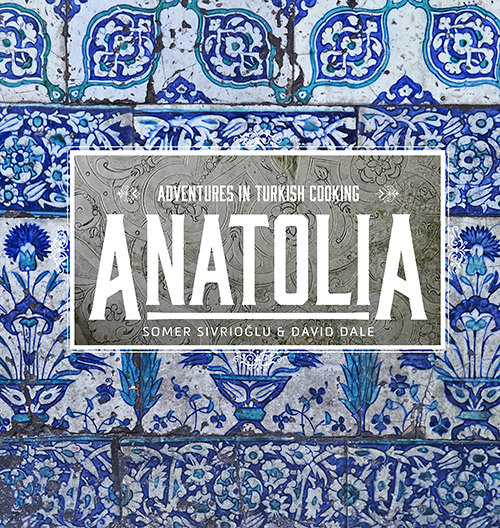
Somer Sivrioğlu and David Dale first met at Somer's Sydney restaurant Efendy, and within 3 months had hatched a plan to write a book about Turkish food traditions both old and new. The result, Anatolia, is a richly illustrated journey through Turkish food and culture. Here we share an edited extract from both Somer's and David's introduction, plus three recipes to kick off your Turkish feast. We also have a copy to give away - leave a comment below for your chance to win. Competition finished.
Somer: I grew up in an apartment building in the Kadiköy neighbourhood of Istanbul which my granddad had bought after selling his hotel and hamam (Turkish bath) in the rural town of Eskisehir. He'd moved the whole family to the multicultural suburb on the Anatolian side of the city and the block felt like a village, with the hallways full of cooking smells floating from open doorways. We had neighbours with Greek, Armenian and Sephardic Jewish backgrounds, and I was blessed to taste their everyday meals.
Much later my culinary hero Musa Dagdeviren visted me in Australia and showed me that Turkish cooking is less about particular ingredients and more about philosophy. In Australia, I'm regarded as a Turkish chef with a modern presentation. In Turkey, I'm regarded as an Australian chef experimenting with some sort of Turkish 'fusion'. I think I'm simply doing what the peoples of Anatolia have done for millennia – getting the best out of local produce with techniques tested and proved by my ancestors.

David: Working with Somer, I learned that Anatolian cooks take a pretty relaxed approach to their creations. They rarely use written recipes and, when they do, the instructions tend to be vague as in 'measure with your eyes', 'add whatever it needs; or else poetic, as in 'cut into bird's heads' (cubed), 'small as a rat's tooth' (finely chopped) or 'till the dough has the texture of an earlobe.' We've tried to avoid the vagueness but retain the relaxation.
We called this book Anatolia because that word best conveys the history and diversity of a land that only started using the term Türkiye (Land of the Turks) in the eleventh century, and only became the Turkish Republic in 1923. The word Anatolia is used to show that our book includes the delicious Arab, Armenian, Assyrian, Balkan, Greek, Jewish, Kurdish and Romany contributions to the way Turks eat.
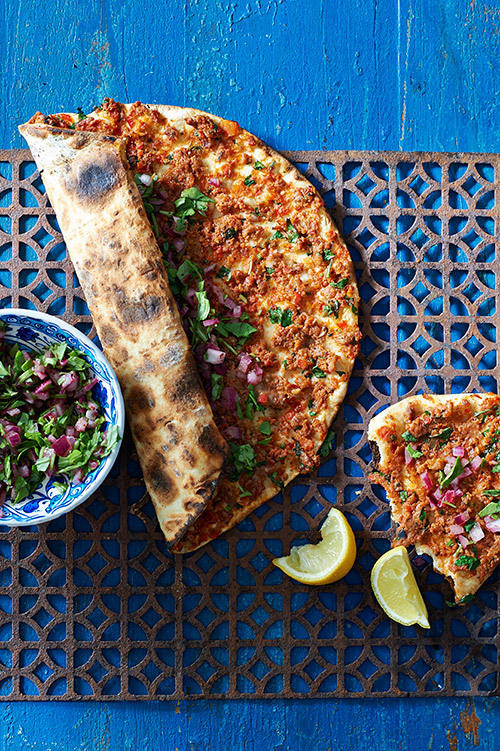
Lahmacun: Thin-crust pide with spicy lamb topping
When I say thin-crust pizza is Italy's answer to lahmacun (pronounced 'lah-mahjun'), I'm not trying to start a fight. The idea of putting spiced mince on a disc of dough would have occurred to human beings long before there were nations called Italy or Turkey—or for that matter Armenia, Greece or Syria—all of whom have claimed to be the originators of this addictive pastry. What we do know is that nowadays lahmacun is a speciality of the town of Şanlıurfa, in southeastern Turkey, where they pride themselves on the crispness of their bases.
Lahmacun should not be confused with the heavier kıymalı pide, well known in and out of Turkey for the thickness of its dough and the coarseness of its meat topping. For lahmacun you need a light touch.
In Şanlıurfa, they turn out hundreds of lahmacuns every lunchtime from big stone ovens. The best way to get the same effect at home is to use a pizza stone or an unglazed terracotta tile, and to ensure your oven is preheated to the max.
Ingredients (serves 4)
Base
200 g (7 oz/11/3 cups) plain (all-purpose) flour, plus extra for dusting
1 teaspoon salt
70 g (2½ oz/½ cup) wholemeal flour (if using a baking tray)
Topping
2 tomatoes
1 red capsicum (pepper)
75 g (22/3 oz) capsicum (pepper) paste
5 garlic cloves
½ bunch flat-leaf (Italian) parsley
2 teaspoons chilli flakes
1 teaspoon freshly ground black pepper
1 teaspoon salt
200 g (7 oz) minced (ground) lamb (about 25 per cent fat)
Red onion and sumac salad (optional)
½ red onion, finely sliced
1 teaspoon salt
1 tablespoon sumac
1 tablespoon extra virgin olive oil
juice of ½ lemon, plus extra to serve
Preparation
Preheat the oven to its maximum temperature (as close to 300°C/570°F as possible). If you have a pizza stone or tile, place it in the oven. Or leave your baking tray in the oven so it will preheat.
Sift the flour into a mixing bowl and add the salt. Make a well in the middle and slowly pour in 125 ml (4 fl oz/½ cup) of lukewarm water. Knead the dough for 5 minutes. Sprinkle some flour on your work surface and then divide the dough into four balls. Cover the bowl with a damp cloth and leave to rest.
Score a shallow cross in the base of the tomatoes, then transfer to a heatproof bowl and cover with boiling water. Leave for 30 seconds, then plunge in cold water and peel the skin away from the cross. Cut the tomato in half and scoop out the stalks and seeds with a teaspoon. Roughly chop. Remove the seeds from the capsicum and roughly chop. Coarsely blend the tomatoes and capsicum with the capsicum paste, garlic, parsley, chilli flakes, pepper and salt. Combine the mixture with the lamb mince and stir thoroughly.
Place a ball of dough on the floured work surface and, with floured hands or a rolling pin, flatten into a round about 25 cm (10 in) wide and less than 5 mm (¼ in) thick. Repeat with the remaining dough balls.
Using a tablespoon, thinly spread the lamb mixture onto the rounds. Then press in with your hands.
If you are using a baking tray, take it out of the oven and put a piece of baking paper over it. Dust the baking paper with a little wholemeal flour. Place the rounds of dough on the baking paper and bake for about 5 minutes, or until the edges are crisp.
Meanwhile, if you are making the salad, finely slice the onion and place in a bowl. Sprinkle with salt and sumac, add the lemon juice and olive oil, then mix together with your hands.
Sprinkle the salad over the lahmacuns, squeeze on some lemon juice, and serve.
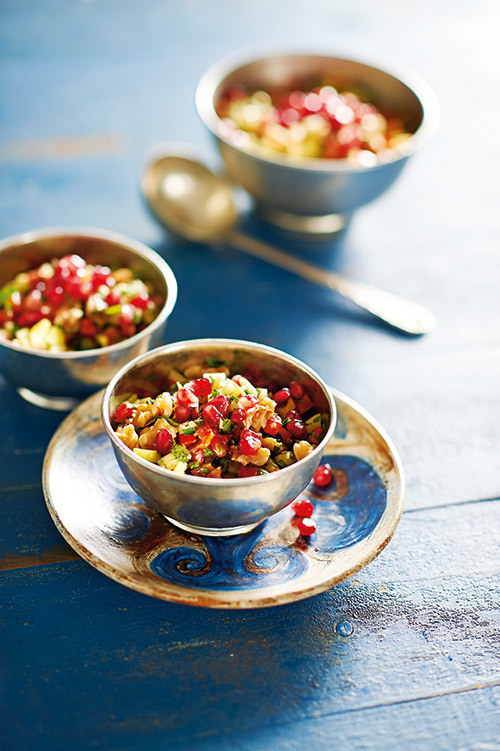
Gavurdağ: 'Spoon salad' (Chopped tomato, walnut and sumac salad)
This salad is served with kebaps all over Turkey, and is designed to be eaten with a spoon. It's just a finely chopped salad, with the tomato pieces no bigger than the pomegranate seeds, but you'll see it on menus in Istanbul described as the famous 'Gavurdağ' salad (apparently named after a mountain in southeast Anatolia). My friend Musa points out in his scholarly journal Yemek ve Kültür (Food and Culture) that there's a trend in Turkey for chefs to give obscure names to standard dishes in an attempt to suggest authentic regional origins. This could well be one of those.
Ingredients (serves 4)
6 ripe tomatoes
1 red onion
1 bunch mint
½ bunch flat-leaf (Italian) parsley
115 g (4 oz/1 cup) walnuts
3 green bullhorn peppers (or 1 green capsicum/pepper)
1 green chilli
1 tablespoon sumac
2 tablespoons pomegranate molasses
60 ml (2 fl oz/¼ cup) olive oil
1 teaspoon apple vinegar
1 teaspoon sea salt
150 g (5½ oz/½ cup) pomegranate seeds
Preparation
Quarter the tomatoes, remove the white centres and then finely chop. Finely chop the red onion. Discard the mint and parsley stalks and finely chop the leaves. Finely chop the walnuts. Cut the bullhorn peppers and the chilli in half, and remove the seeds and stalks. Finely chop. Mix all the chopped ingredients together in a salad bowl.
Mix the sumac, molasses, olive oil, vinegar and salt together, pour onto the salad and toss.
Sprinkle the pomegranate seeds on top and serve.
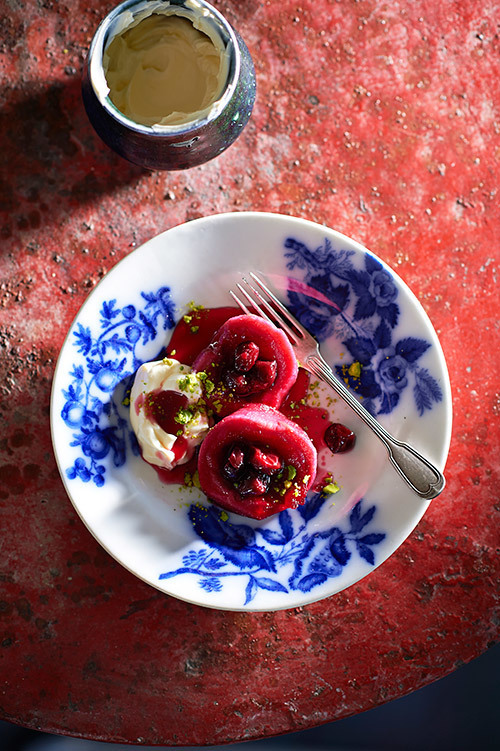
Ayva tatlisi: Poached quinces with sour cherries and clotted cream
You could have eaten this dish 2000 years ago in Anatolia. The world's first cherry growing and the world's first quince growing happened there. Writings from 72 BC discuss how the military leader Lucullus brought a cultivated cherry to Rome from a part of the empire called Pontus in northeastern Anatolia. The Romans at the time were happy to combine it with their quinces stewed in honey.
The Ottoman chefs made a habit of stewing fruits with sugar syrup and combining them with kaymak. The secret here is to cook very slowly and include the skins and the cores of the quinces while simmering, to enhance the pink colouring the Ottomans loved.
Ingredients (serves 4)
100 g (3½ oz/½ cup) frozen sour cherries
4 quinces
juice of 1 lemon
1 cinnamon stick
5 cloves
660 g (1 lb 7 oz/3 cups) sugar
16 walnut kernels
125 g (4½ oz/½ cup) kaymak (or thick/double cream)
Preparation
Take the cherries out of the freezer about 1 hour before you want to serve the dish.
Peel the skin off the quinces and reserve the skin. Halve the peeled quinces, lengthways, and remove the hard cores. Reserve the cores.
Put the lemon juice and 1 litres (35 fl oz/4 cups) of water in a bowl. This will stop the quinces from going brown.
Lay the quince skins, shiny side down, in the bottom of a wide saucepan. Place the cinnamon stick, cloves and cores on top. Put the quinces, cut side up, on top of the spices. Put 3 tablespoons of the sugar on each quince half. Pour 500 ml (17 fl oz/2 cups) of water into the pan around the quinces, being careful not to cover the quinces or wash the sugar off. Put the lid on the pan and simmer for 1 hour until the quinces are pink and soft.
Mix 110 g (3¾ oz/½ cup) of the sugar with about 25 sour cherries. Take the lid off the pot and place three cherries in each half quince. Cover again and simmer for 30 minutes. Remove from the heat and leave to cool for 30 minutes—with the lid off if the quinces are soft, lid on if the quinces are still slightly firm.
Place the quinces on a serving platter. Put two walnuts on top of each quince.
Add a dollop of kaymak or thick cream on top of each quince. Drizzle about 1 tablespoon of the cooking liquid over the quinces and serve.
Edited extract from Anatolia by Somer Sivrioğlu and David Dale.
Exploring the food of Anatolia
Somer Sivrioğlu and David Dale first met at Somer's Sydney restaurant Efendy, and within 3 months had hatched a plan to write a book about Turkish food traditions both old and new. The result, Anatolia, is a richly illustrated journey through Turkish food and culture. Here we share an edited extract from both Somer's and David's introduction, plus three recipes to kick off your Turkish feast. We also have a copy to give away - leave a comment below for your chance to win. Competition finished.
Somer: I grew up in an apartment building in the Kadiköy neighbourhood of Istanbul which my granddad had bought after selling his hotel and hamam (Turkish bath) in the rural town of Eskisehir. He'd moved the whole family to the multicultural suburb on the Anatolian side of the city and the block felt like a village, with the hallways full of cooking smells floating from open doorways. We had neighbours with Greek, Armenian and Sephardic Jewish backgrounds, and I was blessed to taste their everyday meals.
Much later my culinary hero Musa Dagdeviren visted me in Australia and showed me that Turkish cooking is less about particular ingredients and more about philosophy. In Australia, I'm regarded as a Turkish chef with a modern presentation. In Turkey, I'm regarded as an Australian chef experimenting with some sort of Turkish 'fusion'. I think I'm simply doing what the peoples of Anatolia have done for millennia – getting the best out of local produce with techniques tested and proved by my ancestors.
David: Working with Somer, I learned that Anatolian cooks take a pretty relaxed approach to their creations. They rarely use written recipes and, when they do, the instructions tend to be vague as in 'measure with your eyes', 'add whatever it needs; or else poetic, as in 'cut into bird's heads' (cubed), 'small as a rat's tooth' (finely chopped) or 'till the dough has the texture of an earlobe.' We've tried to avoid the vagueness but retain the relaxation.
We called this book Anatolia because that word best conveys the history and diversity of a land that only started using the term Türkiye (Land of the Turks) in the eleventh century, and only became the Turkish Republic in 1923. The word Anatolia is used to show that our book includes the delicious Arab, Armenian, Assyrian, Balkan, Greek, Jewish, Kurdish and Romany contributions to the way Turks eat.
Lahmacun: Thin-crust pide with spicy lamb topping
When I say thin-crust pizza is Italy's answer to lahmacun (pronounced 'lah-mahjun'), I'm not trying to start a fight. The idea of putting spiced mince on a disc of dough would have occurred to human beings long before there were nations called Italy or Turkey—or for that matter Armenia, Greece or Syria—all of whom have claimed to be the originators of this addictive pastry. What we do know is that nowadays lahmacun is a speciality of the town of Şanlıurfa, in southeastern Turkey, where they pride themselves on the crispness of their bases.
Lahmacun should not be confused with the heavier kıymalı pide, well known in and out of Turkey for the thickness of its dough and the coarseness of its meat topping. For lahmacun you need a light touch.
In Şanlıurfa, they turn out hundreds of lahmacuns every lunchtime from big stone ovens. The best way to get the same effect at home is to use a pizza stone or an unglazed terracotta tile, and to ensure your oven is preheated to the max.
Ingredients (serves 4)
Base
200 g (7 oz/11/3 cups) plain (all-purpose) flour, plus extra for dusting
1 teaspoon salt
70 g (2½ oz/½ cup) wholemeal flour (if using a baking tray)
Topping
2 tomatoes
1 red capsicum (pepper)
75 g (22/3 oz) capsicum (pepper) paste
5 garlic cloves
½ bunch flat-leaf (Italian) parsley
2 teaspoons chilli flakes
1 teaspoon freshly ground black pepper
1 teaspoon salt
200 g (7 oz) minced (ground) lamb (about 25 per cent fat)
Red onion and sumac salad (optional)
½ red onion, finely sliced
1 teaspoon salt
1 tablespoon sumac
1 tablespoon extra virgin olive oil
juice of ½ lemon, plus extra to serve
Preparation
Preheat the oven to its maximum temperature (as close to 300°C/570°F as possible). If you have a pizza stone or tile, place it in the oven. Or leave your baking tray in the oven so it will preheat.
Sift the flour into a mixing bowl and add the salt. Make a well in the middle and slowly pour in 125 ml (4 fl oz/½ cup) of lukewarm water. Knead the dough for 5 minutes. Sprinkle some flour on your work surface and then divide the dough into four balls. Cover the bowl with a damp cloth and leave to rest.
Score a shallow cross in the base of the tomatoes, then transfer to a heatproof bowl and cover with boiling water. Leave for 30 seconds, then plunge in cold water and peel the skin away from the cross. Cut the tomato in half and scoop out the stalks and seeds with a teaspoon. Roughly chop. Remove the seeds from the capsicum and roughly chop. Coarsely blend the tomatoes and capsicum with the capsicum paste, garlic, parsley, chilli flakes, pepper and salt. Combine the mixture with the lamb mince and stir thoroughly.
Place a ball of dough on the floured work surface and, with floured hands or a rolling pin, flatten into a round about 25 cm (10 in) wide and less than 5 mm (¼ in) thick. Repeat with the remaining dough balls.
Using a tablespoon, thinly spread the lamb mixture onto the rounds. Then press in with your hands.
If you are using a baking tray, take it out of the oven and put a piece of baking paper over it. Dust the baking paper with a little wholemeal flour. Place the rounds of dough on the baking paper and bake for about 5 minutes, or until the edges are crisp.
Meanwhile, if you are making the salad, finely slice the onion and place in a bowl. Sprinkle with salt and sumac, add the lemon juice and olive oil, then mix together with your hands.
Sprinkle the salad over the lahmacuns, squeeze on some lemon juice, and serve.
Gavurdağ: 'Spoon salad' (Chopped tomato, walnut and sumac salad)
This salad is served with kebaps all over Turkey, and is designed to be eaten with a spoon. It's just a finely chopped salad, with the tomato pieces no bigger than the pomegranate seeds, but you'll see it on menus in Istanbul described as the famous 'Gavurdağ' salad (apparently named after a mountain in southeast Anatolia). My friend Musa points out in his scholarly journal Yemek ve Kültür (Food and Culture) that there's a trend in Turkey for chefs to give obscure names to standard dishes in an attempt to suggest authentic regional origins. This could well be one of those.
Ingredients (serves 4)
6 ripe tomatoes
1 red onion
1 bunch mint
½ bunch flat-leaf (Italian) parsley
115 g (4 oz/1 cup) walnuts
3 green bullhorn peppers (or 1 green capsicum/pepper)
1 green chilli
1 tablespoon sumac
2 tablespoons pomegranate molasses
60 ml (2 fl oz/¼ cup) olive oil
1 teaspoon apple vinegar
1 teaspoon sea salt
150 g (5½ oz/½ cup) pomegranate seeds
Preparation
Quarter the tomatoes, remove the white centres and then finely chop. Finely chop the red onion. Discard the mint and parsley stalks and finely chop the leaves. Finely chop the walnuts. Cut the bullhorn peppers and the chilli in half, and remove the seeds and stalks. Finely chop. Mix all the chopped ingredients together in a salad bowl.
Mix the sumac, molasses, olive oil, vinegar and salt together, pour onto the salad and toss.
Sprinkle the pomegranate seeds on top and serve.
Ayva tatlisi: Poached quinces with sour cherries and clotted cream
You could have eaten this dish 2000 years ago in Anatolia. The world's first cherry growing and the world's first quince growing happened there. Writings from 72 BC discuss how the military leader Lucullus brought a cultivated cherry to Rome from a part of the empire called Pontus in northeastern Anatolia. The Romans at the time were happy to combine it with their quinces stewed in honey.
The Ottoman chefs made a habit of stewing fruits with sugar syrup and combining them with kaymak. The secret here is to cook very slowly and include the skins and the cores of the quinces while simmering, to enhance the pink colouring the Ottomans loved.
Ingredients (serves 4)
100 g (3½ oz/½ cup) frozen sour cherries
4 quinces
juice of 1 lemon
1 cinnamon stick
5 cloves
660 g (1 lb 7 oz/3 cups) sugar
16 walnut kernels
125 g (4½ oz/½ cup) kaymak (or thick/double cream)
Preparation
Take the cherries out of the freezer about 1 hour before you want to serve the dish.
Peel the skin off the quinces and reserve the skin. Halve the peeled quinces, lengthways, and remove the hard cores. Reserve the cores.
Put the lemon juice and 1 litres (35 fl oz/4 cups) of water in a bowl. This will stop the quinces from going brown.
Lay the quince skins, shiny side down, in the bottom of a wide saucepan. Place the cinnamon stick, cloves and cores on top. Put the quinces, cut side up, on top of the spices. Put 3 tablespoons of the sugar on each quince half. Pour 500 ml (17 fl oz/2 cups) of water into the pan around the quinces, being careful not to cover the quinces or wash the sugar off. Put the lid on the pan and simmer for 1 hour until the quinces are pink and soft.
Mix 110 g (3¾ oz/½ cup) of the sugar with about 25 sour cherries. Take the lid off the pot and place three cherries in each half quince. Cover again and simmer for 30 minutes. Remove from the heat and leave to cool for 30 minutes—with the lid off if the quinces are soft, lid on if the quinces are still slightly firm.
Place the quinces on a serving platter. Put two walnuts on top of each quince.
Add a dollop of kaymak or thick cream on top of each quince. Drizzle about 1 tablespoon of the cooking liquid over the quinces and serve.
Edited extract from Anatolia by Somer Sivrioğlu and David Dale.
Explore More



Payment options





Head Office (No Showroom)
2/1-7 Unwins Bridge Rd, St Peters,
NSW 2044, Australia
Your customer reference #:
01-X-CSN